
MicroCam-X1 Digital Camera, 12MP CMOS Sensor, 400X Microscope, 4K Video, Autofocus, 3.5" LCD | Compact Kids Camera for STEM Learning | Point & Shoot, Portable, Travel, Ideal Gift for All Ages
Want the best price and purchase timing?
Our AI advisor analyzes real-time pricing across all channels to find you the best deal.
AI Verdict
A 12MP camera with a 400x microscope and 4K video, designed for casual exploration and STEM learning, not professional scientific use.
This camera is a situational fit because its 400x microscope and 4K video capabilities are compelling for casual exploration and educational purposes, especially given its 160g weight and 3-meter drop resistance. However, the reported focusing difficulties in microscope mode and concerns about its technical specifications for serious use mean it won't satisfy advanced users.
If you need more precise and consistent microscopy, look for cameras with optical zoom and global shutter sensors.
Regret Score™
High RiskLower is better — measures purchase-regret risk from real buyer complaints, review credibility, and product maturity
Issues discovered after purchase
Critically weak dimension
Amazon rating vs actual quality
Chance this product isn't for you
Pros
- Integrated 400x microscope mode reveals details down to 0.01mm.
- Records 4K video at 30fps and captures 12MP photos.
- Compact and lightweight at 160g, fitting in half a hand.
- 3.5" IPS LCD touchscreen with 8H high-alumina glass for scratch resistance.
- Includes a 2000mAh battery for ~4 hours of continuous use and a 64GB microSD card.
- Tested for 3-meter drop resistance, making it durable for outdoor use.
Cons
- Users report difficulty achieving focus in microscope mode, especially with uneven subjects.
- Some users experienced device failure shortly after purchase with unresponsive customer support.
- Features digital image stabilization, which is less effective than optical stabilization for video.
- The 40x zoom is digital, not optical, limiting true magnification quality.
- Microscopy enthusiasts note concerns about rolling shutter and sensor size for scientific applications.
Dimension Scores
Captures 12MP photos and 4K video, but the digital zoom and potential focusing issues in microscope mode can limit overall clarity.
Features phase-detection autofocus, but users report difficulty getting subjects in focus in microscope mode, suggesting it's not always quick or precise.
Records 4K video at 30fps and includes time-lapse and slow-motion modes, which is above average for its price band.
Weighs only 160g and is compact enough to fit in half a hand, making it highly portable for outdoor exploration.
Best For
- Kids and students for STEM learning and outdoor exploration.
- Casual users interested in observing small details in nature or everyday objects.
- Travelers seeking a portable camera for general photography and unique close-up shots.
- Educators for classroom demonstrations via USB live viewing.
Not Recommended For
- Professional photographers requiring advanced image quality or optical zoom.
- Serious scientific researchers needing precise, high-fidelity microscopy.
- Users expecting robust customer support for product issues.
Watch Out For
- Microscope mode can be challenging to focus on non-flat objects.
- One user reported the device stopped working after two days, with no response from the company for a return or refund.
- The 40x zoom is digital, not optical, which can lead to pixelation at higher magnifications.
- Microscopy experts point out the use of rolling shutter and relatively small sensor size, which are limitations for detailed scientific imaging.
Full Specifications
| Brand | LiTTPOPO |
| Model Name | MicroCam |
| Aspect Ratio | 4:3 |
| Optical Zoom | 40 x |
| Image Stabilization | Digital |
| Compatible Mountings | MicroCam-X1 |
| Expanded ISO Minimum | 100 |
| Maximum Focal Length | 20 Millimeters |
| Supported File Format | MP4 |
| Photo Sensor Technology | CMOS |
What Buyers Say
Despite a high average rating, some users found the microscope mode challenging to use, particularly when trying to focus on non-flat objects. There's also a concerning report of a unit failing within days and the company being unresponsive to return requests. While marketing highlights its 400x magnification and 4K video, some microscopy enthusiasts question the technical specifications like rolling shutter and sensor size for serious scientific observation. The device's compact size and inclusion of a 64GB microSD card are frequently mentioned as practical benefits.
“Honestly, the microscope part is cool when it works, but trying to focus on anything that isn't perfectly flat is a nightmare. And mine just died after two days, company won't even answer my emails for a refund, so frustrating.”
Common Praise
- The ability to switch between standard and 400x microscope modes with a 180° rotation.
- The compact size and light weight of 160g make it easy to carry.
- The inclusion of a 64GB microSD card is convenient.
- The 3.5" LCD touchscreen with 8H high-alumina glass is appreciated for durability and clear visuals.
- The 4K video recording capability is a strong point for its price.
Common Complaints
- Difficulty in achieving precise focus in microscope mode, especially for irregular surfaces.
- Reports of product failure soon after purchase and lack of customer support for returns.
- Concerns about the technical limitations (e.g., rolling shutter, sensor size) for serious microscopy applications.
- The 40x zoom is digital, not optical, leading to reduced image quality at higher magnifications.
Ownership Tips
- You'll spend more time trying to stabilize and focus subjects in microscope mode than you might expect.
- The digital stabilization is present but won't magically smooth out shaky handheld video.
- The 3.5" screen is useful for quick viewing but too small for detailed analysis of microscopic images.
- The unibody design does feel sturdy, and it handles minor bumps without issue.
- The included 64GB card is a good start, but heavy 4K video recording will fill it up faster than you think.
Frequently Asked Questions
Can this camera connect to a computer?
Yes, it supports USB Live Viewing, allowing it to function as a webcam for real-time observation and sharing.
Is a memory card included?
Yes, a 64GB microSD card is included and comes pre-inserted in the device.
How long does the battery last?
The 2000mAh battery provides approximately 4 hours of continuous use.
How durable is the screen?
The 3.5" LCD touchscreen is made of 8H high-alumina glass, offering excellent scratch resistance.
Can it take pictures of very small things?
Yes, its 400x microscope mode can reveal details as small as 0.01mm.
Buying Guide
When looking at a camera like this, you're balancing a regular point-and-shoot with a microscope. Don't expect lab-grade precision from the microscope, but it can show you cool details. For the camera part, consider if 12MP photos and 4K video are enough for your needs, especially since the zoom is digital.
400x Microscope
This tells you how much it can magnify tiny objects. For the MicroCam-X1, it means you can see things 400 times larger than they appear to the naked eye, down to 0.01mm, like looking at the tiny hairs on an ant.
12MP CMOS Sensor
This refers to the camera's resolution for still photos. 12 megapixels is enough for clear prints up to common photo sizes, and CMOS is a common sensor type that helps capture light.
4K Video
This is the resolution for recorded videos. 4K means a very detailed picture (3840 x 2160 pixels), making your videos look sharp on modern TVs or monitors.
Digital Stabilization
This feature tries to reduce blur from shaky hands when recording video. Unlike optical stabilization, which uses physical lens movement, digital stabilization processes the image after it's captured, which can sometimes lead to a slight crop or less effective smoothing.
Alternatives
If you need more optical clarity for microscopy, search for devices with dedicated optical zoom lenses and higher-quality sensors designed for scientific imaging. For general photography, look for cameras with optical image stabilization and larger sensors.
You Might Also Like

NexiGo N660P Pro 4K Webcam with Distortion-Free Lens, 1080p 60 fps Autofocus USB Streaming Camera, 3DNR, Noise-Canceling Mics & Privacy Cover, Web Cam for Gaming/Live Streaming/PC/Mac/Switch 2, Pink
$50-$99This is a 4K CMOS webcam with 3DNR and dual noise-canceling mics, designed for plug-and-play use across multiple platforms.
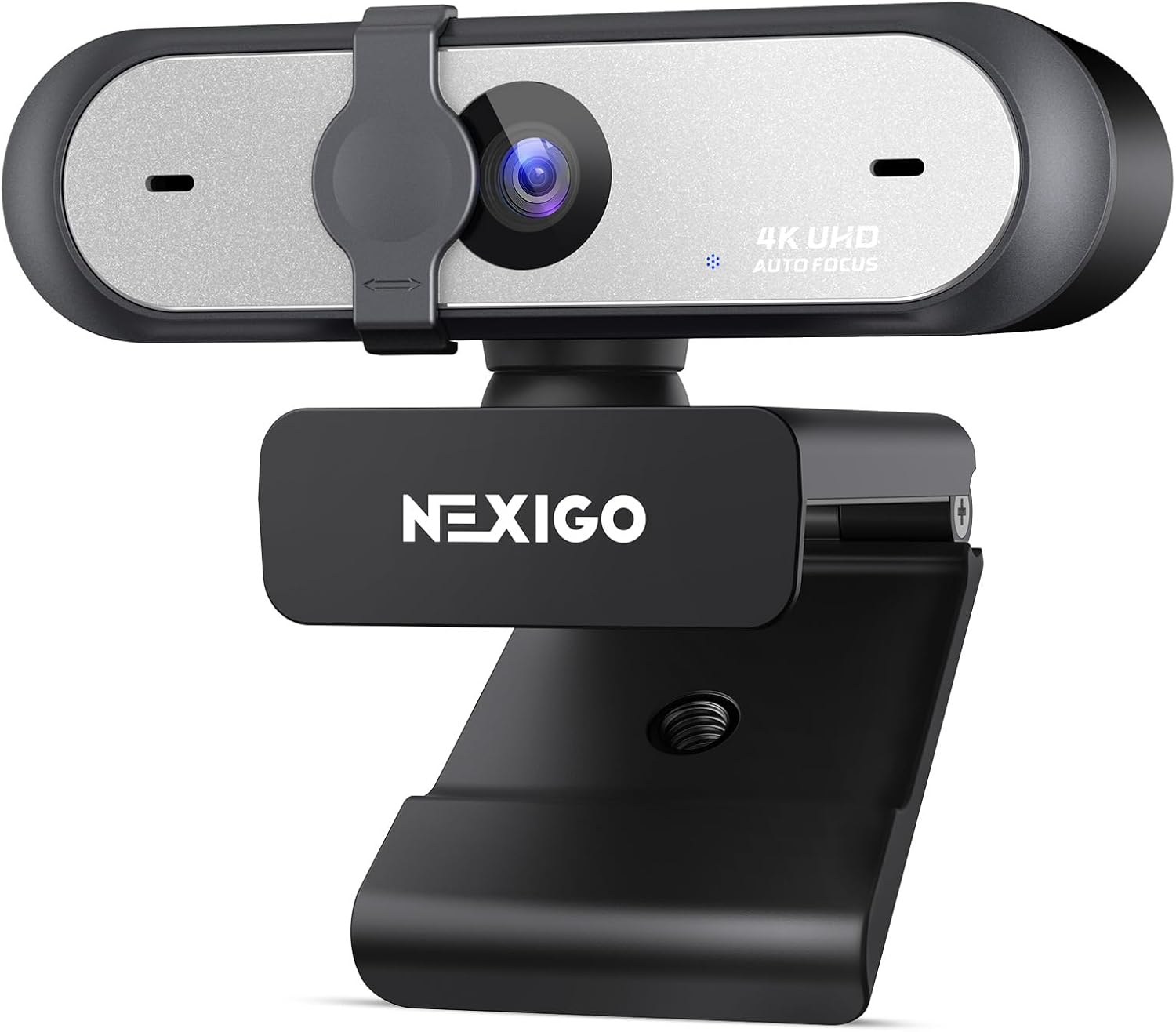
NexiGo N660P Pro 4K Webcam with Distortion-Free Lens, 1080p 60 fps Autofocus USB Streaming Camera, 3DNR, Noise-Canceling Mics & Privacy Cover, Web Cam for Gaming/Live Streaming/PC/Mac/Switch 2, Black
$50-$99This is a 4K 30fps or 1080p 60fps webcam with autofocus, dual noise-canceling mics, and a privacy cover, designed for streaming and video calls on various platforms.

NexiGo N660P Pro 4K Webcam with Distortion-Free Lens, 1080p 60 fps Autofocus USB Streaming Camera, 3DNR, Noise-Canceling Mics & Privacy Cover, Web Cam for Gaming/Live Streaming/PC/Mac/Switch 2, White
$50-$99This 4K webcam with 1080p 60 fps streaming, autofocus, and dual noise-canceling mics is for users needing high resolution and smooth video without external software.

4K Webcam with Autofocus & Tripod, Camera for PC Laptop with Dual Microphone, USB Computer Camera with Low Light Correction, Auto White Balance, Video Camera for Streaming, Meetings, Office, Zoom
$0-$49A 4K webcam with a CMOS sensor and f/2.8 aperture, designed for basic video calls and streaming on a budget.