
FUJIFILM X-T30 III Mirrorless Camera Body, with XC13-33mm Lens Kit, Charcoal Silver
Want the best price and purchase timing?
Our AI advisor analyzes real-time pricing across all channels to find you the best deal.
AI Verdict
This 1.87-pound mirrorless camera with a CMOS sensor and 20 Film Simulations is for photographers who prioritize a compact body and creative in-camera looks.
This camera is a situational fit for those who value a lightweight, retro-styled body with strong in-camera creative options like 20 Film Simulations and 6.2K video. Its 1.87-pound weight and compact design make it highly portable, but the lack of in-body image stabilization means you're dependent on lens-based stabilization for handheld shooting.
If you need more robust image stabilization for diverse shooting conditions, look for cameras with in-body image stabilization (IBIS).
Regret Score™
High RiskLower is better — measures purchase-regret risk from real buyer complaints, review credibility, and product maturity
Issues discovered after purchase
Critically weak dimension
Amazon rating vs actual quality
Chance this product isn't for you
Pros
- The camera weighs 1.87 pounds, making it easy to carry everywhere.
- It includes 20 built-in Film Simulations for varied creative styles.
- AI-powered subject detection autofocus helps keep subjects sharp.
- The camera supports 6.2K/30p and 4K/60p video recording.
- It features a 26.1MP APS-C X-Trans CMOS sensor for image capture.
- The internal X Processor 5 offers faster performance and improved subject tracking.
Cons
- The camera lacks in-body image stabilization (IBIS), requiring stabilized lenses for shake reduction.
- The electronic viewfinder is small, with 0.62x magnification.
- The LCD touchscreen only tilts up and down, without a vari-angle option.
- The front dial is easily jogged, potentially changing aperture or ISO unintentionally.
- The XC13-33mm kit lens does not have an aperture ring, requiring aperture adjustments via an electronic dial.
Dimension Scores
The 26.1MP APS-C X-Trans CMOS sensor and X Processor 5 deliver attractive JPEG color output and well-known image quality.
Equipped with AI-powered subject detection autofocus and the X Processor 5, it offers improved subject tracking and responsive performance.
It offers 6.2K/30p and 4K/60p video recording, providing flexibility for creative video work.
Weighing 1.87 pounds and featuring a remarkably compact body, it is described as the lightest and smallest in the X-T lineup.
Best For
- Street photography, due to its compact size and retro design.
- Travel photography, given its 1.87-pound weight and small form factor.
- Content creators focused on in-camera looks with 20 Film Simulations.
- Beginners looking for an intuitive camera with an Intelligent Auto mode.
Not Recommended For
- Photographers needing extensive low-light handheld stability without lens stabilization.
- Videographers requiring a vari-angle screen for self-recording or complex angles.
- Users with large hands who might find the compact body and button placement awkward.
Watch Out For
- The camera's tripod thread is positioned alongside the SD card slot, blocking access when mounted.
- Without in-body image stabilization, you must rely on optically stabilized lenses for shake reduction.
- The front dial can be easily bumped, inadvertently switching between aperture and ISO settings.
- The XC13-33mm kit lens requires you to 'turn the lens from home position' upon startup, which can be an annoying extra step.
- The small control dial at the back, near the thumb rest, can be accidentally nudged, shifting focus points.
Full Specifications
| ASIN | B0FWVBHRLV |
| Brand | Fujifilm |
| Batteries | 1 Nonstandard Battery batteries required. (included) |
| Model Name | X-T30 III |
| Item Weight | 1.87 pounds |
| Aspect Ratio | 4:3 |
| Manufacturer | Fujifilm |
| Optical Zoom | 2.5 x |
| Maximum Aperture | 3 f |
| Item model number | 16966957 |
| Product Dimensions | 6.7 x 6.6 x 5.5 inches |
| Image Stabilization | Optical |
| Compatible Mountings | Fujifilm X |
| Maximum Focal Length | 33 Millimeters |
| Supported File Format | JPEG |
| Photo Sensor Technology | CMOS |
What Buyers Say
Since this camera was first available in October 2025, widespread long-term user reviews are still emerging. Early professional hands-on reviews highlight it as a 'subtle update' to its predecessor, with internal upgrades like the X Processor 5 improving autofocus and video capabilities. It's frequently praised for its compact size, making it suitable for travel and street photography. The camera maintains Fujifilm's signature retro design and intuitive controls, appealing to those who appreciate a tactile shooting experience.
“I've been wanting to get my hands on a fujifilm camera for a long time and i think this is a great starter camera!”
Common Praise
- The camera's compact size and light weight make it easy to carry.
- Its stylish retro design and engaging analog controls are appreciated.
- The attractive JPEG color output is a recurring positive point.
- The improved AI-powered subject detection autofocus is noted for keeping subjects sharp.
- The intuitive controls and ease of use, even for beginners, are mentioned.
Common Complaints
- The absence of in-body image stabilization (IBIS) is a common concern.
- The viewfinder is considered small, and the screen only tilts, without full articulation.
- The front dial is prone to accidental adjustments, changing aperture or ISO.
- The XC13-33mm kit lens lacks an aperture ring, requiring electronic adjustment.
- The tripod thread position can block the SD card slot when mounted.
Ownership Tips
- You might find yourself needing to customize the camera's dials to prevent accidental setting changes, especially the rear joystick and front dial.
- The camera's compact size means larger lenses can feel awkward to handle, making it better suited for smaller primes or the included kit lens.
- Be aware of the 'turn the lens from home position' message upon startup if you're using the retractable kit lens, as it's an extra step before shooting.
- The single battery included means you'll likely want to invest in spares for extended shooting, as it charges via USB in-camera.
Frequently Asked Questions
Does the FUJIFILM X-T30 III have in-body image stabilization (IBIS)?
No, the X-T30 III does not feature in-body image stabilization. You will need to use lenses with optical image stabilization (OIS) to reduce camera shake.
What is the video capability of this camera?
The camera can record video at up to 6.2K resolution at 30 frames per second (30p) and 4K resolution at 60 frames per second (60p).
What kind of sensor does the X-T30 III use?
It uses a 26.1MP APS-C X-Trans CMOS sensor, which is known for its image quality in Fujifilm cameras.
Is the screen fully articulating for vlogging?
No, the 3-inch LCD touchscreen only tilts up by 90 degrees and down by 45 degrees; it does not flip out to face the front.
How many Film Simulations are included?
The camera comes with 20 built-in Film Simulations, allowing you to apply various film-like looks directly in-camera.
Buying Guide
When looking at a mirrorless camera like this, you're choosing a system that combines DSLR-like image quality with a more compact form factor. Think about how you'll use it: if you're always shooting handheld, optical image stabilization in your lenses becomes crucial since this body doesn't have it. Also, consider if a tilting screen is enough for your video needs, or if you require a screen that flips out completely.
CMOS Sensor
This is the camera's 'eye,' converting light into digital images. A larger sensor, like the APS-C in this camera, generally means better image quality, especially in lower light, and allows for shallower depth of field compared to smaller smartphone sensors.
Max Aperture (f/3)
Aperture controls how much light enters the lens and how much of your photo is in focus. A lower f-number (like f/3 or f/2) means a wider opening, letting in more light for brighter images and creating a blurrier background (bokeh) for portraits. The kit lens has a variable aperture, meaning it changes as you zoom.
Optical Stabilization
This feature, found in the lens, helps counteract camera shake, making your photos and videos sharper, especially in low light or when using longer focal lengths. Since the camera body lacks in-body stabilization, this lens feature is important for handheld shooting.
Film Simulations
These are Fujifilm's unique in-camera color profiles that mimic classic film stocks. Instead of just applying a filter, they adjust color science, tone, and grain, giving your photos a distinct look directly out of the camera, saving you editing time.
Alternatives
If this camera doesn't quite fit, look for models with in-body image stabilization for more versatile handheld shooting, or a fully articulating screen if you plan on vlogging or shooting from complex angles.
You Might Also Like

NexiGo N660P Pro 4K Webcam with Distortion-Free Lens, 1080p 60 fps Autofocus USB Streaming Camera, 3DNR, Noise-Canceling Mics & Privacy Cover, Web Cam for Gaming/Live Streaming/PC/Mac/Switch 2, Pink
$50-$99This is a 4K CMOS webcam with 3DNR and dual noise-canceling mics, designed for plug-and-play use across multiple platforms.
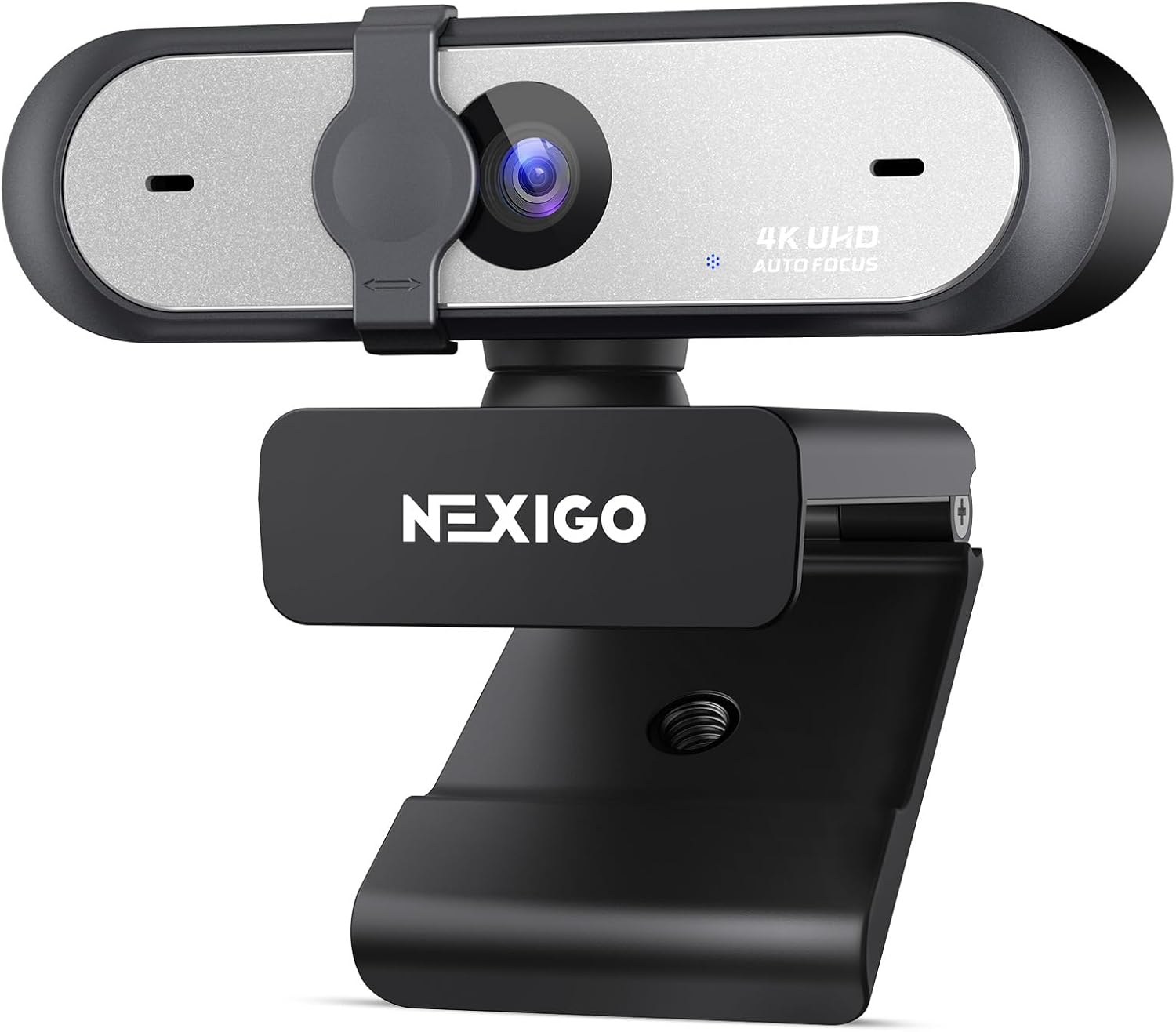
NexiGo N660P Pro 4K Webcam with Distortion-Free Lens, 1080p 60 fps Autofocus USB Streaming Camera, 3DNR, Noise-Canceling Mics & Privacy Cover, Web Cam for Gaming/Live Streaming/PC/Mac/Switch 2, Black
$50-$99This is a 4K 30fps or 1080p 60fps webcam with autofocus, dual noise-canceling mics, and a privacy cover, designed for streaming and video calls on various platforms.

NexiGo N660P Pro 4K Webcam with Distortion-Free Lens, 1080p 60 fps Autofocus USB Streaming Camera, 3DNR, Noise-Canceling Mics & Privacy Cover, Web Cam for Gaming/Live Streaming/PC/Mac/Switch 2, White
$50-$99This 4K webcam with 1080p 60 fps streaming, autofocus, and dual noise-canceling mics is for users needing high resolution and smooth video without external software.

4K Webcam with Autofocus & Tripod, Camera for PC Laptop with Dual Microphone, USB Computer Camera with Low Light Correction, Auto White Balance, Video Camera for Streaming, Meetings, Office, Zoom
$0-$49A 4K webcam with a CMOS sensor and f/2.8 aperture, designed for basic video calls and streaming on a budget.