
Canon PowerShot ELPH 360 HS A Silver
Want the best price and purchase timing?
Our AI advisor analyzes real-time pricing across all channels to find you the best deal.
AI Verdict
This is a re-released 20.2MP point-and-shoot with 12x optical zoom and a DIGIC 4+ processor, best for casual users needing pocketable reach over advanced features.
This camera is a re-release of a 2016 model, offering a 12x optical zoom and a 20.2MP 1/2.3-inch CMOS sensor in a pocketable form factor. It's a situational fit because while it provides optical zoom that many phones lack, its older DIGIC 4+ processor and limited video capabilities mean it won't outperform modern smartphones in all scenarios, especially in low light or for video.
If you need better low-light performance or more creative control, look for cameras with larger sensors (1-inch or APS-C) and wider maximum apertures.
Regret Score™
Very High RiskLower is better — measures purchase-regret risk from real buyer complaints, review credibility, and product maturity
Issues discovered after purchase
Critically weak dimension
Amazon rating vs actual quality
Chance this product isn't for you
Pros
- 12x optical zoom (25-300mm equivalent) provides significant reach for distant subjects.
- Optical Image Stabilizer helps reduce blur in photos and videos.
- Built-in Wi-Fi and NFC allow for direct image transfer to smartphones.
- 20.2 Megapixel CMOS sensor captures sharp images in well-lit conditions at base ISO.
- Compact and lightweight design makes it genuinely pocketable for everyday carry.
Cons
- Video recording is limited to 1080p at 30fps, with user feedback suggesting phone video is often superior.
- Image quality degrades noticeably above ISO 800, with noise becoming prominent by ISO 1600.
- Limited manual control options, requiring menu navigation for basic settings like exposure adjustment.
- The DIGIC 4+ Image Processor is an older generation, impacting overall performance compared to newer cameras.
- Battery life is relatively short, rated at approximately 180 shots.
Dimension Scores
The 20.2 Megapixel CMOS sensor produces sharp images in good light, but quality drops significantly above ISO 800 due to the small 1/2.3-inch sensor.
While not explicitly detailed, the DIGIC 4+ processor and point-and-shoot nature suggest competent but not exceptionally fast autofocus, suitable for casual use.
Limited to 1080p at 30fps, with user reviews indicating that many modern smartphones offer superior video quality and features.
Its slim design and light weight make it genuinely pocketable, a key selling point for a camera with 12x optical zoom.
Best For
- Casual everyday photography where a phone's zoom isn't enough.
- Travelers prioritizing a compact camera with 12x optical zoom for varied shots.
- Beginners who want a simple point-and-shoot experience without complex settings.
- Capturing spontaneous moments with easy sharing to a smartphone.
Not Recommended For
- Users needing extensive manual control or RAW image capture.
- Serious videographers or those expecting high-quality 4K video.
- Photography in consistently dim lighting conditions without flash.
- Anyone expecting modern computational photography features found in current smartphones.
Watch Out For
- Initial Wi-Fi connection setup can be finicky, and transfer speeds are slow.
- The maximum aperture of f/3.6 at wide angle combined with the small 1/2.3-inch sensor results in minimal background blur.
- The camera's video capabilities are considered subpar, with many modern phones offering better quality and features.
- Basic settings like exposure compensation require navigating through menus, which can be cumbersome.
Full Specifications
| Brand | Canon |
| Model Name | Canon PowerShot ELPH 360 HS A Silver |
| Aspect Ratio | 16:9 |
| Optical Zoom | 12 x |
| Maximum Aperture | 2.8 f |
| Image Stabilization | Optical |
| Compatible Mountings | Canon RF |
| Supported File Format | JPEG |
| Photo Sensor Technology | CMOS |
| Maximum Webcam Image Resolution | 20.2 MP |
What Buyers Say
This Canon PowerShot ELPH 360 HS A is essentially a re-release of a camera from 2016, which means you're getting older tech, but in a very compact package with a decent optical zoom. Users frequently mention its pocketability and the convenience of its 12x optical zoom for capturing distant subjects that a phone can't reach. However, the video quality is often cited as a weakness, with many suggesting modern phones do a better job. The Wi-Fi transfer is a plus for quick sharing, but don't expect blazing speeds or a seamless setup every time.
“Honestly, it's tiny and the zoom is cool, but my phone takes better videos and the battery dies so fast, it's annoying when I'm out all day.”
Common Praise
- The 12x optical zoom is genuinely useful for getting closer to subjects.
- Its small size and light weight make it easy to carry everywhere.
- Images are sharp and colors are pleasing in bright conditions.
- Built-in Wi-Fi and NFC simplify transferring photos to a smartphone for sharing.
- The camera is easy to use for beginners, especially in auto mode.
Common Complaints
- Video quality is not competitive with modern smartphones, especially at 1080p 30fps.
- Low-light performance is weak, with noticeable noise above ISO 800.
- Limited manual controls mean less creative flexibility for advanced users.
- The battery life is short, often requiring frequent recharging or spare batteries.
- Wi-Fi setup can be frustrating, and transfer speeds are slow.
Ownership Tips
- You'll probably end up using your phone for most videos because this camera's video just isn't up to par.
- Keep a spare battery charged, because 180 shots goes by quicker than you think.
- Don't expect to get artsy with background blur; the small sensor and aperture just won't do it.
- The Wi-Fi is handy for quick social media posts, but it's not a fast way to offload a whole day's worth of photos.
- It's a camera you grab when you specifically need that 12x optical zoom, not as your primary do-everything shooter.
Frequently Asked Questions
Does this camera shoot 4K video?
No, the Canon PowerShot ELPH 360 HS A records video at a maximum resolution of 1080p Full HD at 30 frames per second.
How well does it perform in low light?
Image quality degrades noticeably above ISO 800, and noise becomes prominent by ISO 1600. While it has a CMOS sensor, its small size and older processor limit its low-light capabilities compared to newer cameras or smartphones.
Can I transfer photos to my phone wirelessly?
Yes, it has built-in Wi-Fi and NFC, allowing you to transfer images and videos to your smartphone using the Canon Camera Connect app. Users report the initial setup can be a bit finicky and transfer speeds are not fast.
Is the screen a touchscreen?
No, the 3.0-inch LCD is fixed and does not have touchscreen functionality.
How long does the battery last?
The battery life is rated for approximately 180 shots on a single charge.
Buying Guide
When looking at a point-and-shoot like this, you need to decide if you prioritize optical zoom and pocketability over advanced image quality or video features. This camera gives you a physical lens that extends to get closer to subjects without losing detail, something most phones can't do well. However, because it's an older design, don't expect it to compete with the computational photography or video capabilities of your current smartphone.
12x Optical Zoom
This means the lens physically moves to magnify your subject 12 times, letting you get close-up shots of things far away, like a bird in a tree, without the blurry, pixelated mess you get from a phone's digital zoom.
20.2 Megapixel CMOS sensor (1/2.3-inch)
The 20.2 megapixels give you enough detail for prints, but the '1/2.3-inch' part is key – it's a small sensor. Think of it like a smaller bucket catching light; it struggles more in dim conditions and won't give you that blurry background 'bokeh' effect like cameras with larger sensors.
DIGIC 4+ Image Processor
This is the camera's 'brain.' A DIGIC 4+ is an older processor, meaning the camera won't be as fast at processing images, especially in burst mode, or as smart with things like noise reduction in low light, compared to cameras with newer processors.
Alternatives
If you need better low-light performance or more control over depth of field, look for cameras with 1-inch or larger sensors and wider maximum apertures. For superior video, consider models that offer 4K recording and more advanced stabilization.
You Might Also Like

NexiGo N660P Pro 4K Webcam with Distortion-Free Lens, 1080p 60 fps Autofocus USB Streaming Camera, 3DNR, Noise-Canceling Mics & Privacy Cover, Web Cam for Gaming/Live Streaming/PC/Mac/Switch 2, Pink
$50-$99This is a 4K CMOS webcam with 3DNR and dual noise-canceling mics, designed for plug-and-play use across multiple platforms.
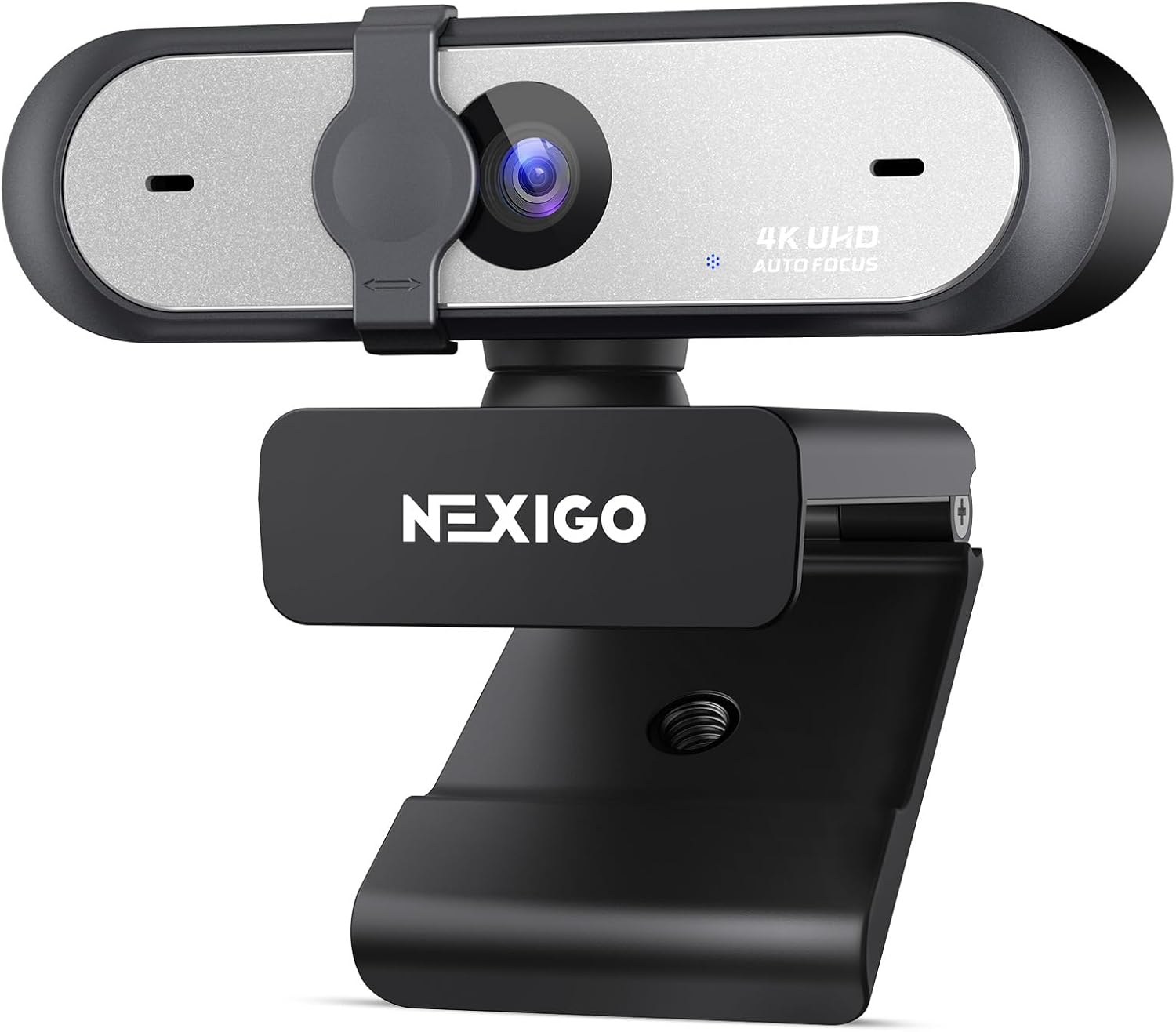
NexiGo N660P Pro 4K Webcam with Distortion-Free Lens, 1080p 60 fps Autofocus USB Streaming Camera, 3DNR, Noise-Canceling Mics & Privacy Cover, Web Cam for Gaming/Live Streaming/PC/Mac/Switch 2, Black
$50-$99This is a 4K 30fps or 1080p 60fps webcam with autofocus, dual noise-canceling mics, and a privacy cover, designed for streaming and video calls on various platforms.

NexiGo N660P Pro 4K Webcam with Distortion-Free Lens, 1080p 60 fps Autofocus USB Streaming Camera, 3DNR, Noise-Canceling Mics & Privacy Cover, Web Cam for Gaming/Live Streaming/PC/Mac/Switch 2, White
$50-$99This 4K webcam with 1080p 60 fps streaming, autofocus, and dual noise-canceling mics is for users needing high resolution and smooth video without external software.

4K Webcam with Autofocus & Tripod, Camera for PC Laptop with Dual Microphone, USB Computer Camera with Low Light Correction, Auto White Balance, Video Camera for Streaming, Meetings, Office, Zoom
$0-$49A 4K webcam with a CMOS sensor and f/2.8 aperture, designed for basic video calls and streaming on a budget.