
Arducam 4K 8MP Autofocus USB Camera Module with HDR, 1080P USB 2.0 Webcam, Lightburn Camera with Multiple preset AI Resolutions for Computer, Laptop, Raspberry Pi, Jetson Nano
Want the best price and purchase timing?
Our AI advisor analyzes real-time pricing across all channels to find you the best deal.
AI Verdict
This is an 8MP 4K CMOS USB 2.0 camera module with f/1.8 autofocus, designed for projects like Lightburn, Raspberry Pi, and Jetson Nano.
This camera is a strong contender if your project specifically needs 4K resolution, HDR, and the flexibility of a module for platforms like Raspberry Pi or Jetson Nano. The 8MP CMOS sensor and f/1.8 aperture are solid for image quality, but the USB 2.0 interface and non-continuous autofocus mean it's not a 'set it and forget it' solution for all scenarios.
If you need smoother video at 4K or truly continuous autofocus for highly dynamic scenes, look for modules with USB 3.0 and explicitly stated continuous autofocus capabilities.
Regret Score™
High RiskLower is better — measures purchase-regret risk from real buyer complaints, review credibility, and product maturity
Issues discovered after purchase
Critically weak dimension
Amazon rating vs actual quality
Chance this product isn't for you
Pros
- Captures 4K resolution video with 8 megapixels, offering exceptional detail and color accuracy for professional imaging and visual inspections.
- Features HDR technology, maintaining high dynamic range performance across all resolutions for consistent image quality in varied lighting.
- Equipped with a precision autofocus lens that automatically adjusts focus for sharp clarity, even with moving subjects.
- Plug-and-play compatibility with Windows, Linux, Android, and macOS, requiring no additional drivers.
- Offers multiple preset AI image resolutions for machine vision, streamlining model training and deployment by eliminating manual cropping.
Cons
- The autofocus behavior is not continuously active; it primarily grabs focus when the camera is initially opened or commanded to.
- Uses a USB 2.0 interface, which might limit maximum frame rates at 4K resolution compared to USB 3.0 cameras.
- The video format is specified as MPEG, which can be less efficient for storage and processing than more modern codecs like H.264 or H.265.
- With a weight of 2.26 ounces, it's not the lightest module, which could be a consideration for very small, weight-sensitive projects.
Dimension Scores
The 8MP 4K CMOS sensor with f/1.8 aperture and HDR technology delivers exceptional detail and color accuracy.
While it has autofocus, user feedback indicates it's not a continuous system, requiring commands to re-focus rather than constant tracking.
It supports 4K video output with HDR, but the USB 2.0 interface and MPEG format might limit frame rates and efficiency compared to newer standards.
Weighing 2.26 ounces and being a module, it's compact and suitable for integration into various portable or embedded projects.
Best For
- Laser engravers needing a Lightburn camera for precise visual alignment and monitoring.
- Developers integrating cameras with Raspberry Pi or Jetson Nano for machine vision projects.
- Industrial imaging or surveillance applications requiring 4K resolution and HDR in challenging lighting.
- 3D printer monitoring where a compact, autofocus camera is beneficial for observing print progress.
Not Recommended For
- Users needing continuous, real-time autofocus tracking for fast-moving, unpredictable subjects.
- Anyone expecting a high-end webcam experience with integrated microphones or advanced software features (this is a module).
- Applications where a very wide field of view (beyond 75° diagonal) is a critical requirement.
Watch Out For
- The autofocus isn't truly continuous; it often requires a command to re-focus, which can be a hassle for dynamic scenes.
- Despite being 4K, the USB 2.0 connection might bottleneck higher frame rates, especially at maximum resolution, leading to choppier video than expected.
- The product is a module, meaning it lacks a protective casing or mounting hardware, which you'll need to source separately for most applications.
Full Specifications
| ASIN | B0FLX4T1BY |
| Brand | Arducam |
| Color | Auto Focus |
| Item Weight | 2.26 ounces |
| Manufacturer | Arducam |
| Special Feature | 4K Imaging, AI Resolution, HDR, Precision Autofocus |
| Maximum Aperture | 1.8 f |
| Flash Memory Type | Internal flash memory |
| Item model number | B029202 |
| Package Dimensions | 3.46 x 3.03 x 1.3 inches |
| Maximum Focal Length | 3.95 Millimeters |
| Video Capture Format | MPEG |
| Connectivity Technology | USB |
| Photo Sensor Technology | CMOS |
| Video Capture Resolution | 4K |
What Buyers Say
User feedback for this specific ASIN is limited to 7 reviews, making it hard to pinpoint widespread praise or complaints. However, general discussions around Arducam autofocus cameras suggest that while the image quality, especially with 4K and HDR, is often appreciated, the autofocus mechanism isn't always continuously active, requiring manual triggers for refocusing. The plug-and-play nature and compatibility with various single-board computers are frequently highlighted as benefits for project-based use.
“Okay, so the 4K picture is actually pretty clear, like, way better than I thought for the price, but seriously, the autofocus needs a kick in the pants sometimes, it doesn't just *stay* focused, you gotta tell it to. Still, for my laser engraver, it's doing the job.”
Common Praise
- Delivers sharp 4K image quality with good detail.
- HDR capability works well in challenging lighting conditions.
- Easy plug-and-play setup with no drivers needed across multiple OS.
- Compact size makes it suitable for embedded projects.
- Useful for Lightburn and Raspberry Pi applications.
Common Complaints
- Autofocus isn't continuous; it needs to be triggered to re-focus.
- USB 2.0 might be a bottleneck for high frame rates at 4K.
- Lack of a built-in enclosure means it's exposed for project use.
- MPEG video format can be less efficient than other codecs.
Ownership Tips
- You'll probably need to write a small script or use a specific command to trigger autofocus if your subject moves.
- The metal casing feels durable, but you'll still want to design a proper mount for it in your project.
- Expect to experiment with different software settings to get the best frame rates at 4K over USB 2.0.
- The 'AI Resolutions' feature is more about specific output formats for machine vision libraries than a 'smart' camera feature for general use.
Frequently Asked Questions
Does this camera require special drivers?
No, it's a plug-and-play USB camera module that works with native UVC drivers on Windows, Linux, Android, and macOS, so no extra drivers are needed.
Can I use this with a Raspberry Pi?
Yes, this camera module is designed for compatibility with platforms like the Raspberry Pi, Jetson Nano, and other computer systems.
How does the autofocus work?
It has a precision autofocus lens that automatically adjusts focus to maintain clarity. However, user reports suggest it primarily focuses when the camera is opened or commanded to, rather than continuously tracking.
What is 'AI Resolution' for?
The multiple preset AI image resolutions are designed for machine vision applications, allowing you to train and deploy models directly without manual image cropping.
Does it support HDR?
Yes, this upgraded model includes High Dynamic Range (HDR) technology, which helps capture details in both bright and dark areas, and it maintains HDR performance across all resolutions.
Buying Guide
When you're looking at a camera module like this, you're not buying a ready-to-go webcam. You're getting a component for a project. You need to consider how you'll power it, mount it, and integrate its software with your system. The 4K resolution and HDR are great, but understand that 'autofocus' here might not mean the same thing as on your phone camera.
4K 8MP Resolution
This means the camera captures images and video with 3840x2160 pixels, giving you a lot of detail. Think of it like watching a super-sharp TV compared to an older, blurrier one – more pixels mean you can see finer lines and textures.
Autofocus Lens
This lens can automatically adjust to make sure your subject is sharp, whether it's close up or further away. It's like your eyes naturally adjusting focus, so you don't have to manually twist a ring to get a clear picture.
HDR (High Dynamic Range)
HDR helps the camera capture detail in both the brightest and darkest parts of an image simultaneously. Imagine taking a picture of a bright window with a dark room – without HDR, either the window is blown out or the room is too dark. With HDR, you see more detail in both areas, closer to what your eyes perceive.
USB 2.0 Interface
This is how the camera connects to your computer or device. USB 2.0 is an older standard, which means it can transfer data slower than USB 3.0. For 4K video, this might mean lower frame rates, making the video look less smooth, especially if there's a lot of motion.
Alternatives
If you need higher frame rates at 4K, look for cameras with a USB 3.0 interface. For truly continuous autofocus, search for modules explicitly stating 'continuous autofocus tracking' or 'phase-detection autofocus'.
You Might Also Like

NexiGo N660P Pro 4K Webcam with Distortion-Free Lens, 1080p 60 fps Autofocus USB Streaming Camera, 3DNR, Noise-Canceling Mics & Privacy Cover, Web Cam for Gaming/Live Streaming/PC/Mac/Switch 2, Pink
$50-$99This is a 4K CMOS webcam with 3DNR and dual noise-canceling mics, designed for plug-and-play use across multiple platforms.
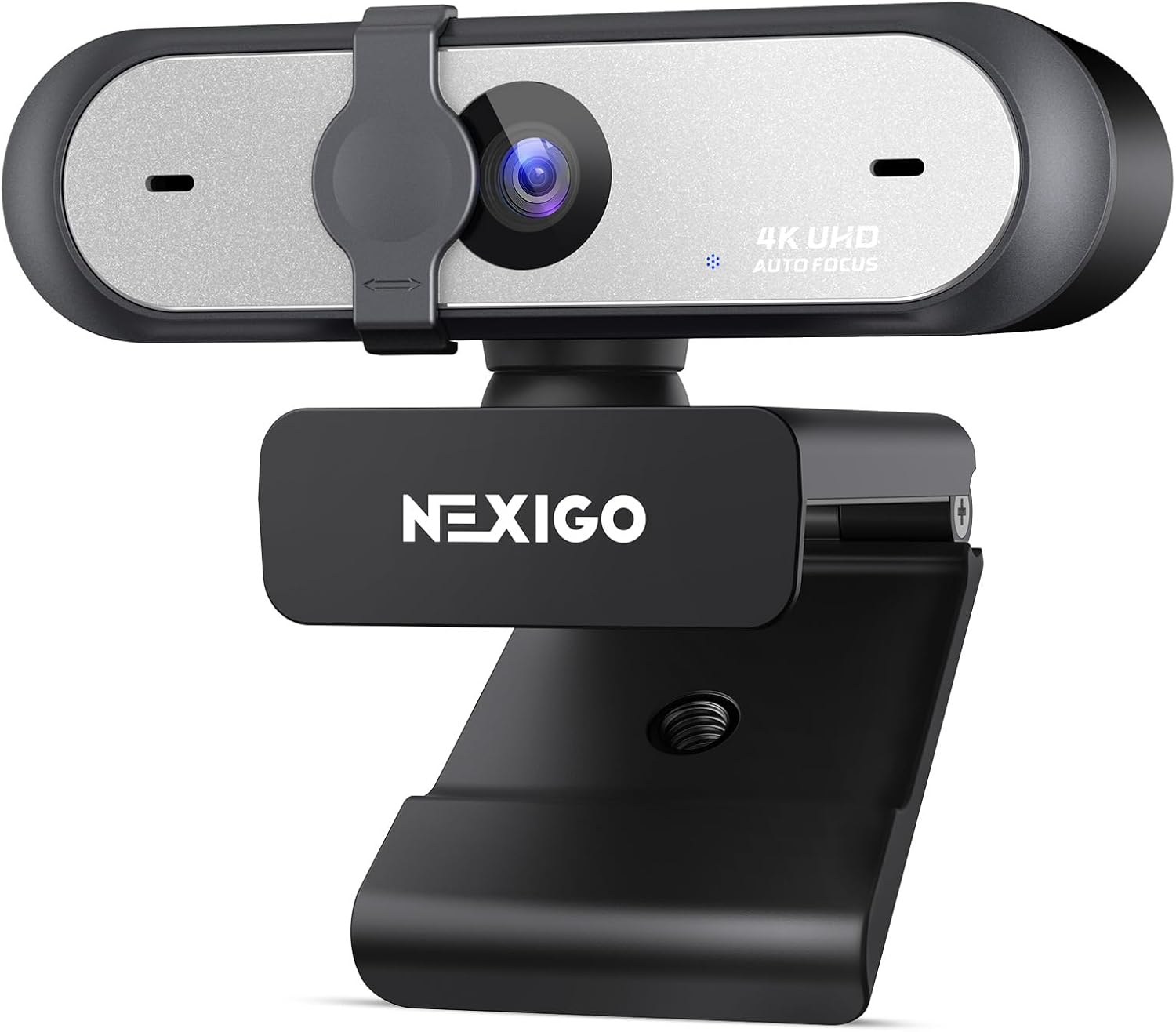
NexiGo N660P Pro 4K Webcam with Distortion-Free Lens, 1080p 60 fps Autofocus USB Streaming Camera, 3DNR, Noise-Canceling Mics & Privacy Cover, Web Cam for Gaming/Live Streaming/PC/Mac/Switch 2, Black
$50-$99This is a 4K 30fps or 1080p 60fps webcam with autofocus, dual noise-canceling mics, and a privacy cover, designed for streaming and video calls on various platforms.

NexiGo N660P Pro 4K Webcam with Distortion-Free Lens, 1080p 60 fps Autofocus USB Streaming Camera, 3DNR, Noise-Canceling Mics & Privacy Cover, Web Cam for Gaming/Live Streaming/PC/Mac/Switch 2, White
$50-$99This 4K webcam with 1080p 60 fps streaming, autofocus, and dual noise-canceling mics is for users needing high resolution and smooth video without external software.

4K Webcam with Autofocus & Tripod, Camera for PC Laptop with Dual Microphone, USB Computer Camera with Low Light Correction, Auto White Balance, Video Camera for Streaming, Meetings, Office, Zoom
$0-$49A 4K webcam with a CMOS sensor and f/2.8 aperture, designed for basic video calls and streaming on a budget.