
Sony Alpha ZV-E10 - APS-C Interchangeable Lens Mirrorless Vlog Camera Kit - Black, ZVE10KB
Want the best price and purchase timing?
Our AI advisor analyzes real-time pricing across all channels to find you the best deal.
AI Verdict
This is a 24.2MP APS-C mirrorless camera with 4K video and a flip-out screen, built for content creators prioritizing video.
This camera is a strong contender for vloggers and content creators due to its 24.2MP APS-C sensor, 4K video capabilities, and vari-angle LCD. However, the absence of a viewfinder and in-body image stabilization, coupled with significant rolling shutter in 4K, means it's not a universal fit for all types of photography or videography.
If you need better stabilization for handheld shooting or less rolling shutter for action, look for cameras with in-body image stabilization (IBIS) and faster sensor readout speeds.
Regret Score™
Medium RiskLower is better — measures purchase-regret risk from real buyer complaints, review credibility, and product maturity
Issues discovered after purchase
Critically weak dimension
Amazon rating vs actual quality
Chance this product isn't for you
Pros
- The 24.2MP APS-C Exmor CMOS Sensor captures detailed RAW images with a wide dynamic range.
- Its autofocus system excels at tracking faces and eyes, which is crucial for self-recording.
- The flip-out vari-angle LCD screen allows for easy self-monitoring during vlogging and vertical shooting.
- Records 4K video oversampled from 6K with full pixel readout, producing sharp footage.
- The E-mount interchangeable lens system provides a broad selection of lenses for different creative needs.
- Weighing 1.55 pounds, it's compact and easy to carry for extended shooting sessions.
Cons
- Lacks a built-in electronic viewfinder, making photography less intuitive for some users.
- Exhibits significant rolling shutter in 4K video, causing distortion with quick movements.
- Does not feature in-body image stabilization (IBIS), relying on lens-based optical stabilization or electronic stabilization that crops footage.
- The 4K 30fps video mode applies a 1.2x crop, narrowing the field of view for wide-angle shots.
- Video recording is limited to 8-bit color depth, which offers less flexibility for color grading compared to 10-bit.
Dimension Scores
The 24.2MP APS-C Exmor CMOS Sensor produces detailed RAW images with good dynamic range.
Features an autofocus system that accurately tracks faces and eyes in video, which is above average for its category.
Shoots 4K video oversampled from 6K and 1080p at 120fps, but suffers from significant rolling shutter and lacks in-body image stabilization.
Weighs 1.55 pounds and has a compact design, making it easy to carry for extended periods.
Best For
- Beginner videographers and vloggers needing an interchangeable lens system.
- Content creators who frequently record themselves and need a flip-out screen.
- Users who prioritize compact size and light weight for travel or everyday carry.
Not Recommended For
- Photographers who rely on an electronic viewfinder for composing shots.
- Action videographers or those frequently shooting fast-moving subjects due to pronounced rolling shutter.
- Users requiring extensive in-body image stabilization for handheld video without lens stabilization.
Watch Out For
- The camera can overheat when continuously recording 4K video, especially in warm environments.
- The SD card slot is located inside the battery compartment, making card swaps inconvenient.
- The zoom rocker on the camera body only functions with a limited selection of power zoom lenses, reducing its utility.
- The included 16-50mm kit lens has reported issues with heavy distortion, focus breathing, and a loud motor.
- Battery life can be short for extended video recording, often requiring multiple spare batteries for a full day's shoot.
Full Specifications
| ASIN | B0FLSPG85G |
| Batteries | 1 Lithium Ion batteries required. (included) |
| Item Weight | 1.55 pounds |
| Aspect Ratio | 1:1, 3:2, 4:3 |
| Manufacturer | Sony |
| Optical Zoom | 3 x |
| Maximum Aperture | 3.5 f |
| Item model number | ZVE10KB |
| Product Dimensions | 1.8 x 4.5 x 2.5 inches |
| Image Stabilization | Dual, Optical |
| Compatible Mountings | Sony E |
| Expanded ISO Minimum | 50 |
| Maximum Focal Length | 50 Millimeters |
| Metering Description | 1200-zone evaluative metering |
| Supported File Format | JPEG, RAW |
| Photo Sensor Technology | CMOS |
What Buyers Say
Many users point out that despite being marketed as a vlogging camera, the ZV-E10 performs surprisingly well for photography, especially when shooting RAW. The flip-out screen is consistently praised for self-recording, and the autofocus system is frequently highlighted for its accuracy in tracking faces. However, the lack of a viewfinder is a common point of contention for photographers, and the pronounced rolling shutter in 4K video is a recurring complaint for videographers. The camera's compact size and light weight make it a favorite for portability, but the small grip can be uncomfortable for some.
“Look, I needed something for my YouTube channel that wasn't my phone, and this little Sony does the trick for talking head stuff, but man, that rolling shutter in 4K is a headache if I move too fast, and I really miss having a viewfinder for photos.”
Common Praise
- The 24.2MP APS-C sensor captures sharp images with plenty of fine detail.
- Autofocus system tracks faces and eyes with precision during video recording.
- The vari-angle LCD screen is essential for self-shooting and vlogging.
- 4K video quality, oversampled from 6K, looks crisp and detailed.
- Its lightweight build (1.55 pounds) makes it comfortable to carry all day.
- The ability to change lenses opens up many creative possibilities.
Common Complaints
- No electronic viewfinder, which is a drawback for traditional photography.
- Significant rolling shutter effect in 4K video, causing 'jello' artifacts with movement.
- Absence of in-body image stabilization (IBIS) means shaky handheld footage without an optically stabilized lens.
- The small grip can feel awkward or uncomfortable for users with larger hands.
- Overheating issues reported during extended 4K recording sessions.
- The SD card slot being inside the battery compartment is a pain for quick card changes.
Ownership Tips
- You'll definitely want to invest in extra batteries if you plan on shooting video for more than an hour or two.
- The electronic stabilization crops your footage, so if you need wide shots, rely on an optically stabilized wide-angle lens.
- The kit lens is okay to start, but you'll quickly want to upgrade to a prime lens for better image quality and low-light performance.
- The camera's compact size is awesome for travel, but the grip can feel too small if you're using heavier lenses.
- Learning to work around the rolling shutter in 4K by minimizing camera movement is key for clean video.
Frequently Asked Questions
Does the Sony ZV-E10 have a viewfinder?
No, the Sony ZV-E10 does not include a built-in electronic viewfinder. It relies solely on the flip-out LCD screen for framing shots.
Can I use other lenses with the ZV-E10?
Yes, the ZV-E10 uses Sony's E-mount, which means you can interchange the kit lens with a wide variety of E-mount lenses from Sony and third-party manufacturers.
Is the ZV-E10 good for photography?
While primarily marketed for vlogging, its 24.2MP APS-C sensor delivers detailed RAW photos with good dynamic range, performing comparably to other APS-C cameras for stills.
Does the ZV-E10 have image stabilization?
The ZV-E10 does not have in-body image stabilization (IBIS). It relies on optical stabilization found in some lenses (OSS) or electronic stabilization, which can introduce a crop to your footage.
What is the battery life like for video recording?
Battery life can be limited for continuous video recording, especially 4K. Many users recommend carrying extra batteries for longer shoots.
Buying Guide
When you're looking at a camera like the ZV-E10, you need to think about what you'll actually be shooting. If you're mostly recording yourself talking to the camera, the flip-out screen and autofocus are huge. But if you're planning on running around shooting action or taking a lot of still photos, some of its limitations, like the lack of a viewfinder or in-body stabilization, might become frustrating. It's a tool built with a specific job in mind, so make sure that job aligns with yours.
APS-C Sensor
This is the size of the image sensor inside the camera. An APS-C sensor is larger than what's in your phone, capturing more light and detail, which results in clearer images and better performance in dim lighting. It also helps create that blurry background effect (bokeh) that makes your subject stand out.
4K Movie Oversampled from 6K
This means the camera captures more image data than needed for 4K (6K worth) and then shrinks it down to a 4K resolution. This process results in sharper, more detailed 4K video because it's using more information to create the final image, similar to how a high-resolution scan of a photo looks better than a lower-res one.
Interchangeable Lens System (E-mount)
Unlike cameras with fixed lenses, this camera lets you swap out lenses. This is a big deal because different lenses are designed for different things – a wide-angle lens for landscapes, a telephoto for distant subjects, or a fast prime lens for portraits with creamy bokeh. It gives you a lot of creative control and lets you adapt the camera to various shooting situations.
Alternatives
If you need a viewfinder for photography or stronger in-body image stabilization for handheld video, look for cameras with an EVF and IBIS. For better video color grading, consider models offering 10-bit internal recording.
You Might Also Like

NexiGo N660P Pro 4K Webcam with Distortion-Free Lens, 1080p 60 fps Autofocus USB Streaming Camera, 3DNR, Noise-Canceling Mics & Privacy Cover, Web Cam for Gaming/Live Streaming/PC/Mac/Switch 2, Pink
$50-$99This is a 4K CMOS webcam with 3DNR and dual noise-canceling mics, designed for plug-and-play use across multiple platforms.
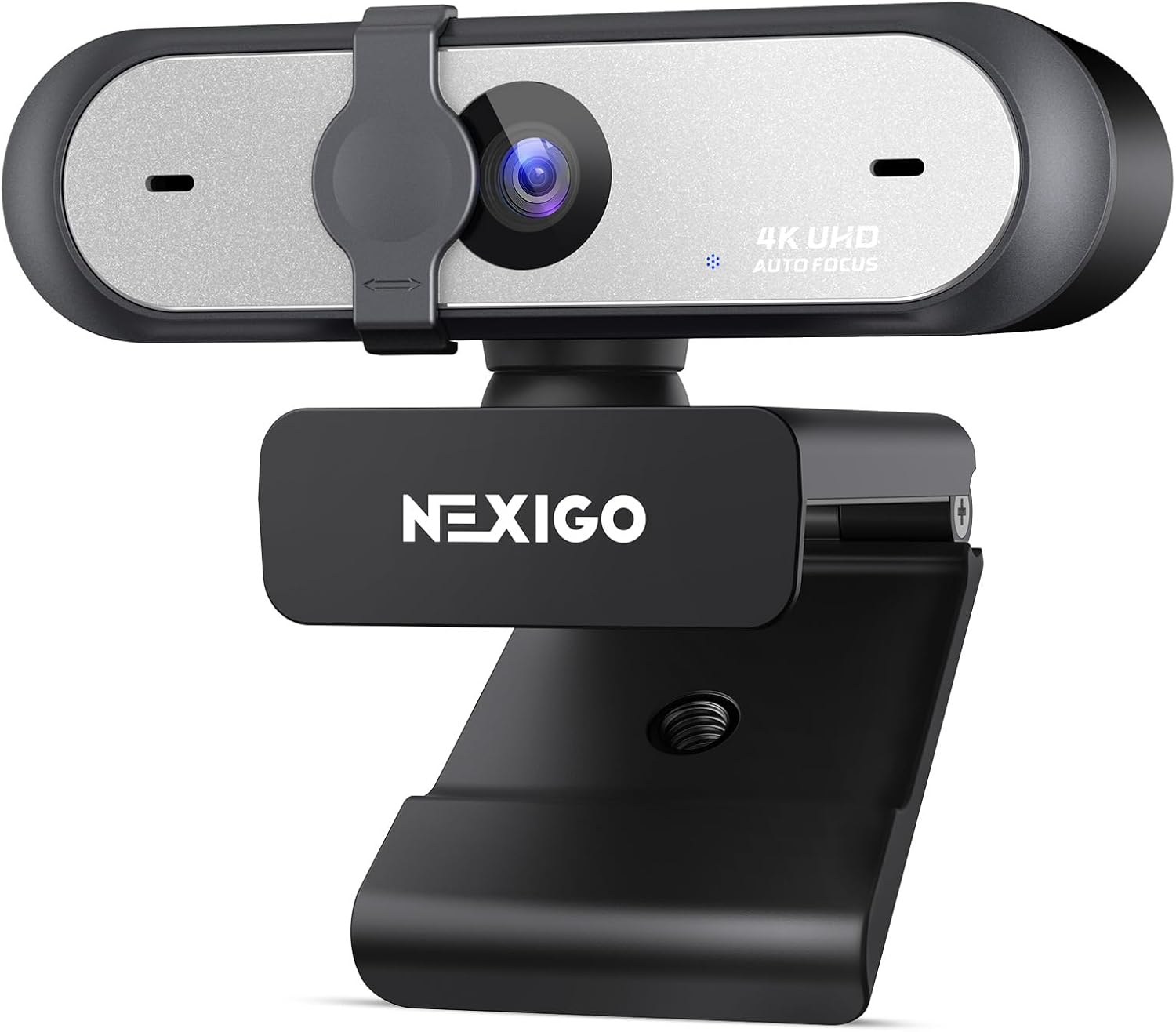
NexiGo N660P Pro 4K Webcam with Distortion-Free Lens, 1080p 60 fps Autofocus USB Streaming Camera, 3DNR, Noise-Canceling Mics & Privacy Cover, Web Cam for Gaming/Live Streaming/PC/Mac/Switch 2, Black
$50-$99This is a 4K 30fps or 1080p 60fps webcam with autofocus, dual noise-canceling mics, and a privacy cover, designed for streaming and video calls on various platforms.

NexiGo N660P Pro 4K Webcam with Distortion-Free Lens, 1080p 60 fps Autofocus USB Streaming Camera, 3DNR, Noise-Canceling Mics & Privacy Cover, Web Cam for Gaming/Live Streaming/PC/Mac/Switch 2, White
$50-$99This 4K webcam with 1080p 60 fps streaming, autofocus, and dual noise-canceling mics is for users needing high resolution and smooth video without external software.

4K Webcam with Autofocus & Tripod, Camera for PC Laptop with Dual Microphone, USB Computer Camera with Low Light Correction, Auto White Balance, Video Camera for Streaming, Meetings, Office, Zoom
$0-$49A 4K webcam with a CMOS sensor and f/2.8 aperture, designed for basic video calls and streaming on a budget.