
Canon EOS R50 V Mirrorless Camera with RF-S14-30mm F4-6.3 is STM PZ Lens, APS-C Sensor, 24.2 Megapixels, Ultra-Wide Zoom, Fast Autofocus, Vlogging and Live Streaming Kit for Content Creators, Black
Want the best price and purchase timing?
Our AI advisor analyzes real-time pricing across all channels to find you the best deal.
AI Verdict
This 1.2-pound APS-C mirrorless camera with a 24.2 MP sensor and 4K video is built for interchangeable lens video shooting and content creation.
This camera is purpose-built for video-first content creators, offering advanced video features like Canon Log 3 and a vertical video mount in a lightweight 1.2-pound body. Its interchangeable lens system and power zoom kit lens cater directly to dynamic video production.
If you need rock-solid handheld footage without a gimbal, look for cameras with in-body image stabilization (IBIS).
Regret Score™
Low RiskLower is better — measures purchase-regret risk from real buyer complaints, review credibility, and product maturity
Issues discovered after purchase
Critically weak dimension
Amazon rating vs actual quality
Chance this product isn't for you
Pros
- Interchangeable lens video shooting with the first EOS V series camera body.
- RF-S14-30mm F4-6.3 IS STM PZ lens provides power zooming for smooth video and ultra-wide to standard zoom (22-48mm equivalent).
- 24.2 MP APS-C CMOS Image Sensor with DIGIC X Image Processor captures detailed stills and video.
- Records up to 4K Crop 59.94p, 4K 29.97p full-width, and Full-HD full-width 119.8p.
- Features a Vertical Video tripod mount and Front Record button, designed for creators.
- Includes advanced video features like Canon Log 3, HLG, PQ, 709 Recording, False Color, and Zebras.
- Dual Pixel CMOS AF II offers fast autofocus with subject detection for people, animals, and vehicles.
- Multi-function accessory shoe supports LPCM 24bit/4ch audio.
- Built-in 2.4Ghz and 5Ghz Wi-Fi with four live streaming modes for direct connection.
Cons
- Lacks in-body image stabilization (IBIS), relying on optical lens stabilization.
- 4K 59.94p video recording has a significant crop, estimated around 1.5x.
- Photo settings are primarily menu-based due to a video-focused mode dial.
- Uses an LP-17 battery, which may require extra batteries for extended shooting.
- Does not include an electronic viewfinder.
- Some users report 'tiny controls' which can be difficult to manage.
Dimension Scores
The 24.2 MP APS-C CMOS sensor with DIGIC X processor delivers detailed 4K video and stills, with advanced color profiles like Canon Log 3.
Dual Pixel CMOS AF II with subject detection for people, animals, and vehicles provides fast and accurate focusing.
With 4K 59.94p recording, Canon Log 3, a vertical video tripod mount, front record button, and 4-channel audio, it's highly optimized for video creators.
Weighing 1.2 pounds and featuring a compact design, it's easily carried for on-the-go content creation.
Best For
- Vlogging and live streaming with interchangeable lenses
- Content creators prioritizing video features and portability
- B-camera for professional video productions needing a compact option
- Travel video creation where size and weight are critical
Not Recommended For
- Professional still photographers needing extensive physical controls
- Action sports videography without a gimbal due to lack of IBIS
- Users who require an electronic viewfinder for framing
Watch Out For
- The lack of in-body image stabilization means handheld footage without a stabilized lens or gimbal will show more shake.
- Shooting 4K at 59.94p introduces a noticeable crop, making wide-angle shots tighter than expected.
- The LP-17 battery capacity means you'll likely need to carry spare batteries for sessions longer than an hour or two.
- The video-centric dial design pushes most photo adjustments into menus, slowing down still photography workflow.
- Without an electronic viewfinder, bright outdoor conditions can make screen-only framing challenging.
Full Specifications
| ASIN | B0F258T13X |
| Batteries | 1 12V batteries required. (included) |
| Item Weight | 1.2 pounds |
| Aspect Ratio | 16:9, 3:2, 4:3 |
| Manufacturer | Canon |
| Optical Zoom | 3.1 x |
| Maximum Aperture | 4 f |
| Item model number | 6895C012 |
| Product Dimensions | 2.7 x 4.6 x 3.4 inches |
| Image Stabilization | Optical |
| Compatible Mountings | Canon RF |
| Expanded ISO Minimum | 100 |
| Maximum Focal Length | 30 Millimeters |
| Metering Description | Center-Weighted Average, Evaluative, Partial, Spot |
| Supported File Format | JPEG |
| Photo Sensor Technology | CMOS |
What Buyers Say
Many users are surprised by the level of C-LOG3 footage this compact camera produces, making it a strong contender for video-first creators. The camera's video-centric design, including a dedicated vertical video mount and front record button, is frequently highlighted as a major advantage for vloggers. However, the absence of in-body image stabilization is a recurring point of contention, especially for handheld shooting. The significant crop when shooting 4K at 59.94p also limits its utility for wider shots in that mode.
“Man, this camera is sick for my YouTube stuff, but why no IBIS? My arms are gonna fall off trying to keep it steady without my gimbal, and that 4K crop is just rude.”
Common Praise
- Produces C-LOG3 footage that holds its own against higher-end cameras.
- Compact and lightweight design makes it easy to carry everywhere.
- Power zoom on the RF-S14-30mm kit lens allows for smooth, controlled video zooms.
- Fast Dual Pixel CMOS AF II with subject tracking is effective for video and stills.
- Dedicated vertical video tripod mount and front record button streamline vlogging.
- Multi-function accessory shoe with 4-channel audio input is useful for external microphones.
Common Complaints
- No in-body image stabilization (IBIS) means handheld video can be shaky without a gimbal or stabilized lens.
- The 4K 59.94p video mode has a substantial crop, making it less wide-angle.
- Photo settings are buried in menus due to the video-focused mode dial, complicating still photography.
- Battery life with the LP-17 battery is short, requiring multiple spares for longer shoots.
- Lacks an electronic viewfinder, which can be difficult in bright sunlight.
- Some users find the physical controls 'tiny' and difficult to operate.
Ownership Tips
- You'll definitely want to invest in a few extra LP-17 batteries if you plan on shooting for more than an hour or two.
- For smooth handheld video, a gimbal or a lens with strong optical stabilization is practically a requirement.
- If you switch between video and photo often, be prepared to dive into menus for photo settings.
- The vertical video mount is a game-changer for TikTok and Shorts, making quick transitions easy.
- The power zoom on the kit lens is surprisingly useful for cinematic slow zooms, a feature you don't realize you need until you have it.
Frequently Asked Questions
Does the Canon EOS R50 V have in-body image stabilization (IBIS)?
No, the Canon EOS R50 V does not feature in-body image stabilization. It relies on optical image stabilization found in compatible lenses.
What is the battery life like on the R50 V?
The camera uses an LP-17 battery. Users suggest carrying extra batteries for extended shooting sessions, as its capacity might be limited for long video recording.
Can I shoot 4K video at 60 frames per second?
Yes, the R50 V can record 4K video at 59.94p, but this mode applies a significant crop to the image.
Is this camera suitable for still photography?
While it has a 24.2 MP APS-C sensor and fast autofocus, its mode dial is heavily video-focused, meaning most still photography settings are accessed through menus.
Does the kit lens have power zoom?
Yes, the included RF-S14-30mm F4-6.3 IS STM PZ lens features power zooming capability, which is particularly useful for smooth video transitions.
Does it have a headphone jack?
Yes, the Canon EOS R50 V is equipped with both mic and headphone ports.
Buying Guide
When looking at cameras like this, you need to think about what you're actually going to shoot. If it's mostly video for platforms like YouTube or TikTok, features like 4K resolution, good autofocus, and specific video-centric controls are key. Don't get hung up on megapixels if you're not printing huge photos. For video, how the camera handles movement and sound is often more important than raw image size.
APS-C Sensor
This is the size of the camera's 'eye.' An APS-C sensor is larger than what's in your phone, meaning it can capture more light and detail, especially in lower light, and helps create that blurry background effect (bokeh) that makes your subject pop.
24.2 Megapixels
This number tells you how much detail your photos will have. For most social media and even decent-sized prints, 24.2 MP is plenty. It means your images will look sharp without being unnecessarily huge files that fill up your storage too quickly.
4K Video
This refers to the resolution of your video. 4K footage has four times the detail of standard Full HD (1080p). It makes your videos look much sharper and more professional, especially on larger screens, and gives you more flexibility to crop in during editing without losing too much quality.
Optical Stabilization
This is a feature in the lens that helps reduce blur from camera shake. Think of it like tiny springs inside the lens that counteract your hand movements, making your photos and videos look steadier, especially when you're not using a tripod.
Alternatives
If this camera doesn't quite hit the mark, consider models with in-body image stabilization for smoother handheld footage, or cameras with a more balanced photo/video control layout if stills are equally important to your workflow.
You Might Also Like

NexiGo N660P Pro 4K Webcam with Distortion-Free Lens, 1080p 60 fps Autofocus USB Streaming Camera, 3DNR, Noise-Canceling Mics & Privacy Cover, Web Cam for Gaming/Live Streaming/PC/Mac/Switch 2, Pink
$50-$99This is a 4K CMOS webcam with 3DNR and dual noise-canceling mics, designed for plug-and-play use across multiple platforms.
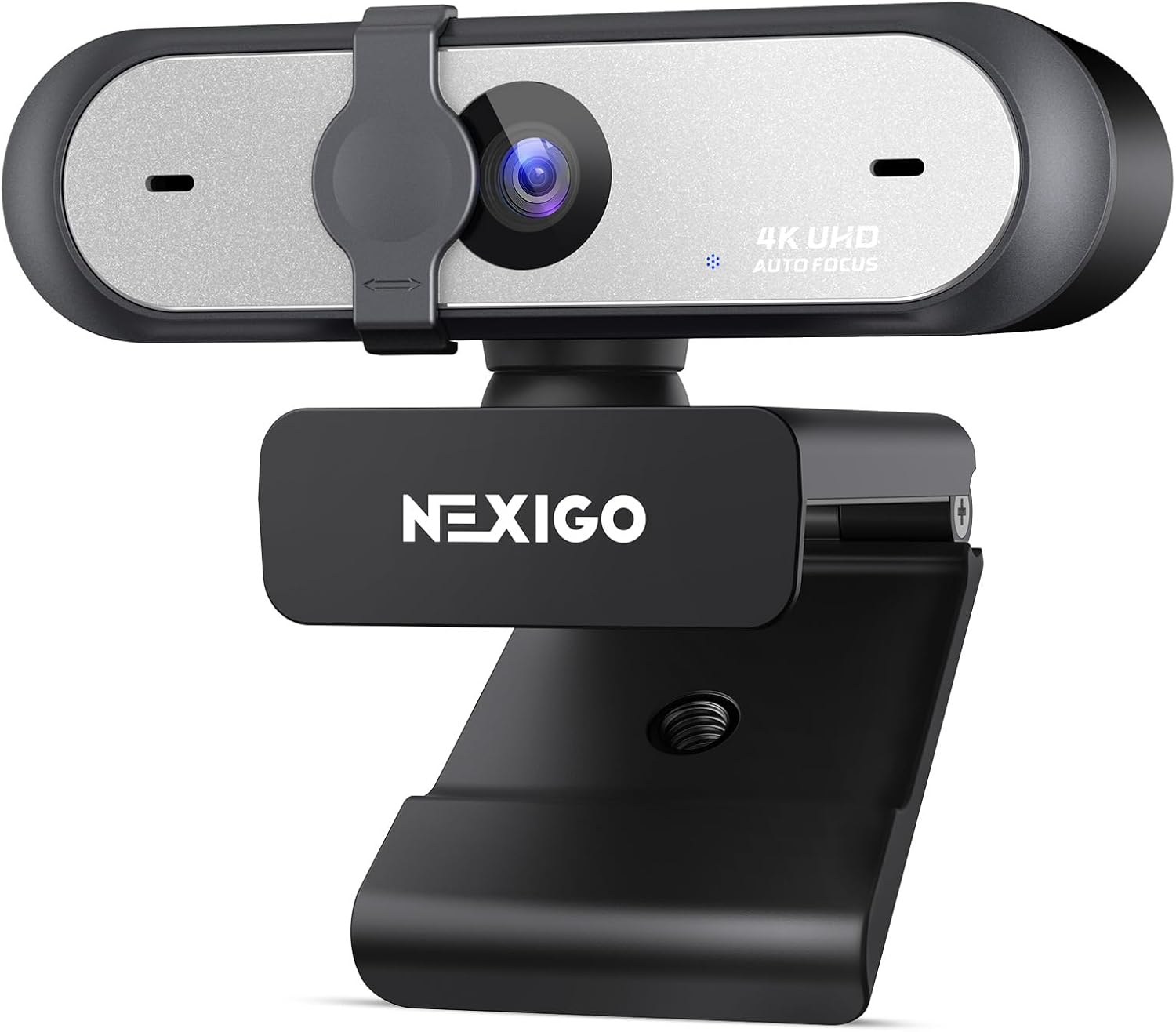
NexiGo N660P Pro 4K Webcam with Distortion-Free Lens, 1080p 60 fps Autofocus USB Streaming Camera, 3DNR, Noise-Canceling Mics & Privacy Cover, Web Cam for Gaming/Live Streaming/PC/Mac/Switch 2, Black
$50-$99This is a 4K 30fps or 1080p 60fps webcam with autofocus, dual noise-canceling mics, and a privacy cover, designed for streaming and video calls on various platforms.

NexiGo N660P Pro 4K Webcam with Distortion-Free Lens, 1080p 60 fps Autofocus USB Streaming Camera, 3DNR, Noise-Canceling Mics & Privacy Cover, Web Cam for Gaming/Live Streaming/PC/Mac/Switch 2, White
$50-$99This 4K webcam with 1080p 60 fps streaming, autofocus, and dual noise-canceling mics is for users needing high resolution and smooth video without external software.

4K Webcam with Autofocus & Tripod, Camera for PC Laptop with Dual Microphone, USB Computer Camera with Low Light Correction, Auto White Balance, Video Camera for Streaming, Meetings, Office, Zoom
$0-$49A 4K webcam with a CMOS sensor and f/2.8 aperture, designed for basic video calls and streaming on a budget.