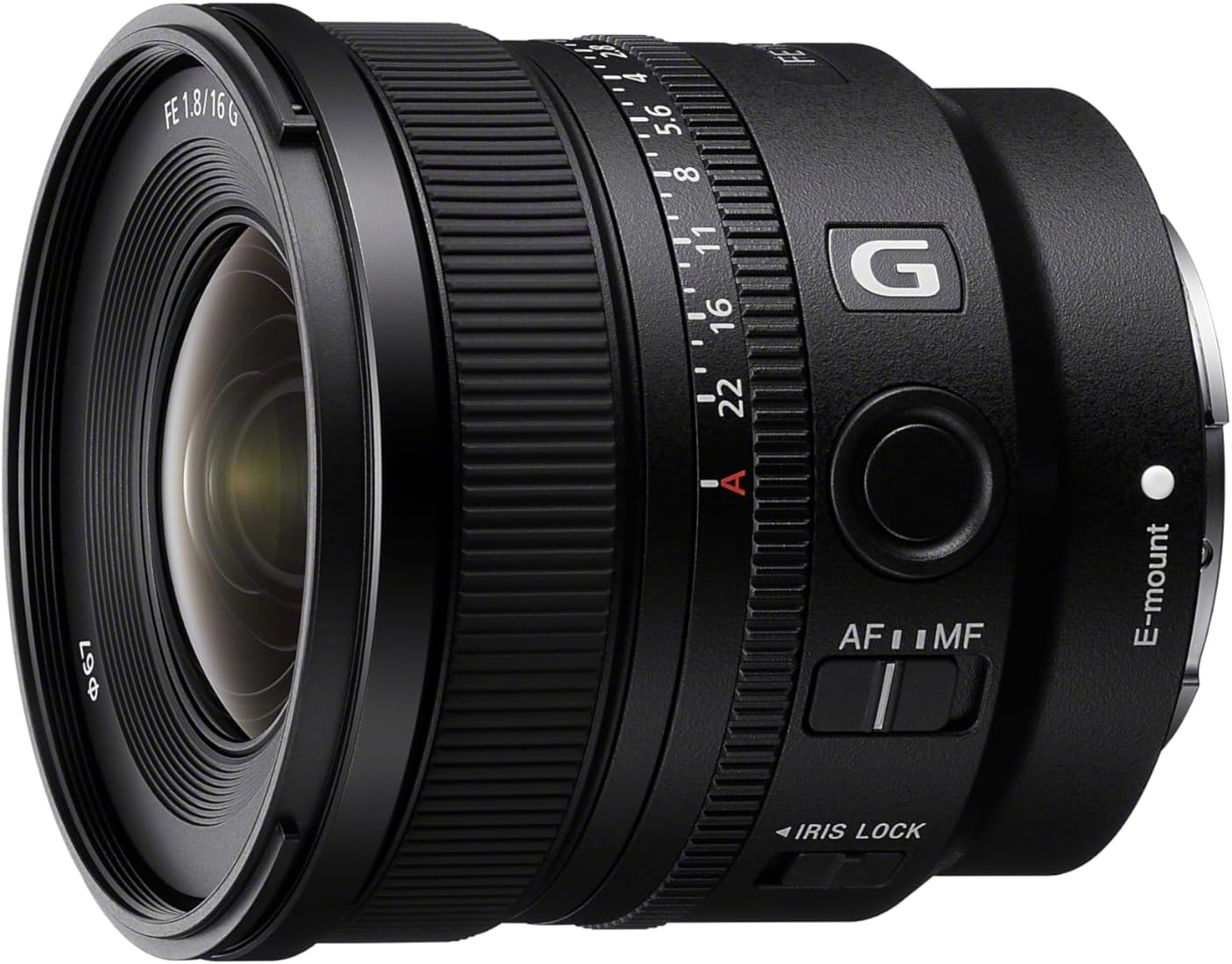
Sony FE 16mm f/1.8 G,Black
Want the best price and purchase timing?
Our AI advisor analyzes real-time pricing across all channels to find you the best deal.
AI Verdict
This 304g, 16mm f/1.8 G lens is for photographers prioritizing portability and low-light performance in an ultra-wide prime.
This lens is a strong fit if you need a compact, lightweight ultra-wide prime with a fast f/1.8 aperture. Its 304g weight and 16mm focal length make it ideal for travel and specific genres like astrophotography where light gathering is crucial. The quiet autofocus and minimal breathing also make it suitable for video work.
If you need more compositional flexibility and can sacrifice some aperture speed, look for a 16-25mm f/2.8 G zoom lens instead.
Regret Score™
Medium RiskLower is better — measures purchase-regret risk from real buyer complaints, review credibility, and product maturity
Issues discovered after purchase
Critically weak dimension
Amazon rating vs actual quality
Chance this product isn't for you
Pros
- Captures sharp images from center to corner, especially when stopped down to f/2.8-f/8.
- Weighs only 304g (10.7 ounces), making it easy to carry and balance on a gimbal.
- Features a fast f/1.8 aperture, allowing for shooting in low light and creating background blur.
- Autofocus is fast, precise, quiet, and exhibits minimal focus breathing, which is beneficial for video recording.
- Offers a minimum focus distance of 0.13m (manual focus), enabling close-up shots with exaggerated perspectives.
- Accepts standard 67mm screw-on filters, unlike some other ultra-wide primes.
Cons
- Some users have reported receiving decentered copies, indicating potential sample variation issues.
- Corner sharpness at f/1.8 can be soft and may require stopping down to f/2.8 or smaller apertures for optimal results.
- Uncorrected raw files show noticeable barrel distortion, requiring in-camera or software correction.
- Bokeh rendering can be harsh or compromised in certain situations, despite the f/1.8 aperture.
- Exhibits vignetting, particularly at f/1.8, though it is often correctable.
Dimension Scores
The lens delivers strong center sharpness from f/1.8, with corner sharpness improving when stopped down to f/2.8-f/8, though uncorrected distortion is noticeable.
Equipped with two XD linear motors, the autofocus is fast, precise, and quiet, with minimal focus breathing, making it highly effective for both stills and video.
Its quiet and smooth autofocus, minimal focus breathing, de-clickable aperture ring, and compact size make it a strong choice for video shooters and vlogging.
Weighing just 304g (10.7 ounces) and being compact, it's frequently praised for its ease of transport and ability to pair well with various camera bodies and gimbals.
Best For
- Astrophotography, due to its f/1.8 aperture and reported sharpness for night sky scenes.
- Landscape and architectural photography where a wide field of view and portability are key.
- Vlogging and handheld video recording, given its light weight and quiet autofocus.
- Creative close-up photography, leveraging the 0.13m minimum focus distance for unique perspectives.
Not Recommended For
- Photographers who demand perfect corner-to-corner sharpness at f/1.8 without any post-processing.
- Users who need a zoom lens for compositional flexibility, as this is a fixed 16mm prime.
- Anyone unwilling to potentially deal with sample variation or lens correction profiles for distortion.
Watch Out For
- You might get a 'dud' copy; some users have reported issues with decentering, even after exchanging the lens.
- Corner sharpness at f/1.8 isn't always tack-sharp, with some reviews noting a 'smudged look' in the extreme corners even when stopped down.
- Bokeh can be 'harsh' or 'compromised' in some shots, which might not be what you expect from an f/1.8 lens.
- Raw files will show noticeable barrel distortion that needs correction, so expect to apply a lens profile.
- Vignetting is present at f/1.8, which means you'll see darkened corners in uncorrected images.
Full Specifications
| ASIN | B0DYK97L9M |
| Brand | Sony |
| Batteries | 1 Nonstandard Battery batteries required. |
| Lens Type | Wide Angle |
| Item Weight | 10.7 ounces |
| Manufacturer | Sony |
| Item model number | SEL16F18G |
| Product Dimensions | 2.95 x 2.91 x 2.91 inches |
| Compatible Mountings | Sony E, Sony FE |
| Camera Lens Description | A Sony Full-frame 16mm F1.8 Lens |
| Focal Length Description | 16mm |
What Buyers Say
The most surprising finding from user feedback is the recurring mention of sample variation, with some users reporting decentered copies, which can impact overall performance. Despite this, many reviewers praise its light weight of 304g and its f/1.8 aperture for astrophotography, noting its sharpness in the center. However, corner sharpness at f/1.8 and the quality of the bokeh receive mixed opinions, with some finding the bokeh harsh. The lens's quiet autofocus and minimal focus breathing are consistently highlighted as benefits for video use.
“Man, this lens is tiny and bright, perfect for my night shots, but I swear my first copy was a dud, had to swap it, and even then, those corners at f/1.8 are just… not there.”
Common Praise
- Very sharp from the center, even at f/1.8.
- Lightweight and compact, making it easy to carry for travel or vlogging.
- Fast f/1.8 aperture is excellent for low-light conditions and astrophotography.
- Autofocus is fast, precise, and quiet, with minimal focus breathing for video.
- Accepts standard 67mm screw-on filters.
- Build quality feels solid and premium, with weather sealing.
Common Complaints
- Some users received decentered copies, suggesting potential quality control issues.
- Corner sharpness at f/1.8 can be soft and requires stopping down for better results.
- Noticeable barrel distortion in raw files that requires correction.
- Bokeh can be described as harsh or not as smooth as expected from an f/1.8 lens.
- Vignetting is present, especially at f/1.8, though it's usually correctable.
Ownership Tips
- You'll probably leave this lens on your camera more often than you expect because it's so light and unobtrusive.
- Even with the f/1.8 aperture, you'll find yourself stopping down to f/2.8 or f/4 for landscapes to get better corner sharpness.
- The barrel distortion is real in uncorrected raw files, so make sure your editing software has a profile for it.
- The quiet autofocus is a game-changer if you shoot video, you won't hear it hunting.
- The close focus distance is actually super fun for getting dramatic wide-angle close-ups, more than just a spec.
Frequently Asked Questions
Is this lens good for astrophotography?
Yes, many users find it performs very well for astrophotography due to its f/1.8 aperture and sharpness, especially in the center. Some vignetting is present but correctable.
How is the sharpness of this lens?
It's generally very sharp in the center, even at f/1.8, and improves across the frame when stopped down to f/2.8-f/8. Corner sharpness at f/1.8 can be soft.
Is this lens heavy or bulky?
No, it's considered very compact and lightweight, weighing only 304g (10.7 ounces), making it easy to handle and balance on gimbals.
Does it have autofocus issues?
The lens features two XD linear motors for fast, precise, and quiet autofocus, which also exhibits minimal focus breathing, making it suitable for video.
Can I use filters with this lens?
Yes, it accepts standard 67mm screw-on filters, which is a benefit over some other ultra-wide lenses that require larger, specialized filters.
Buying Guide
When looking at wide-angle prime lenses like this, you need to think about what you're actually going to shoot. A 16mm lens gives you a really broad view, which is awesome for big landscapes or tight indoor spaces, but it also exaggerates perspective, making things close look bigger and things far away look smaller. The f/1.8 aperture means it lets in a lot of light, so you can shoot in dim conditions or get that blurry background effect, even with a wide lens. Don't just focus on the 'wide' part; consider how much light you need and how compact you want your setup to be.
16mm focal length
This number tells you how 'wide' your view will be. A 16mm lens captures a much broader scene than, say, a 50mm lens, making it ideal for fitting entire buildings or vast landscapes into your shot without having to step back a mile.
f/1.8 aperture
The 'f-number' indicates how much light the lens can gather and how much background blur (bokeh) you can achieve. An f/1.8 aperture is very 'fast,' meaning it lets in a lot of light for shooting in dark environments and can create a shallow depth of field, making your subject pop against a blurred background.
Weight: 304g (10.7 ounces)
This is how much the lens weighs. For a wide-angle lens with a fast aperture, 304g is pretty light. A lighter lens means your camera setup is easier to carry all day, less fatiguing for handheld video, and balances better on gimbals.
Two XD linear motors
These are the tiny engines inside the lens that move the focusing elements. Having two of them means the lens can focus very quickly, precisely, and silently. This is crucial for capturing fast-moving subjects or recording video without the microphone picking up focusing noises.
Alternatives
If this lens doesn't fit, consider searching for a wide-angle zoom lens with a constant f/2.8 aperture for more compositional flexibility, or a prime lens with a wider focal length like 14mm if you need an even broader field of view and don't mind a larger size.
You Might Also Like

NexiGo N660P Pro 4K Webcam with Distortion-Free Lens, 1080p 60 fps Autofocus USB Streaming Camera, 3DNR, Noise-Canceling Mics & Privacy Cover, Web Cam for Gaming/Live Streaming/PC/Mac/Switch 2, Pink
$50-$99This is a 4K CMOS webcam with 3DNR and dual noise-canceling mics, designed for plug-and-play use across multiple platforms.
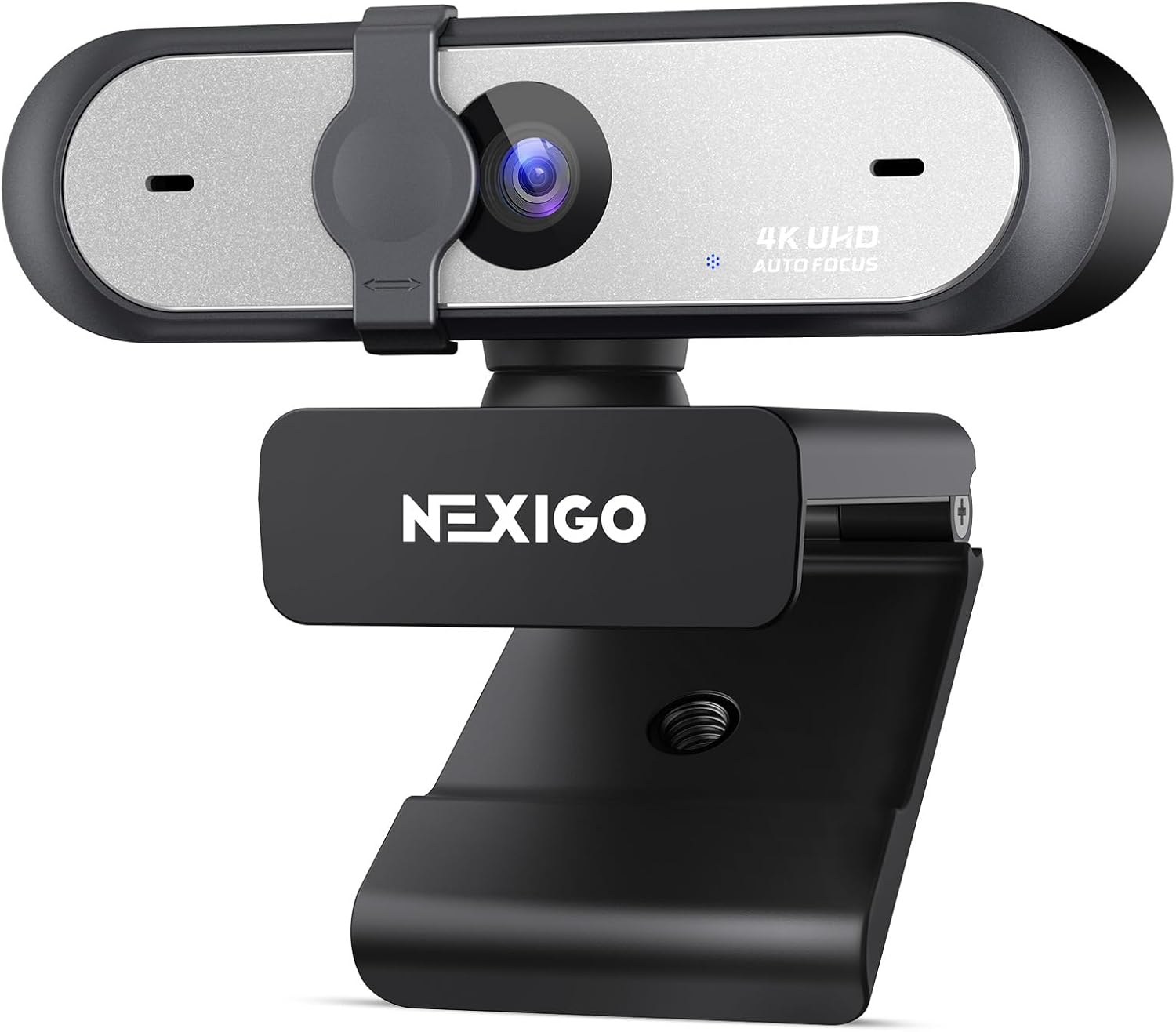
NexiGo N660P Pro 4K Webcam with Distortion-Free Lens, 1080p 60 fps Autofocus USB Streaming Camera, 3DNR, Noise-Canceling Mics & Privacy Cover, Web Cam for Gaming/Live Streaming/PC/Mac/Switch 2, Black
$50-$99This is a 4K 30fps or 1080p 60fps webcam with autofocus, dual noise-canceling mics, and a privacy cover, designed for streaming and video calls on various platforms.

NexiGo N660P Pro 4K Webcam with Distortion-Free Lens, 1080p 60 fps Autofocus USB Streaming Camera, 3DNR, Noise-Canceling Mics & Privacy Cover, Web Cam for Gaming/Live Streaming/PC/Mac/Switch 2, White
$50-$99This 4K webcam with 1080p 60 fps streaming, autofocus, and dual noise-canceling mics is for users needing high resolution and smooth video without external software.

4K Webcam with Autofocus & Tripod, Camera for PC Laptop with Dual Microphone, USB Computer Camera with Low Light Correction, Auto White Balance, Video Camera for Streaming, Meetings, Office, Zoom
$0-$49A 4K webcam with a CMOS sensor and f/2.8 aperture, designed for basic video calls and streaming on a budget.