
SIGMA 18-50mm F2.8 DC DN Contemporary Lens for Canon RF Mount Mirrorless Cameras
Want the best price and purchase timing?
Our AI advisor analyzes real-time pricing across all channels to find you the best deal.
AI Verdict
This 10.6-ounce, constant f/2.8 APS-C zoom lens is for Canon RF-S camera users who prioritize a compact size and fast autofocus for everyday shooting.
This lens is a strong fit for Canon APS-C mirrorless camera owners who need a compact, bright standard zoom. Its constant f/2.8 aperture and 300g weight make it highly portable for everyday use and travel, while the fast autofocus is a clear advantage for capturing various subjects.
If you shoot on a full-frame Canon RF camera, look for a full-frame specific RF lens to avoid crop mode limitations and maximize your sensor's resolution.
Regret Score™
Low RiskLower is better — measures purchase-regret risk from real buyer complaints, review credibility, and product maturity
Issues discovered after purchase
Critically weak dimension
Amazon rating vs actual quality
Chance this product isn't for you
Pros
- It's the smallest and lightest lens in its class, measuring 69.2mm in diameter and 74.5mm in length, weighing 300g.
- The constant f/2.8 aperture provides consistent low-light performance and shallow depth of field across the 18-50mm zoom range.
- Autofocus is quick, quiet, and accurate, with minimal focus breathing, making it suitable for both stills and video.
- It offers close-up shooting with a minimum focusing distance of 12.1cm and a maximum magnification of 1:2.8.
- The lens mount features a rubber seal for use in various environments.
- Center sharpness is high, even when shooting wide open at f/2.8.
Cons
- It lacks optical image stabilization, which is a drawback for Canon APS-C bodies without in-body image stabilization.
- Users report noticeable chromatic aberration, especially longitudinal CA at f/2.8, which requires post-processing correction.
- There's strong barrel distortion at 18mm and some pincushion distortion at 50mm, necessitating in-camera corrections.
- Edge sharpness is not as strong as center sharpness, particularly at f/2.8.
- The manual focus ring is narrow and positioned close to the lens mount, making it uncomfortable to use for some, and its nonlinear response might hinder precise video work.
Dimension Scores
It delivers high center sharpness and pleasing bokeh at f/2.8, though it exhibits chromatic aberration and distortion that require in-camera or post-processing correction.
Autofocus is consistently described as quick, quiet, and accurate, performing well even with erratic subjects and in low light.
Its fast, silent autofocus and minimal focus breathing make it a strong contender for video, though the absence of optical stabilization is a limitation for handheld recording.
At 300g and with a compact size of 69.2mm diameter and 74.5mm length, it is the smallest and lightest lens in its class, making it exceptionally portable.
Best For
- Canon APS-C mirrorless camera users (R7, R10, R50, R100) seeking a compact, everyday zoom lens.
- Travel photographers and vloggers who need a lightweight lens with a constant f/2.8 aperture for varied lighting conditions.
- Photographers who frequently shoot close-up subjects and want a lens with a 1:2.8 maximum magnification.
- Content creators prioritizing fast, quiet autofocus and minimal focus breathing for video recording.
Not Recommended For
- Canon full-frame RF camera users, as it operates in crop mode, reducing resolution to approximately 8MP and impacting low-light performance.
- Users who require built-in optical image stabilization for handheld shooting, especially with older Canon APS-C bodies lacking IBIS.
- Photographers who demand consistently sharp corners at f/2.8 without relying on post-processing corrections for optical imperfections.
Watch Out For
- You'll see strong barrel distortion at 18mm and some pincushion at 50mm; in-camera corrections are essential to fix this.
- Expect chromatic aberration, particularly longitudinal CA, when shooting wide open at f/2.8, which will need to be cleaned up in editing.
- If your Canon APS-C camera doesn't have in-body image stabilization, you'll be relying solely on your hands to keep shots steady, as the lens lacks its own stabilization.
- The manual focus ring is narrow and sits uncomfortably close to the lens mount, making precise manual adjustments a bit of a pain.
Full Specifications
| ASIN | B0D81586GK |
| Brand | Sigma |
| Batteries | 1 12V batteries required. |
| Lens Type | Standard |
| Item Weight | 10.6 ounces |
| Manufacturer | Sigma Corporation of America |
| Item model number | 585972 |
| Product Dimensions | 3.5 x 3 x 3 inches |
| Compatible Mountings | Canon RF |
| Camera Lens Description | 18-50MM F2.8 DC DN | C |
| Focal Length Description | 18-50MM F2.8 DC DN | C |
What Buyers Say
The biggest takeaway from early users is how surprisingly compact and light this f/2.8 zoom is for Canon APS-C cameras, making it a go-to for travel and everyday shooting. Many are just thrilled to finally have a third-party autofocus option for RF mount, especially one that performs so well in terms of autofocus speed and center sharpness. However, the lack of image stabilization is a recurring point of contention, particularly for those with Canon bodies that don't have IBIS. Optical issues like chromatic aberration and distortion are present, but most users seem to accept them as correctable in post-processing.
“Finally, a compact f/2.8 zoom for my R50! It's so light and the autofocus is snappy, but man, I wish it had stabilization for those darker shots. Still, it's basically glued to my camera now.”
Common Praise
- It's incredibly small and light, making the camera setup easy to carry all day.
- The autofocus is fast and quiet, keeping up with moving subjects effectively.
- The constant f/2.8 aperture is a game-changer for low-light shooting and creating background blur.
- Center sharpness is excellent, even at the widest aperture.
- The close-focusing ability allows for interesting macro-style shots.
Common Complaints
- No image stabilization means shaky video and blurry photos in low light if your camera lacks IBIS.
- Chromatic aberration is visible, especially at f/2.8, and needs to be corrected in editing.
- Distortion at both ends of the zoom range is strong and requires profile corrections.
- Edge sharpness isn't as crisp as the center, particularly when wide open.
- The manual focus ring is too narrow and close to the camera body, making it awkward to use.
Ownership Tips
- You'll quickly learn to rely on in-camera lens corrections or software profiles to manage the distortion and chromatic aberration.
- The compact size means you'll probably leave it on your camera more often, making it a true 'walk-around' lens.
- Without stabilization, you'll find yourself pushing ISO or looking for faster shutter speeds more frequently in dim conditions.
- The f/2.8 aperture really helps separate subjects from backgrounds, even on an APS-C sensor, giving images a more professional feel.
Frequently Asked Questions
Does this lens work on full-frame Canon RF cameras like the R6 or R5?
No, this is an APS-C (DC) lens. While it will physically mount, it forces your full-frame camera into crop mode, resulting in significantly lower resolution images (around 8MP) and reduced low-light performance.
Does this lens have image stabilization?
No, the Sigma 18-50mm F2.8 DC DN does not have built-in optical image stabilization. If your camera body lacks in-body image stabilization, you'll need to rely on higher shutter speeds or a tripod for sharp images in low light.
Is this lens good for video?
Yes, it's considered good for video due to its fast, quiet autofocus and minimal focus breathing. However, the lack of image stabilization might be a concern for handheld video if your camera doesn't have IBIS.
What is the closest focusing distance?
The lens can focus as close as 12.1cm (4.8 inches) from the sensor, achieving a maximum magnification ratio of 1:2.8, which is useful for close-up shots.
Does it have weather sealing?
Yes, the lens mount is rubber-sealed to provide some protection against dust and splashes. However, some reviews indicate it's not fully protected from all elements.
Buying Guide
When looking at a lens like this, you need to think about what camera you have and how you shoot. This is a 'standard zoom' for APS-C cameras, meaning it covers a versatile range for everyday photos. The 'f/2.8' part is crucial; it means the lens lets in a lot of light, which is great for dim places and blurring backgrounds. Don't get hung up on 'full-frame equivalent' numbers; just know 18-50mm on your APS-C camera is a useful range for most situations.
f/2.8 constant aperture
This means the lens can open up wide to f/2.8 across its entire zoom range (18mm to 50mm). It's like having a bigger window for light, so you can shoot in darker environments without cranking up your camera's ISO too high, and it helps create that blurry background effect (bokeh) that makes your subject pop.
DC DN (APS-C format)
This tells you the lens is designed specifically for cameras with smaller APS-C sensors, not full-frame cameras. If you put it on a full-frame camera, your images will be cropped, losing resolution and making the lens less effective. Think of it like putting a small car tire on a big truck – it'll fit, but it won't work right.
10.6 ounces (300g) weight
This is super light for a lens with a constant f/2.8 aperture. A lighter lens means your camera setup is less tiring to carry around all day, especially for travel or vlogging, and it balances better on smaller mirrorless bodies.
Alternatives
If you need image stabilization built into the lens, look for lenses with 'OS' or 'IS' in their name. If you shoot on a full-frame camera, search for 'full-frame RF mount standard zoom' to find compatible options that utilize your entire sensor.
You Might Also Like

NexiGo N660P Pro 4K Webcam with Distortion-Free Lens, 1080p 60 fps Autofocus USB Streaming Camera, 3DNR, Noise-Canceling Mics & Privacy Cover, Web Cam for Gaming/Live Streaming/PC/Mac/Switch 2, Pink
$50-$99This is a 4K CMOS webcam with 3DNR and dual noise-canceling mics, designed for plug-and-play use across multiple platforms.
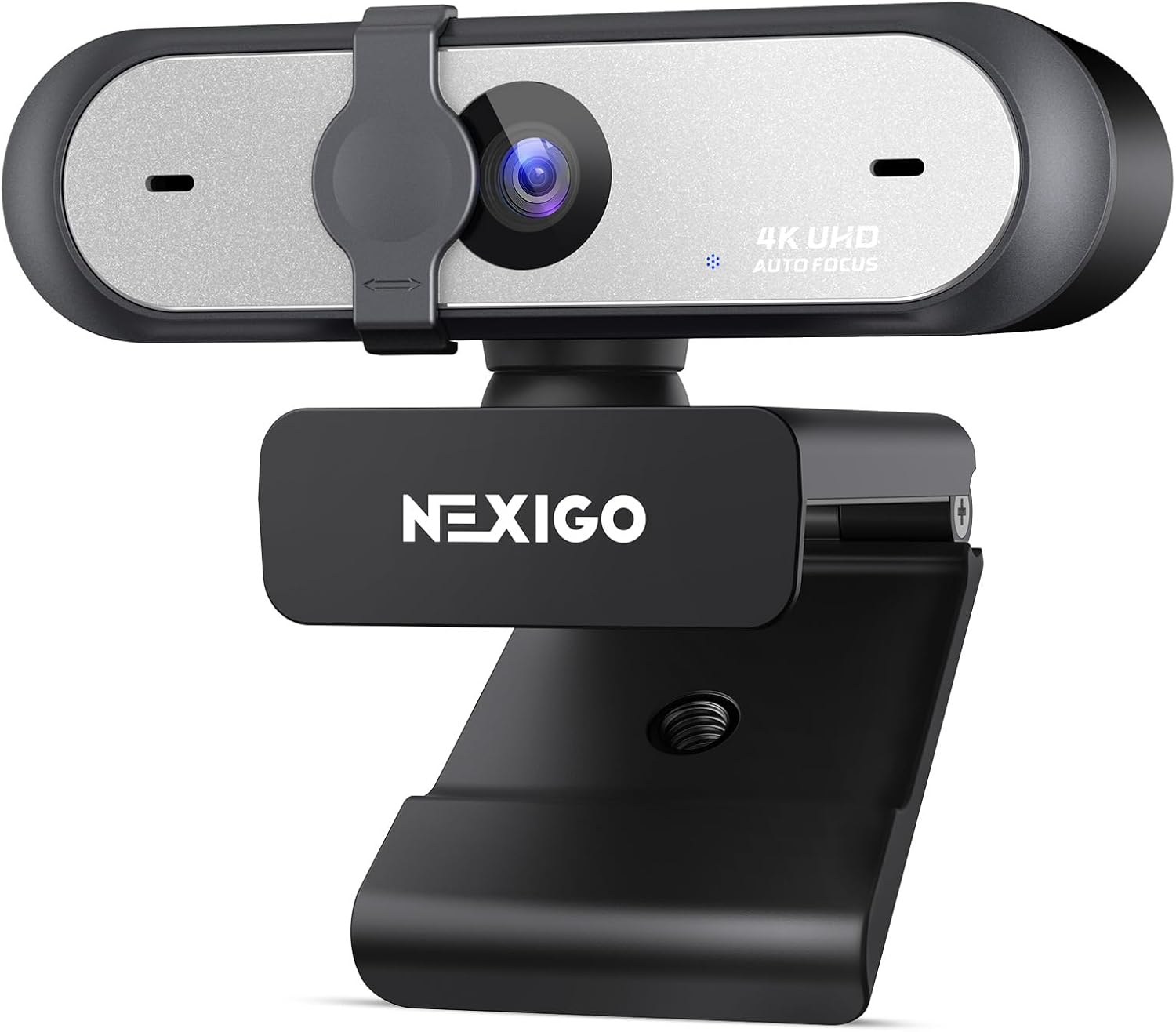
NexiGo N660P Pro 4K Webcam with Distortion-Free Lens, 1080p 60 fps Autofocus USB Streaming Camera, 3DNR, Noise-Canceling Mics & Privacy Cover, Web Cam for Gaming/Live Streaming/PC/Mac/Switch 2, Black
$50-$99This is a 4K 30fps or 1080p 60fps webcam with autofocus, dual noise-canceling mics, and a privacy cover, designed for streaming and video calls on various platforms.

NexiGo N660P Pro 4K Webcam with Distortion-Free Lens, 1080p 60 fps Autofocus USB Streaming Camera, 3DNR, Noise-Canceling Mics & Privacy Cover, Web Cam for Gaming/Live Streaming/PC/Mac/Switch 2, White
$50-$99This 4K webcam with 1080p 60 fps streaming, autofocus, and dual noise-canceling mics is for users needing high resolution and smooth video without external software.

4K Webcam with Autofocus & Tripod, Camera for PC Laptop with Dual Microphone, USB Computer Camera with Low Light Correction, Auto White Balance, Video Camera for Streaming, Meetings, Office, Zoom
$0-$49A 4K webcam with a CMOS sensor and f/2.8 aperture, designed for basic video calls and streaming on a budget.