
24-70mm F2.8 DGDN II for Sony E
Want the best price and purchase timing?
Our AI advisor analyzes real-time pricing across all channels to find you the best deal.
AI Verdict
This 1.64-pound telephoto lens with a constant f/2.8 aperture is for Sony E-mount users prioritizing sharpness and fast autofocus without the premium price.
This lens is a strong fit for many Sony E-mount users due to its combination of high sharpness, fast autofocus, and reduced weight (1.64 pounds) compared to its predecessor. The constant f/2.8 aperture and 24-70mm range make it highly adaptable for various shooting scenarios, offering a compelling alternative to pricier native lenses.
If critical corner sharpness at 24mm is a non-negotiable requirement, consider a dedicated wide-angle prime lens or a higher-tier native zoom that explicitly addresses this.
Regret Score™
Low RiskLower is better — measures purchase-regret risk from real buyer complaints, review credibility, and product maturity
Issues discovered after purchase
Critically weak dimension
Amazon rating vs actual quality
Chance this product isn't for you
Pros
- Delivers high sharpness throughout the entire image, particularly in the center of the frame.
- Features faster and very accurate autofocus speeds compared to its predecessor.
- Weighs 1.64 pounds, making it 10% lighter and 7% smaller than the previous version.
- Includes a de-clickable aperture ring, useful for both stills and video.
- Constructed with a weather-sealed barrel, offering protection in various conditions.
- Exhibits virtually zero focus breathing, which is beneficial for video recording.
Cons
- Some users report softness or lack of focus at f/2.8, especially at the wider 24mm end or in the corners.
- Shows noticeable distortion and vignetting at 24mm, which can be complex to correct manually.
- Does not support Sony's fastest burst speeds with AFC on top Sony bodies or in-camera focus breathing correction.
- Fringing (chromatic aberration) can still be present in some real-world shots.
- Lacks internal optical stabilization, relying solely on the camera's in-body image stabilization.
Dimension Scores
The lens delivers high sharpness throughout the image, particularly in the center, but some users report corner softness and distortion at 24mm, along with occasional fringing.
It features faster and very accurate autofocus compared to its predecessor, performing well in various scenarios.
With virtually zero focus breathing, it's strong for video, but it lacks optical stabilization and doesn't support Sony's in-camera breathing correction.
Weighing 1.64 pounds, it is 10% lighter and 7% smaller than its predecessor, making it more manageable for extended use.
Best For
- General purpose photography, covering a wide range of subjects from landscapes to events.
- Event photography, benefiting from its f/2.8 constant aperture and versatile focal range.
- Video production, due to its minimal focus breathing.
- Photographers seeking a high-performance lens that offers a strong value proposition compared to more expensive native options.
Not Recommended For
- Photographers who require absolute corner-to-corner sharpness at 24mm without any post-processing correction.
- Videographers who rely on Sony's specific in-camera focus breathing compensation features, as this lens does not support them.
- Users who frequently need focal lengths beyond 70mm for telephoto reach.
Watch Out For
- Users have reported that images can appear soft or not fully in focus at f/2.8, particularly at the wider 24mm end or in the corners.
- The lens exhibits significant distortion and vignetting at 24mm, which requires correction and can be challenging to fix manually.
- It does not support the fastest burst speeds with continuous autofocus on high-end Sony camera bodies.
- An optional Sigma dock is required for installing future firmware updates.
Full Specifications
| ASIN | B0D49V35GV |
| Brand | Sigma |
| Lens Type | Telephoto |
| Item Weight | 1.64 pounds |
| Manufacturer | Sigma |
| Item model number | 57A965 |
| Product Dimensions | 4.8 x 3.5 x 3.5 inches |
| Compatible Mountings | Sony E |
| Camera Lens Description | 24-70mm F2.8 II For Sony E |
| Focal Length Description | 24-70mm F2.8 DG DN ii for Sony E |
What Buyers Say
Many users are drawn to this lens as a compelling alternative to pricier native options, often praising its sharpness and autofocus performance. However, a recurring theme in feedback points to some corner softness and distortion at the 24mm wide end, which can be a concern for landscape photographers. The inclusion of a de-clickable aperture ring is a specific highlight for videographers, while the reduced weight is a welcome change for those carrying their gear all day. The lack of full compatibility with all of Sony's advanced in-camera lens corrections is a known trade-off.
“Okay, so I bought this lens because everyone was saying it's like a GM but cheaper, and honestly, the sharpness is insane in the middle! But man, those 24mm corners at f/2.8? A little soft, not gonna lie. Still, for the price, I'm keeping it, just gotta remember to stop down a bit for landscapes.”
Common Praise
- Sharpness is really good, especially in the center of the frame.
- Autofocus is fast and accurate, making it responsive for various shooting situations.
- The de-clickable aperture ring is a practical addition for smooth aperture adjustments during video recording.
- The reduced weight of 1.64 pounds makes it more comfortable for prolonged use compared to its predecessor.
- Virtually no focus breathing, which is a significant plus for video shooters.
- The weather-sealed construction provides confidence when shooting in less-than-ideal conditions.
Common Complaints
- Photos can be soft or not fully in focus at f/2.8, particularly at the 24mm wide end or in the corners.
- Noticeable distortion and vignetting occur at 24mm, requiring significant correction in post-processing.
- Fringing (chromatic aberration) is still present in some images, despite Sigma's general reputation for correction.
- It does not support Sony's in-camera focus breathing correction or the fastest burst speeds with AFC on certain bodies.
- The zoom ring turns anti-clockwise, which is opposite to Sony and Lumix lenses, causing a minor adjustment period for some users.
Ownership Tips
- The zoom lock at 24mm is a thoughtful feature that automatically disengages when you turn the zoom ring, preventing accidental extension.
- While the lens is weather-sealed, the need for an optional Sigma dock for firmware updates is an extra step to consider.
- The anti-clockwise zoom ring rotation can feel counter-intuitive if you're used to Sony or Lumix lenses, which turn the opposite way.
- At minimum focus distance, especially at 24mm and f/2.8, results can be soft and it's easy to cast shadows on your subject.
Frequently Asked Questions
Is this lens sharp enough for portraits?
Yes, the lens is generally sharp, and many users find it suitable for portraits. However, some photographers might prefer the bokeh characteristics of dedicated portrait prime lenses.
Does this lens have image stabilization?
No, this lens does not include internal optical image stabilization. It relies on the in-body image stabilization (IBIS) system present in compatible Sony camera bodies.
How does it compare to the Sony 24-70mm GM II?
The Sigma 24-70mm F2.8 DG DN II comes very close to the Sony 24-70mm GM II in performance, especially regarding sharpness and autofocus speed. However, the Sony GM II may offer a slight edge in corner sharpness and full compatibility with all of Sony's advanced in-camera features, typically at a higher price point.
Is this lens suitable for low-light photography?
Yes, the constant f/2.8 maximum aperture across the entire zoom range makes this lens well-suited for low-light conditions, allowing for faster shutter speeds or lower ISO settings.
Is the lens weather-sealed?
Yes, the Sigma 24-70mm F2.8 DG DN II features a fully weather-sealed barrel, providing protection against dust and splashes.
Buying Guide
When looking at a zoom lens like this, you're balancing convenience with optical performance. The '24-70mm' tells you the range of perspectives you can capture, from wide scenes to tighter shots. The 'F2.8' means it lets in a lot of light, which is crucial for shooting in dimmer conditions or getting that blurry background look. The weight (1.64 pounds) matters if you're carrying it all day, as heavier lenses can cause fatigue.
F2.8 Constant Aperture
This means the lens can maintain its widest aperture (F2.8) across the entire zoom range. It's like having a consistent 'light-gathering' ability, allowing you to shoot in low light without increasing your camera's sensitivity too much, and it helps create a pleasingly blurred background behind your subject.
24-70mm Focal Range
This range is incredibly versatile. 24mm is wide enough for landscapes or group shots, while 70mm is a short telephoto, great for portraits or isolating subjects. It's like having several prime lenses in one, covering most everyday shooting situations without needing to change lenses.
1.64 pounds Weight
The weight of a lens directly impacts how comfortable it is to use for extended periods. At 1.64 pounds, this lens is lighter than many comparable professional zooms, which means less strain on your wrist and neck during long shoots or when traveling.
Alternatives
If this lens doesn't fit your needs, consider searching for lenses with a wider zoom range (e.g., 24-105mm or 28-200mm for more reach), a lighter build (if portability is paramount), or a prime lens (for ultimate sharpness and wider apertures at a single focal length).
You Might Also Like

NexiGo N660P Pro 4K Webcam with Distortion-Free Lens, 1080p 60 fps Autofocus USB Streaming Camera, 3DNR, Noise-Canceling Mics & Privacy Cover, Web Cam for Gaming/Live Streaming/PC/Mac/Switch 2, Pink
$50-$99This is a 4K CMOS webcam with 3DNR and dual noise-canceling mics, designed for plug-and-play use across multiple platforms.
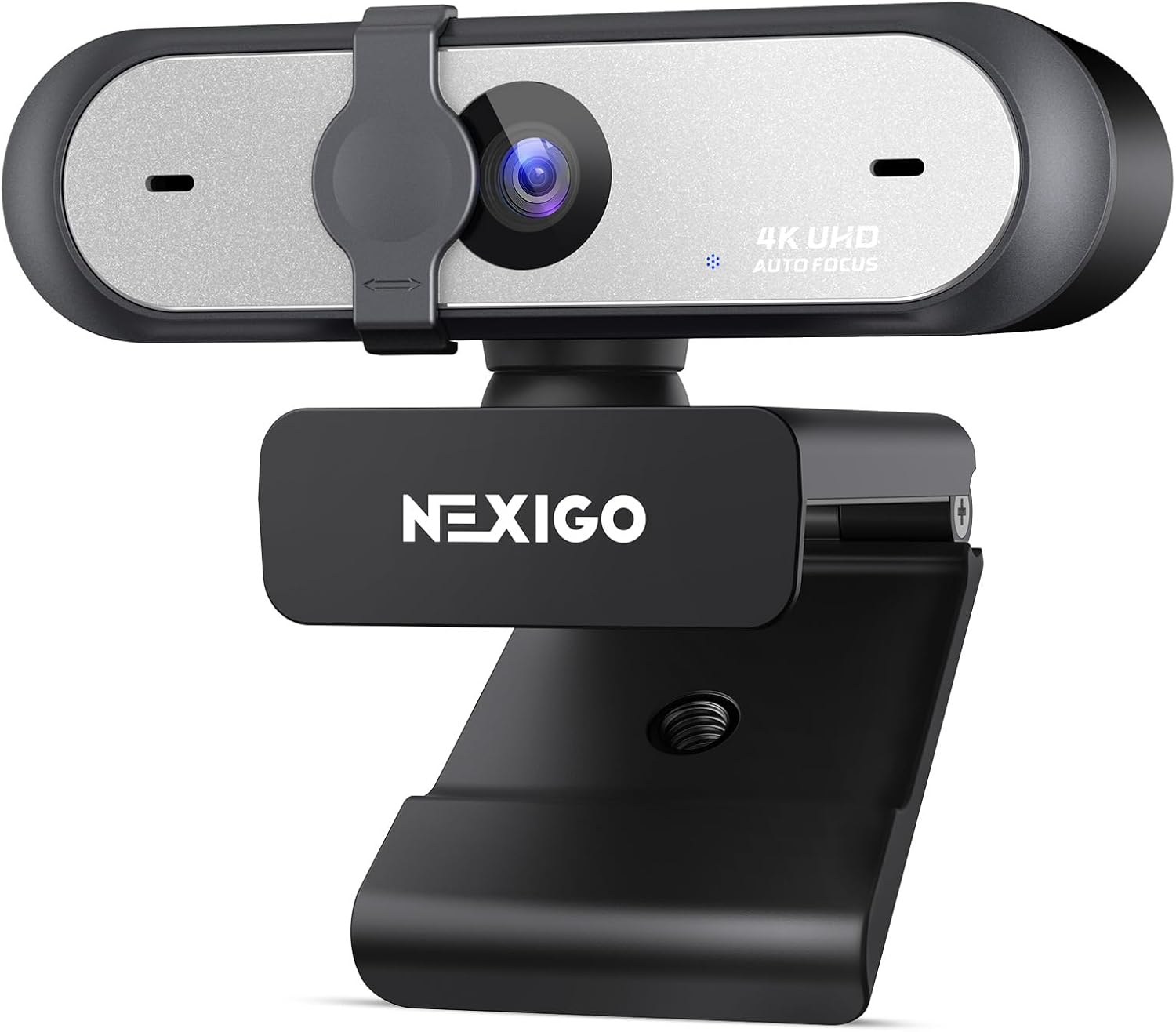
NexiGo N660P Pro 4K Webcam with Distortion-Free Lens, 1080p 60 fps Autofocus USB Streaming Camera, 3DNR, Noise-Canceling Mics & Privacy Cover, Web Cam for Gaming/Live Streaming/PC/Mac/Switch 2, Black
$50-$99This is a 4K 30fps or 1080p 60fps webcam with autofocus, dual noise-canceling mics, and a privacy cover, designed for streaming and video calls on various platforms.

NexiGo N660P Pro 4K Webcam with Distortion-Free Lens, 1080p 60 fps Autofocus USB Streaming Camera, 3DNR, Noise-Canceling Mics & Privacy Cover, Web Cam for Gaming/Live Streaming/PC/Mac/Switch 2, White
$50-$99This 4K webcam with 1080p 60 fps streaming, autofocus, and dual noise-canceling mics is for users needing high resolution and smooth video without external software.

4K Webcam with Autofocus & Tripod, Camera for PC Laptop with Dual Microphone, USB Computer Camera with Low Light Correction, Auto White Balance, Video Camera for Streaming, Meetings, Office, Zoom
$0-$49A 4K webcam with a CMOS sensor and f/2.8 aperture, designed for basic video calls and streaming on a budget.