
Canon EOS R50 Mirrorless Vlogging Camera (Body Only/Black), RF Mount, 24.2 MP, 4K Video, DIGIC X Image Processor, Subject Detection & Tracking, Compact, Smartphone Connection, Content Creator
Want the best price and purchase timing?
Our AI advisor analyzes real-time pricing across all channels to find you the best deal.
AI Verdict
A 13.3-ounce RF mount camera with a 24.2 MP APS-C sensor and 4K 30fps video, designed for beginners upgrading from smartphones or content creators needing portability.
This camera is a strong fit for beginners and content creators due to its 24.2 MP APS-C sensor, 4K 30fps video, and compact 13.3-ounce body. Its advanced autofocus system and vari-angle screen directly support vlogging and ease of use for those transitioning from smartphones.
If you need smoother handheld video without a gimbal, look for cameras with in-body image stabilization (IBIS).
Regret Score™
Low RiskLower is better — measures purchase-regret risk from real buyer complaints, review credibility, and product maturity
Issues discovered after purchase
Critically weak dimension
Amazon rating vs actual quality
Chance this product isn't for you
Pros
- The 24.2 MP APS-C sensor delivers sharp images with good color accuracy and dynamic range.
- Records 4K video at up to 30 fps, oversampled from 6K for noticeably sharper footage.
- Dual Pixel CMOS AF II offers auto subject detection and tracking for people, animals, and vehicles across up to 100% of the frame.
- Achieves continuous shooting at 15 fps with the electronic shutter.
- Weighs 13.3 ounces, making it compact and lightweight for travel and everyday carrying.
- The vari-angle touchscreen LCD allows for flexible shooting angles and intuitive menu navigation.
Cons
- Lacks in-body image stabilization (IBIS), requiring optically stabilized lenses or digital stabilization with a crop.
- The buffer depth for RAW files is limited to 7 frames, which quickly fills during continuous shooting at 15 fps.
- Features a single UHS-I SD card slot, which can limit write speeds for burst photography.
- The new multi-pin hotshoe interface may require an adapter for compatibility with many third-party flashes.
- Battery life is not optimized for extended video recording sessions.
Dimension Scores
The 24.2 MP APS-C CMOS sensor delivers sharp images with accurate colors and a good dynamic range.
Dual Pixel CMOS AF II covers up to 100% of the area with 651 AF zones and includes effective auto subject detection and tracking.
Offers 4K uncropped movie at up to 30 fps oversampled from 6K and Full HD high-frame rate movie at up to 120 fps.
Weighs 13.3 ounces and is described as compact and lightweight, making it easy to travel with.
Best For
- Beginners upgrading from smartphone photography who want a dedicated camera with interchangeable lenses.
- Content creators needing a portable camera for vlogging and travel due to its lightweight design and vari-angle screen.
- Hobbyists wanting to learn photography with access to manual controls and helpful scene presets.
- Users prioritizing a lightweight setup for quick snaps and light travel.
Not Recommended For
- Professional sports photographers who require deep buffers for sustained RAW burst shooting.
- Videographers who need in-body stabilization for smooth handheld footage without relying on gimbals or stabilized lenses.
- Users primarily focused on extreme low-light photography where full-frame sensor performance is critical.
Watch Out For
- The buffer depth for RAW files is only 7 frames, meaning less than a second of continuous shooting at 15 fps before the camera slows down.
- No in-body image stabilization, so you'll need lenses with optical stabilization or accept a crop when using digital stabilization for video.
- The new multi-pin hotshoe means older or third-party flashes might need a specific adapter to function correctly.
- Some users found it "a bit bulky to carry around" for long distances despite its compact design.
- Overheating can be an issue in warm climates during extended video recording.
Full Specifications
| ASIN | B0BTTVH7VF |
| Brand | Canon |
| Batteries | 1 Lithium Ion batteries required. (included) |
| Model Name | EOS R50 (Black) |
| Item Weight | 13.3 ounces |
| Aspect Ratio | 1.50:1 |
| Manufacturer | Canon USA |
| Maximum Aperture | 3.5 Millimeters |
| Item model number | 5811C002 |
| Product Dimensions | 2.71 x 4.58 x 3.37 inches |
| Image Stabilization | Evaluative,Partial,Spot, Center-weighted |
| Compatible Mountings | Canon RF |
| Expanded ISO Minimum | 51200 |
| Metering Description | Evaluative |
| Supported File Format | C-RAW, HEIF, JPEG, Raw |
| Photo Sensor Technology | CMOS |
What Buyers Say
The most surprising finding is how often users mention the R50 as a significant upgrade from a phone, but with a learning curve, emphasizing that lenses are crucial for image quality. Many users appreciate its compact size for travel and everyday use, though some still find it a bit bulky. The camera's ability to shoot 4K video oversampled from 6K is frequently highlighted for its sharpness, making it a strong contender for vlogging despite battery concerns. Its autofocus system, with subject detection and tracking, is consistently praised for its effectiveness, even for fast-moving subjects. However, the limited buffer depth for RAW files is a recurring point of frustration for those attempting continuous shooting.
“Man, I really wanted to love this thing for sports, but that buffer fills up so fast with RAWs, it's almost pointless for anything serious. Still, my travel photos look insane, so I guess it's a trade-off.”
Common Praise
- The 24.2 MP APS-C sensor produces sharp images with accurate colors.
- 4K video is oversampled from 6K, resulting in noticeably sharper footage.
- Dual Pixel CMOS AF II provides fast and accurate subject detection and tracking for people, animals, and vehicles.
- The vari-angle touchscreen LCD makes shooting from different angles and navigating menus easy.
- The compact and lightweight body at 13.3 ounces is convenient for travel and everyday carrying.
- Advanced A+ Assist mode helps beginners capture expressive shots in auto mode.
Common Complaints
- No in-body image stabilization (IBIS), requiring optically stabilized lenses or digital stabilization with a crop.
- The small buffer depth limits continuous RAW shooting to 7 frames before slowing down.
- The single UHS-I SD card slot restricts write speeds, especially for burst photography.
- The new multi-pin hotshoe design requires an adapter for compatibility with many existing flashes.
- Battery life can be insufficient for extended video recording sessions.
- Some users found it "a bit bulky" for long trips despite its overall compact size.
Ownership Tips
- The camera feels snappy and responsive due to the DIGIC X processor, making menu navigation quick.
- Learning to utilize the full potential of the camera beyond auto modes takes time, especially for those coming from smartphones.
- Investing in quality RF lenses significantly impacts image quality more than the camera body itself.
- The lack of IBIS means handheld video can be shaky without a stabilized lens or gimbal.
- The compact size is a double-edged sword; it's portable but can feel cramped for users with larger hands.
Frequently Asked Questions
Does the R50 have in-body image stabilization?
No, the R50 does not have in-body image stabilization (IBIS). You'll need lenses with optical image stabilization (IS) or use digital stabilization, which applies a crop to your footage.
Is the R50 suitable for vlogging?
Yes, it's a very portable camera with a vari-angle screen, 4K 30fps video, and Dual Pixel CMOS AF II, making it suitable for vlogging. However, its battery life for video is not its strongest point.
What kind of lenses can I use with the R50?
The R50 uses the Canon RF mount, meaning it's compatible with both full-frame RF lenses and crop-sensor RF-S lenses.
How is the R50's performance in low light?
While its 24.2 MP APS-C sensor provides good image quality, it doesn't perform as well in low light as full-frame cameras. You might need a faster lens to minimize noise in darker environments.
Can the R50 shoot fast action or sports?
It can shoot at 15 fps with the electronic shutter and has effective subject detection and tracking. However, its small buffer depth of 7 RAW frames means it's not ideal for extended bursts needed in professional sports photography.
Buying Guide
When you're looking at a camera like the R50, you're stepping up from your phone, so forget about "point and shoot" simplicity for every scenario. You're getting a bigger sensor for better image quality, especially in challenging light, and the ability to swap lenses completely changes how you capture photos and videos. Think about what you'll actually shoot most often, because that dictates the lenses you'll need, and those can add up fast. This camera is built to be carried around, but remember, the lenses add weight.
megapixels: 24.2 MP
This number tells you how much detail the camera can capture. More megapixels means you can crop your photos more aggressively or print them larger without losing sharpness.
sensor: CMOS (APS-C)
This is the camera's "eye." An APS-C sensor is larger than what's in your phone, letting in more light for better image quality and allowing for shallower depth of field (that blurry background effect).
video_res: 4K
This means the camera can record video with four times the detail of Full HD. The R50 even oversamples from 6K, which makes its 4K footage look extra sharp, like getting a super high-res scan of a photo.
weight: 13.3 ounces
This is how much the camera body weighs without a lens. For comparison, a typical smartphone is around 6-8 ounces. This camera is designed to be carried easily, but a lens will add to that.
Alternatives
If you need in-body image stabilization for smoother handheld video or a deeper buffer for continuous RAW shooting, look for cameras with those specific features. If you're primarily shooting in very low light, consider models with larger full-frame sensors.
You Might Also Like

NexiGo N660P Pro 4K Webcam with Distortion-Free Lens, 1080p 60 fps Autofocus USB Streaming Camera, 3DNR, Noise-Canceling Mics & Privacy Cover, Web Cam for Gaming/Live Streaming/PC/Mac/Switch 2, Pink
$50-$99This is a 4K CMOS webcam with 3DNR and dual noise-canceling mics, designed for plug-and-play use across multiple platforms.
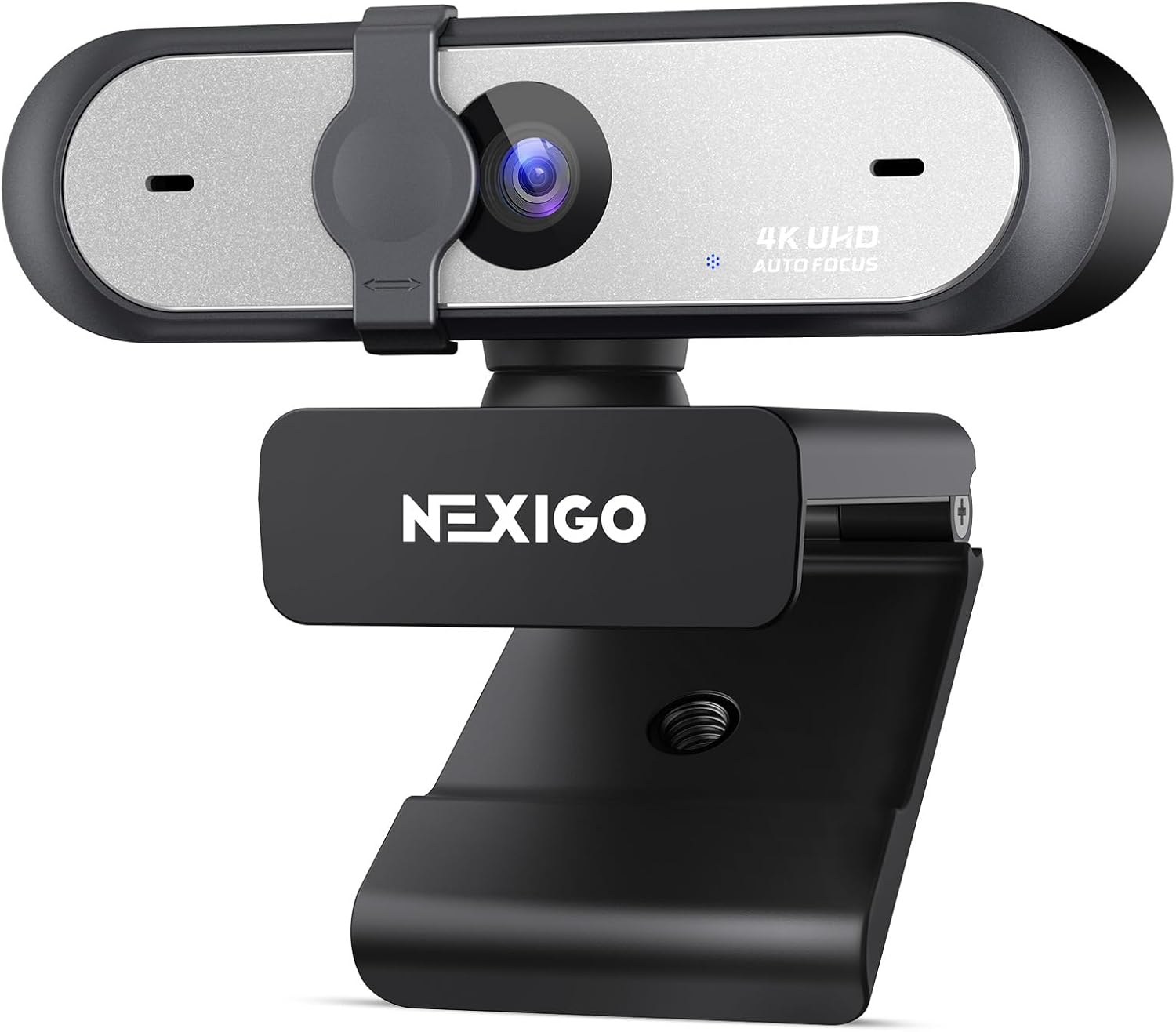
NexiGo N660P Pro 4K Webcam with Distortion-Free Lens, 1080p 60 fps Autofocus USB Streaming Camera, 3DNR, Noise-Canceling Mics & Privacy Cover, Web Cam for Gaming/Live Streaming/PC/Mac/Switch 2, Black
$50-$99This is a 4K 30fps or 1080p 60fps webcam with autofocus, dual noise-canceling mics, and a privacy cover, designed for streaming and video calls on various platforms.

NexiGo N660P Pro 4K Webcam with Distortion-Free Lens, 1080p 60 fps Autofocus USB Streaming Camera, 3DNR, Noise-Canceling Mics & Privacy Cover, Web Cam for Gaming/Live Streaming/PC/Mac/Switch 2, White
$50-$99This 4K webcam with 1080p 60 fps streaming, autofocus, and dual noise-canceling mics is for users needing high resolution and smooth video without external software.

4K Webcam with Autofocus & Tripod, Camera for PC Laptop with Dual Microphone, USB Computer Camera with Low Light Correction, Auto White Balance, Video Camera for Streaming, Meetings, Office, Zoom
$0-$49A 4K webcam with a CMOS sensor and f/2.8 aperture, designed for basic video calls and streaming on a budget.