
Canon RF-S55-210mm F5-7.1 is STM for APS-C Mirrorless RF Mount Cameras, Telephoto Zoom, Compact, Lightweight, Optical Image Stabilization, for Landscape, Portrait, & Travel Photos/Videos, Black
Want the best price and purchase timing?
Our AI advisor analyzes real-time pricing across all channels to find you the best deal.
AI Verdict
This 9.5-ounce telephoto zoom lens with 88-336mm full-frame equivalent coverage is for APS-C Canon R-series users needing reach without bulk.
This lens is a situational fit for APS-C Canon R-series users who prioritize a lightweight telephoto zoom for well-lit conditions. Its 9.5-ounce weight and 88-336mm equivalent range are compelling for travel, but the f/5-7.1 aperture limits its utility in dimmer environments. It's a budget-friendly option that delivers reach but compromises on light gathering and build features.
If you need better low-light performance or more background blur, look for lenses with a wider, constant maximum aperture, like f/2.8 or f/4.
Regret Score™
Medium RiskLower is better — measures purchase-regret risk from real buyer complaints, review credibility, and product maturity
Issues discovered after purchase
Critically weak dimension
Amazon rating vs actual quality
Chance this product isn't for you
Pros
- Weighs only 9.5 ounces, making it exceptionally light for a telephoto zoom lens.
- Offers an 88-336mm full-frame equivalent focal range on APS-C cameras, providing significant reach.
- Includes optical image stabilization, providing up to 4.5 stops of shake correction, or 7.0 stops when paired with IBIS-equipped R-series cameras.
- Autofocus is silent, accurate, and nearly instantaneous, even when tracking subjects.
- Features two UD glass elements and one aspheric element to minimize ghosting and flare for image quality.
- Achieves a maximum magnification of 0.28x at 210mm with a 28.7-inch minimum focus distance, allowing for close-up shots.
Cons
- The variable aperture of f/5-7.1 is considered 'slow,' limiting its performance in low-light conditions and affecting background blur.
- Lacks weather sealing, which means it's not protected against dust or moisture.
- Does not include physical AF/MF or stabilization on/off switches, requiring menu-based adjustments.
- Constructed with a plastic lens mount, which some users perceive as less durable than metal mounts.
- The lens extends physically when zooming, increasing its length during use.
Dimension Scores
Users report sharp pictures with good contrast, aided by two UD glass elements and one aspheric element.
The STM stepping motor provides silent, accurate, and nearly instantaneous autofocus, even with subject tracking.
The STM motor offers smooth and quiet continuous focus, which is beneficial for video, but the variable f/5-7.1 aperture limits its use in varied lighting conditions.
Weighing only 9.5 ounces and featuring a compact design, it is exceptionally lightweight and small for a telephoto zoom lens.
Best For
- Capturing distant subjects like wildlife or sports from a distance in bright conditions.
- Travel photography where minimizing weight and size is a priority.
- Outdoor portraiture where ample light is available and background compression is desired.
- Budget-conscious photographers seeking telephoto reach for Canon APS-C mirrorless cameras.
Not Recommended For
- Low-light photography or indoor events due to its narrow maximum aperture.
- Professional macro photography, as its 0.28x magnification is less capable than dedicated macro lenses.
- Everyday walk-around photography if a wider focal length is frequently needed.
- Users who require weather-sealed gear for challenging environments.
Watch Out For
- The f/5-7.1 variable aperture means you'll need plenty of light, especially at the 210mm end, where it's f/7.1, making low-light shooting difficult.
- No weather sealing, so don't expect it to hold up in rain or dusty conditions.
- The lens extends a couple of inches when zoomed to 210mm, which changes its balance and profile.
- It uses a plastic lens mount, which some users worry about for long-term durability compared to metal mounts.
- You won't find AF/MF or IS on/off switches on the barrel, so prepare to dive into your camera's menus for those settings.
Full Specifications
| ASIN | B0BTTTHPXS |
| Brand | Canon |
| Lens Type | Telephoto |
| Item Weight | 9.5 ounces |
| Manufacturer | Canon USA |
| Item model number | 5824C002 |
| Product Dimensions | 3.7 x 2.7 x 2.7 inches |
| Compatible Mountings | Canon RF |
| Focal Length Description | 55-210 millimeters |
What Buyers Say
Many users picked up this lens on sale, finding it a compelling value for its telephoto reach on APS-C cameras. The lightweight design and effective image stabilization are frequently mentioned as key benefits, making it easy to carry for travel or casual outdoor shooting. However, the variable f/5-7.1 aperture is a recurring point of concern, especially for those trying to shoot in less-than-ideal light or achieve significant background blur. Some users noted the lack of physical switches and the plastic mount as minor compromises for the price point.
“Okay, so I got this for my R50 and it's actually pretty good for the price, especially if you catch a sale. It's super light, which is awesome for hiking, but man, that f/7.1 at 210mm means you NEED sun, otherwise everything gets noisy fast. Still, for grabbing those far-off shots, it does the job.”
Common Praise
- Captures distant subjects effectively with its 88-336mm equivalent range.
- The 9.5-ounce weight makes it very easy to carry for extended periods.
- Optical image stabilization provides noticeable shake correction, especially useful on cameras without IBIS.
- Autofocus is quick and quiet, which is helpful for both stills and video.
- Produces sharp images with good contrast in well-lit conditions.
Common Complaints
- The f/5-7.1 aperture is too narrow for low-light situations, forcing higher ISOs or slower shutter speeds.
- Lacks weather sealing, so it's not suitable for adverse weather conditions.
- No dedicated switches for AF/MF or IS on/off, requiring menu navigation.
- The plastic lens mount feels less premium and potentially less durable than metal mounts.
- Extends physically when zooming, which can be a minor inconvenience.
Ownership Tips
- You'll quickly learn to check your lighting conditions before using this lens, as its narrow aperture demands bright environments.
- The compact size and light weight mean it often stays on the camera for casual outings, unlike heavier telephoto options.
- Without physical switches, you'll get familiar with your camera's custom button assignments for AF/MF and IS control.
- The extending barrel feels a bit less premium than internal zoom lenses, but it's a trade-off for the compact stowed size.
- While it gets you closer, don't expect super creamy bokeh like you'd get from a faster prime lens, even at 210mm.
Frequently Asked Questions
Does this lens work on full-frame Canon R-series cameras?
No, this is an RF-S lens designed specifically for Canon's APS-C mirrorless RF mount cameras like the R50, R10, and R7. It will not work on full-frame R-series cameras.
Is this lens suitable for low-light photography?
Due to its variable maximum aperture of f/5-7.1, this lens is not ideal for low-light photography. You'll need ample light to get usable shutter speeds without significantly increasing ISO.
Does this lens have image stabilization?
Yes, it features optical image stabilization, providing up to 4.5 stops of shake correction. When paired with an EOS R series camera with In-Body Image Stabilizer (IBIS), it can achieve up to 7.0 stops of shake correction.
What is the minimum focus distance of this lens?
The minimum focus distance is approximately 28.7 inches (0.73 meters) at the 210mm focal length, allowing for a maximum magnification of 0.28x.
Does this lens come with a lens hood?
No, the lens hood is not included and must be purchased separately. The compatible hood is the ET-60B.
Is this lens good for portraits?
It can be used for outdoor portraits in bright light, offering good background compression at longer focal lengths. However, its f/5-7.1 aperture won't produce the creamy background blur of faster prime lenses.
Buying Guide
When looking at a telephoto zoom lens like this, you need to think about how much 'reach' you need and what kind of light you'll be shooting in. This lens gives you a lot of reach, equivalent to 336mm on a full-frame camera, which is great for bringing distant subjects closer. However, its maximum aperture changes as you zoom, getting narrower at the long end. This means the lens lets in less light when fully zoomed, so you'll need brighter conditions or a camera that handles high ISOs well.
Focal Length (55-210mm, 88-336mm equivalent)
This tells you how much you can 'zoom in.' 55mm is a moderate telephoto, good for tighter portraits, while 210mm (336mm equivalent) is for subjects far away, like birds or distant landscapes. The 'equivalent' part is because it's for APS-C cameras, which have a crop factor that makes lenses appear more zoomed in than on full-frame cameras.
Aperture (F5-7.1)
This number indicates how much light the lens can gather and how much background blur you can achieve. A larger number (like F7.1) means less light and less blur. Since it's a 'variable' aperture, it gets darker as you zoom in, making it harder to shoot in dim light or get that super blurry background effect.
Optical Image Stabilization (4.5 stops)
This feature helps reduce blur from camera shake, especially important at longer focal lengths where even tiny movements are magnified. '4.5 stops' means you can use a shutter speed 4.5 times slower than you normally could and still get a sharp image, which is a big help when shooting handheld.
Weight (9.5 ounces)
This is crucial for portability. A lighter lens means less fatigue when carrying your camera all day, making it more enjoyable for travel or long shooting sessions. At 9.5 ounces, this lens is very light, like a small soda can.
Alternatives
If this lens doesn't fit, consider a telephoto zoom with a constant, wider aperture for better low-light performance and background blur, or a lens with a wider starting focal length if you need a more general-purpose zoom.
You Might Also Like

NexiGo N660P Pro 4K Webcam with Distortion-Free Lens, 1080p 60 fps Autofocus USB Streaming Camera, 3DNR, Noise-Canceling Mics & Privacy Cover, Web Cam for Gaming/Live Streaming/PC/Mac/Switch 2, Pink
$50-$99This is a 4K CMOS webcam with 3DNR and dual noise-canceling mics, designed for plug-and-play use across multiple platforms.
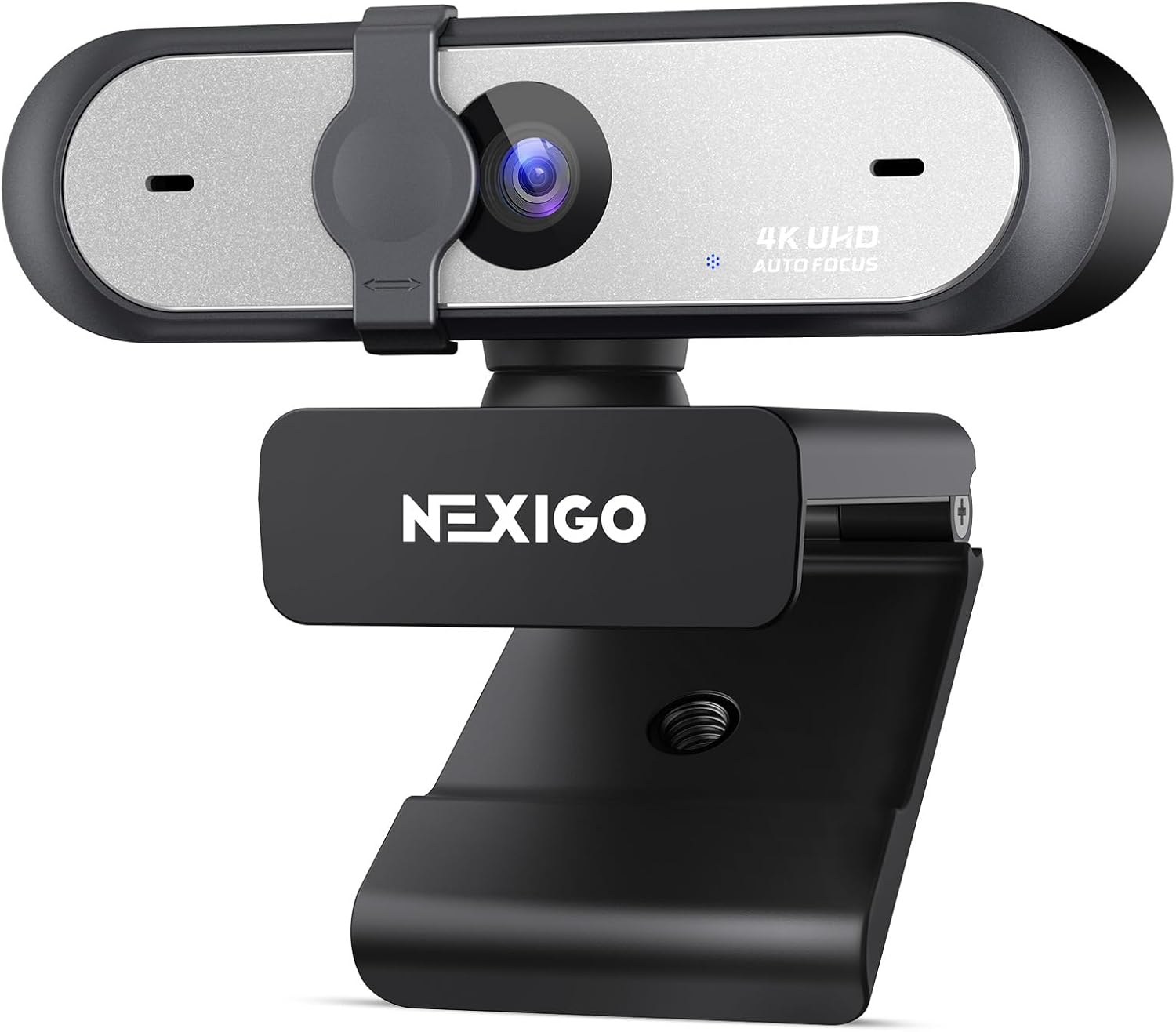
NexiGo N660P Pro 4K Webcam with Distortion-Free Lens, 1080p 60 fps Autofocus USB Streaming Camera, 3DNR, Noise-Canceling Mics & Privacy Cover, Web Cam for Gaming/Live Streaming/PC/Mac/Switch 2, Black
$50-$99This is a 4K 30fps or 1080p 60fps webcam with autofocus, dual noise-canceling mics, and a privacy cover, designed for streaming and video calls on various platforms.

NexiGo N660P Pro 4K Webcam with Distortion-Free Lens, 1080p 60 fps Autofocus USB Streaming Camera, 3DNR, Noise-Canceling Mics & Privacy Cover, Web Cam for Gaming/Live Streaming/PC/Mac/Switch 2, White
$50-$99This 4K webcam with 1080p 60 fps streaming, autofocus, and dual noise-canceling mics is for users needing high resolution and smooth video without external software.

4K Webcam with Autofocus & Tripod, Camera for PC Laptop with Dual Microphone, USB Computer Camera with Low Light Correction, Auto White Balance, Video Camera for Streaming, Meetings, Office, Zoom
$0-$49A 4K webcam with a CMOS sensor and f/2.8 aperture, designed for basic video calls and streaming on a budget.