
DJI RS 3 Mini, 3-Axis Gimbal Stabilizer for Cameras Canon/Sony/Panasonic/Nikon/Fujifilm, 2 kg (4.4 lbs) Tested Payload, Camera Stabilizer, Camera Gimbal with Native Vertical Shooting
Want the best price and purchase timing?
Our AI advisor analyzes real-time pricing across all channels to find you the best deal.
AI Verdict
This is a 795g (1.75 lbs) gimbal with a 2 kg (4.4 lbs) payload, made for mirrorless camera users who prioritize portability over heavy-duty camera setups.
This gimbal is a situational fit because its 795g (1.75 lbs) weight and 2 kg (4.4 lbs) payload capacity are ideal for compact mirrorless setups, but it struggles significantly with heavier camera and lens combinations. The native vertical shooting is a plus for social media, but balancing can be a chore with certain camera bodies and lenses.
If you frequently use heavier lenses or need automatic axis locks, look for gimbals with a higher payload capacity (e.g., 3 kg+) and features like auto-locking axes.
Regret Score™
Low RiskLower is better — measures purchase-regret risk from real buyer complaints, review credibility, and product maturity
Issues discovered after purchase
Critically weak dimension
Amazon rating vs actual quality
Chance this product isn't for you
Pros
- Weighs 795g (1.75 lbs), making it easy to hold for extended shooting.
- Supports camera and lens combinations up to 2 kg (4.4 lbs).
- Offers native vertical shooting by mounting the quick-release plate to the vertical arm.
- Features Bluetooth shutter control, allowing automatic camera reconnection and control of photo/video capture.
- Utilizes a 3rd-Gen RS Stabilization Algorithm for smooth footage.
- Provides a 10-hour battery life and charges via USB-C.
Cons
- Struggles with camera and lens combinations approaching the 2 kg (4.4 lbs) payload limit, especially with larger zoom lenses like 24-70mm.
- Balancing can be tricky and time-consuming, with shorter mounting plates limiting adjustment for front-heavy setups.
- The touchscreen can be unresponsive, often requiring multiple presses to register input.
- The battery is not replaceable, though it can be charged while in use with a power bank.
- Lacks automatic axis locks and intelligent tracking features found in higher-end models like the RS 3 or RS 4 Mini.
Dimension Scores
The 3rd-Gen RS Stabilization Algorithm effectively smooths out footage, allowing for stable shots even in challenging scenarios.
The gimbal itself doesn't directly affect camera autofocus speed, but Bluetooth shutter control allows for seamless recording activation.
It supports native vertical shooting and provides stable footage for various camera movements, making it suitable for diverse video content creation.
Weighing 795g (1.75 lbs), it's significantly lighter and more compact than larger gimbals, making it easy to travel with and hold for extended periods.
Best For
- Travel videographers needing a compact and lightweight stabilizer for mirrorless cameras.
- Content creators focusing on social media with native vertical shooting requirements.
- Users with smaller mirrorless cameras and prime or lighter zoom lenses under 2 kg (4.4 lbs).
- Filmmakers who need a portable option for low-angle shots or filming in flashlight mode.
Not Recommended For
- Videographers using heavy full-frame cameras with large, extending zoom lenses near or over 2 kg (4.4 lbs).
- Professionals requiring advanced features like automatic axis locks or intelligent subject tracking.
- Users who need a replaceable battery for extended, uninterrupted shooting sessions.
Watch Out For
- Balancing a Sony A7sIII with a Sigma 18-35mm lens is difficult because the camera screen hits the back motor in vertical mode, preventing proper balance.
- Zoom lenses that extend, like the Canon RF 24-105mm f/4, often require recalibration after zooming, interrupting workflow.
- The touchscreen can be frustrating, needing multiple presses to register input.
- The handle grip can be too small for larger hands, leading to accidental joystick touches during operation.
- It doesn't come with a carrying case, leaving it vulnerable to damage when packed in a bag.
Full Specifications
| UPC | 190021067158 |
| ASIN | B0BLD1KBHQ |
| Brand | DJI |
| Color | black |
| Language | English |
| Batteries | 1 CR5 batteries required. (included) |
| Department | adults |
| Folded Size | 32.3×19.5×9.8 centimeters |
| Item Weight | 2.16 pounds |
| Manufacturer | DJI |
| Item model number | P20M |
| Compatible Devices | Camera |
| Product Dimensions | 6.26 x 11.65 x 7.09 inches |
| Compatible Camcorder Models | SONY ZV-E10 |
| Global Trade Identification Number | 00190021067158, 06941565941916 |
What Buyers Say
Users frequently report that while the DJI RS 3 Mini is incredibly light and portable, its 2 kg (4.4 lbs) payload limit is often a tight squeeze for many popular mirrorless camera and lens combinations, leading to balancing headaches. Many found that setups close to the weight limit, especially with front-heavy lenses, cause the camera to hit the gimbal body or make balancing extremely difficult. The manual axis locks are a step down from the auto-locks on bigger RS models, and the touchscreen can be a bit finicky.
“Look, it's light, yeah, but trying to balance my A7IV with a 24-70mm was a nightmare, the screen kept hitting the back and the motors sounded like they were gonna give up. If you got a small prime, maybe, but anything else, just get the bigger one.”
Common Praise
- The 795g (1.75 lbs) weight makes it comfortable to carry and use for long shoots.
- Native vertical shooting is quick and easy to set up, which is crucial for social media content.
- The 3rd-Gen RS Stabilization Algorithm delivers consistently smooth and stable footage.
- Bluetooth shutter control is a convenient feature, eliminating the need for cables and automatically reconnecting.
- The 10-hour battery life is sufficient for most day-long shooting sessions.
Common Complaints
- Balancing can be a frustrating and time-consuming process, especially with heavier lenses or when switching to vertical mode.
- Camera screens can hit the back motor when trying to balance front-heavy setups in vertical orientation.
- The touchscreen often requires multiple presses to register input, which slows down adjustments.
- The gimbal struggles with camera and lens combinations near its 2 kg (4.4 lbs) payload capacity, leading to motor strain.
- The lack of automatic axis locks means manually securing each axis, which is less convenient than on the RS 3.
Ownership Tips
- You'll spend more time balancing than you think, especially if your lens extends or you switch between horizontal and vertical often.
- The small grip can be annoying if you have larger hands, leading to accidental joystick nudges.
- Even with the 10-hour battery, the non-replaceable battery means you're tethered to a power bank for really long shoots.
- The absence of a dedicated carrying case means you need to find your own solution to protect it in your bag.
- Don't expect intelligent tracking; this model is purely about stabilization and basic controls.
Frequently Asked Questions
What is the maximum weight capacity for cameras and lenses?
The DJI RS 3 Mini can support camera and lens combinations weighing up to 2 kg (4.4 lbs).
Can I shoot vertical video with this gimbal?
Yes, it supports native vertical shooting. You just mount the quick-release plate directly to the vertical arm.
Does it have automatic axis locks?
No, the RS 3 Mini features manual axis locks, unlike the automatic locking mechanisms found on the larger RS 3 and RS 4 Mini models.
How long does the battery last?
The gimbal offers a battery life of approximately 10 hours on a full charge, which takes about 2.5 hours.
Is the battery replaceable?
No, the battery on the DJI RS 3 Mini is not replaceable, but you can charge and use the gimbal simultaneously with a power bank.
Buying Guide
When you're looking at gimbals, you need to think about what camera and lenses you'll actually use with it. Don't just look at the maximum payload; consider how balanced your setup will be. A lighter gimbal like this one is awesome for travel, but if your gear is front-heavy, you'll fight it constantly. Also, think about how you shoot: do you need quick vertical switches for social media, or are you doing cinematic pans that require precise control?
Payload Capacity (2 kg / 4.4 lbs)
This isn't just about the total weight your camera and lens add up to. It's about how much the gimbal's motors can physically stabilize without straining. If your setup is too close to this limit, the gimbal will struggle, leading to less smooth footage and potentially damaging the motors over time.
Weight (795g / 1.75 lbs)
This is how much the gimbal itself weighs. A lighter gimbal means less fatigue during long shooting sessions, especially if you're holding it one-handed. Think of it like carrying a backpack – a lighter empty pack means you can carry more gear comfortably.
Native Vertical Shooting
This feature lets you quickly switch your camera to shoot in portrait orientation without needing extra accessories or complex rebalancing. If you create content for platforms like TikTok or Instagram Reels, this saves you a ton of time and hassle.
Alternatives
If this gimbal doesn't fit your needs, look for models with a higher payload capacity (e.g., 3 kg or more) for heavier camera setups, or those with automatic axis locks and advanced tracking features for quicker setup and more dynamic shots.
You Might Also Like

NexiGo N660P Pro 4K Webcam with Distortion-Free Lens, 1080p 60 fps Autofocus USB Streaming Camera, 3DNR, Noise-Canceling Mics & Privacy Cover, Web Cam for Gaming/Live Streaming/PC/Mac/Switch 2, Pink
$50-$99This is a 4K CMOS webcam with 3DNR and dual noise-canceling mics, designed for plug-and-play use across multiple platforms.
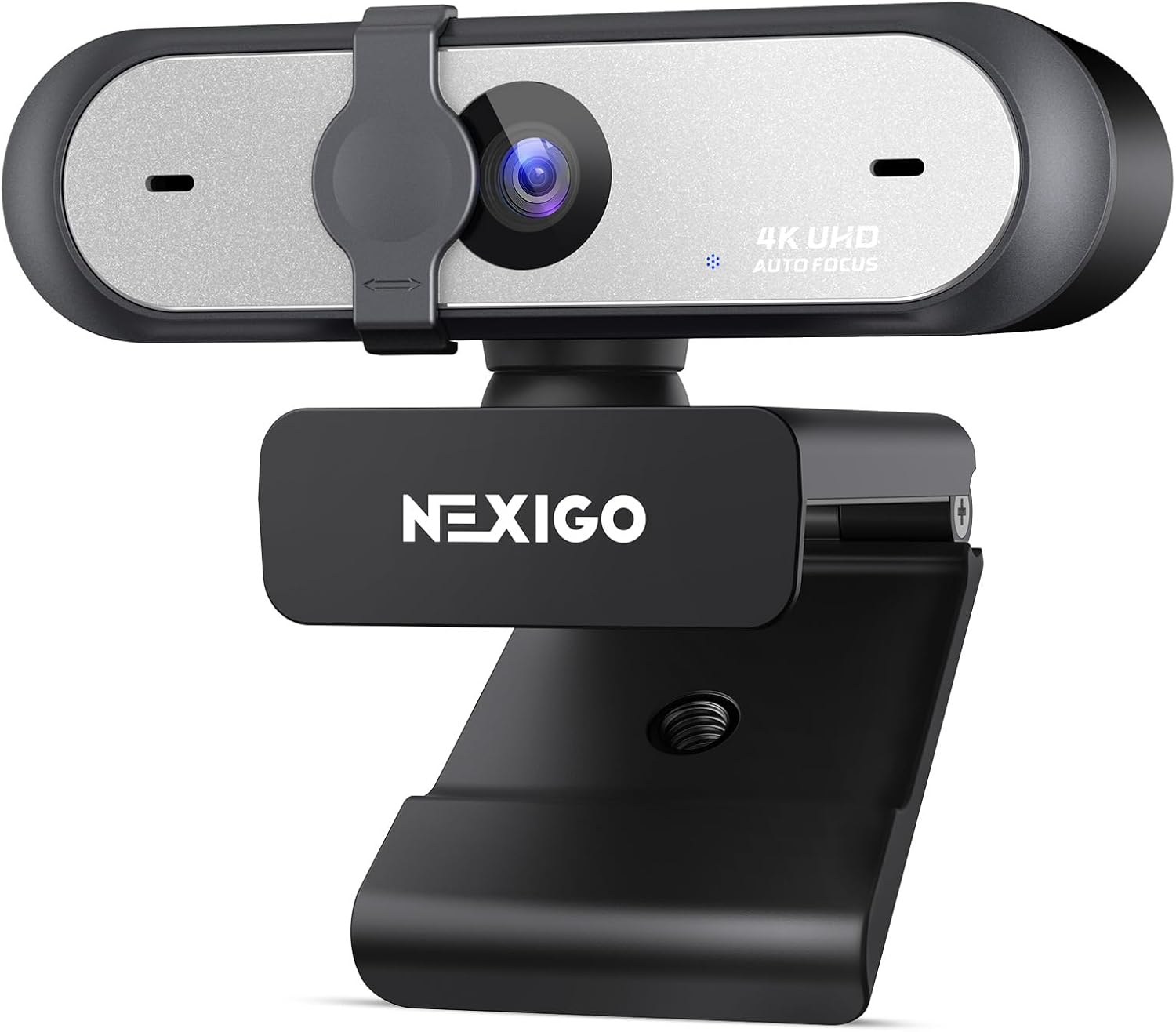
NexiGo N660P Pro 4K Webcam with Distortion-Free Lens, 1080p 60 fps Autofocus USB Streaming Camera, 3DNR, Noise-Canceling Mics & Privacy Cover, Web Cam for Gaming/Live Streaming/PC/Mac/Switch 2, Black
$50-$99This is a 4K 30fps or 1080p 60fps webcam with autofocus, dual noise-canceling mics, and a privacy cover, designed for streaming and video calls on various platforms.

NexiGo N660P Pro 4K Webcam with Distortion-Free Lens, 1080p 60 fps Autofocus USB Streaming Camera, 3DNR, Noise-Canceling Mics & Privacy Cover, Web Cam for Gaming/Live Streaming/PC/Mac/Switch 2, White
$50-$99This 4K webcam with 1080p 60 fps streaming, autofocus, and dual noise-canceling mics is for users needing high resolution and smooth video without external software.

4K Webcam with Autofocus & Tripod, Camera for PC Laptop with Dual Microphone, USB Computer Camera with Low Light Correction, Auto White Balance, Video Camera for Streaming, Meetings, Office, Zoom
$0-$49A 4K webcam with a CMOS sensor and f/2.8 aperture, designed for basic video calls and streaming on a budget.