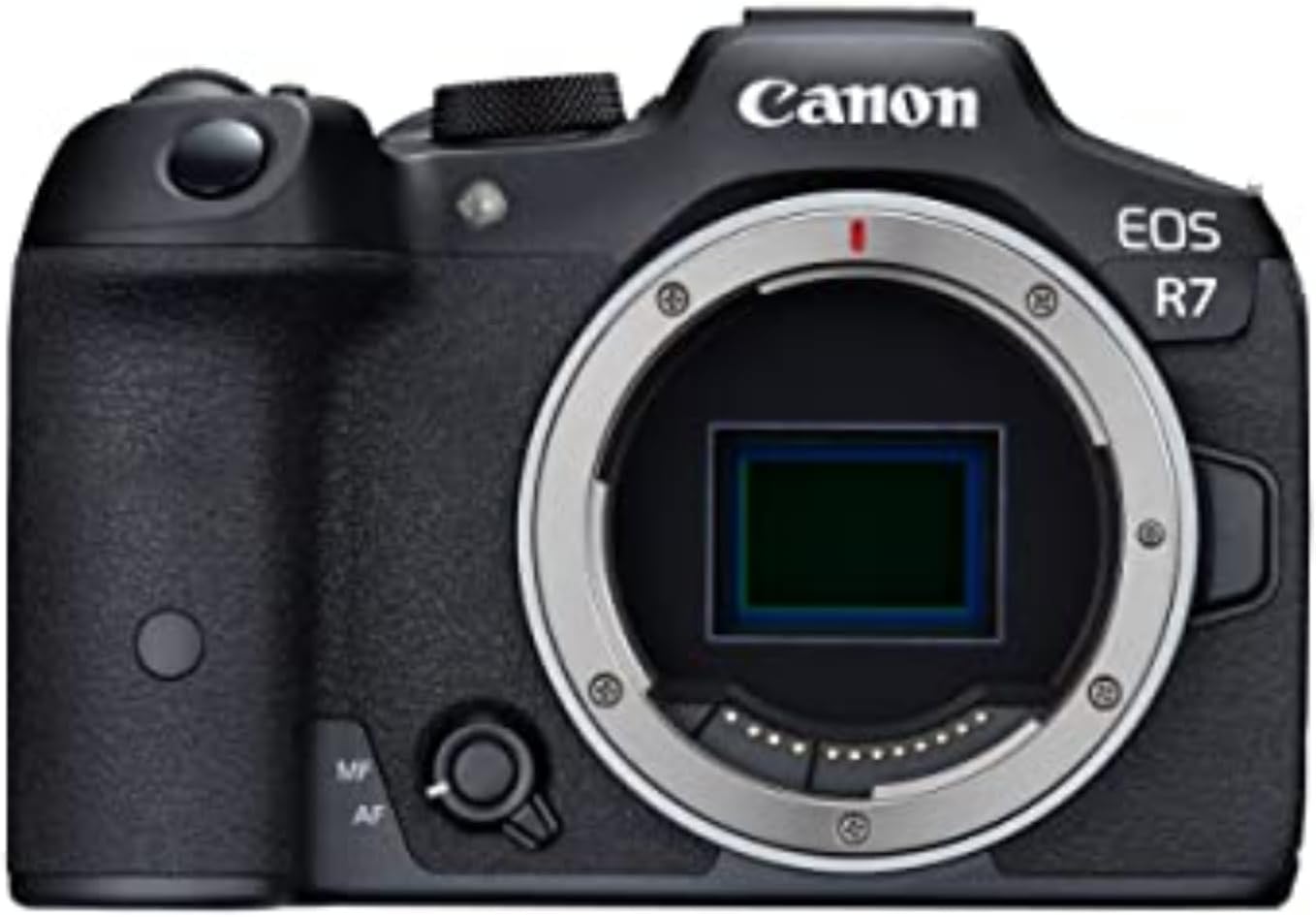
Canon EOS R7 Mirrorless Camera (Body Only), Hybrid Camera, 32.5 Megapixel (APS-C) CMOS Sensor, 4K Video, for Sports, Action, Content Creators, Vlogging Camera, Black
Want the best price and purchase timing?
Our AI advisor analyzes real-time pricing across all channels to find you the best deal.
AI Verdict
This is a 32.5-megapixel APS-C mirrorless camera with 4K60p video and 15 fps mechanical shooting, built for action and content creation.
This camera is a strong fit for action, sports, and video content creators due to its 32.5-megapixel APS-C sensor, 15 fps mechanical shutter, and uncropped 4K60p video with IBIS. The Dual Pixel CMOS AF II with subject detection is designed for tracking moving subjects effectively.
If you need superior low-light performance and less noise at high ISOs, look for a full-frame sensor camera.
Regret Score™
Medium RiskLower is better — measures purchase-regret risk from real buyer complaints, review credibility, and product maturity
Issues discovered after purchase
Critically weak dimension
Amazon rating vs actual quality
Chance this product isn't for you
Pros
- Captures 32.5-megapixel images with an APS-C CMOS sensor.
- Records uncropped 4K60p 10-bit video with no recording time limit.
- Focuses with Dual Pixel CMOS AF II across 651 zones, covering 100% width and height.
- Shoots continuously at 15 frames per second with the mechanical shutter.
- Stabilizes images and video with 5-Axis In-body Image Stabilization (IBIS) up to 7 stops.
- Offers a robust, weather-sealed magnesium body with a deep hand grip.
Cons
- Electronic shutter exhibits noticeable rolling shutter distortion with fast movement.
- Autofocus can struggle with small, fast-moving subjects in complex backgrounds.
- Produces higher noise levels in low light compared to full-frame cameras, especially above ISO 25,600.
- Has a limited selection of native RF-S lenses.
- Lacks a dedicated headphone jack on the body, requiring an adapter.
Dimension Scores
The 32.5-megapixel APS-C CMOS sensor delivers high-resolution images, but noise becomes significant above ISO 25,600.
Dual Pixel CMOS AF II with 651 zones and subject detection is fast and covers 100% of the frame, though it can struggle with small, fast subjects in busy scenes.
Offers uncropped 4K60p 10-bit video with C.LOG 3, no recording limit, and IBIS, but the electronic shutter has rolling shutter issues.
Weighing 1.1 pounds (body only), it's relatively lightweight for an enthusiast camera, but not the most portable among crop sensor options.
Best For
- Capturing fast-moving sports and wildlife with its 15 fps mechanical shutter.
- Creating high-quality 4K60p video content with in-body stabilization.
- Hybrid shooters needing both high-resolution stills and 10-bit 4K video.
- Travelers seeking a lightweight body with a deep hand grip for telephoto lenses.
Not Recommended For
- Shooting in very low light conditions where noise performance is critical.
- Users who rely heavily on the electronic shutter for freezing fast action without distortion.
- Photographers requiring an extensive native APS-C lens ecosystem without adapters.
Watch Out For
- The electronic shutter can cause noticeable rolling shutter artifacts when capturing fast-moving subjects.
- Autofocus performance can be inconsistent with small, fast wildlife in busy scenes, requiring quick re-focusing.
- Some users have reported issues with the D-Pad not working properly and questioned the weather sealing around it.
- Low light image quality shows significant noise above ISO 25,600, making those settings generally unusable.
- The EVF, at 2.36M-dots, is functional but not considered best-in-class compared to some competitors.
Full Specifications
| ASIN | B0B27KKNZV |
| Brand | Canon |
| Batteries | 1 AAA batteries required. (included) |
| Department | All Ages, Unisex |
| Item Weight | 1.1 pounds |
| Aspect Ratio | 3:2 |
| Manufacturer | Canon USA |
| Maximum Aperture | 6.3 f |
| Item model number | 5137C002 |
| Product Dimensions | 3.61 x 5.2 x 3.56 inches |
| Image Stabilization | Sensor-shift |
| Compatible Mountings | Canon RF |
| Expanded ISO Minimum | 100 |
| Maximum Focal Length | 150 Millimeters |
| Metering Description | Center-Weighted Average, Evaluative, Partial, Spot |
| Supported File Format | C-RAW, HEIF, JPEG, Raw |
| Photo Sensor Technology | CMOS |
What Buyers Say
Many users highlight the camera's ability to capture sharp images of distant subjects, especially when paired with telephoto lenses, thanks to the APS-C crop factor and high megapixel count. The battery life is frequently praised, with some reporting over 100 minutes of 4K60p recording or 660 shots on a single charge. However, the electronic shutter's rolling shutter effect is a recurring concern for fast action, and some find the autofocus can be inconsistent with very challenging subjects. The limited native RF-S lens selection is also a point of discussion, pushing users towards full-frame RF lenses or adapted EF glass.
“Okay, so the R7 is pretty sick for wildlife, that crop factor and IBIS are a game changer, I got some insane shots I never would have with my old camera. But seriously, that electronic shutter rolling shutter is a pain, gotta remember to switch to mechanical for anything fast or it looks like jelly. And the low light? Forget about it past ISO 12800, it's a noisy mess.”
Common Praise
- The 32.5MP sensor provides ample resolution for cropping, especially useful for wildlife.
- In-body image stabilization (IBIS) allows for sharp handheld shots at slow shutter speeds, even with long lenses.
- Battery life is extended, providing long shooting sessions for both stills and 4K video.
- The deep hand grip and overall ergonomics feel comfortable, even with heavier lenses.
- Uncropped 4K60p video with 10-bit C-Log3 offers professional-grade video capabilities.
- The fully articulating touchscreen is highly versatile for vlogging and awkward angles.
Common Complaints
- Rolling shutter distortion is noticeable when using the electronic shutter for fast-moving subjects.
- Autofocus can be unpredictable or miss focus with small, fast-moving subjects in complex environments.
- Low light performance and high ISO noise are not as clean as full-frame alternatives.
- The native RF-S lens lineup is still quite limited, requiring reliance on adapters or full-frame RF lenses.
- One user reported a faulty D-Pad button and questioned the camera's weather sealing integrity.
Ownership Tips
- The included extra battery pack (LP-E6NH) is genuinely useful for extended shooting days.
- The APS-C crop factor effectively extends the reach of full-frame lenses, making them feel longer.
- The autofocus joystick with a dial takes a little getting used to but becomes intuitive.
- Using AI denoisers in post-processing can significantly improve high ISO noise from the APS-C sensor.
- The camera's menu system includes a helpful 'Help' function that explains settings.
Frequently Asked Questions
Does the Canon EOS R7 have in-body image stabilization?
Yes, it features a 5-Axis In-body Image Stabilization System (IBIS) that can provide up to 7 stops of stabilization. This helps capture shake-free images and video, even in low light conditions.
What kind of video can the Canon EOS R7 record?
The R7 records high-quality 4K video at up to 60p without a crop and supports internal 10-bit 4:2:2 video recording in C.LOG 3 format. It also has no recording time limit, allowing for longer takes.
How fast can the Canon EOS R7 shoot?
It can shoot continuously at 15 frames per second with its mechanical shutter and up to 30 frames per second with the electronic shutter. There's also a RAW Burst Mode with 1/2-second pre-shooting.
Is the Canon EOS R7 good for low light photography?
While usable up to ISO 6400, its low light performance is less ideal than full-frame cameras, with noticeable noise appearing above ISO 25,600. You'll get cleaner results by keeping ISO lower.
Can I use my old EF lenses on the Canon EOS R7?
Yes, you can use EF and EF-S lenses with an appropriate Canon EF-EOS R mount adapter. This expands your lens options beyond the native RF-S lineup.
Buying Guide
When looking at a mirrorless camera like the R7, you're essentially buying into a system. Think about what you shoot most: fast action, video, or general photography. The sensor size, like this APS-C, gives you more 'reach' with lenses compared to full-frame, which is a big deal for wildlife. Also, check if the camera has in-body image stabilization (IBIS) because it helps keep your shots steady, especially with longer lenses or in lower light. Don't just look at megapixels; how the camera handles autofocus and video quality is just as important for real-world use.
32.5 Megapixel (APS-C) CMOS Sensor
This sensor size gives you a 'crop factor,' making your lenses appear to have more zoom, which is fantastic for getting closer to distant subjects like birds or athletes. The 32.5 megapixels mean you can crop your photos significantly and still have plenty of detail for large prints or aggressive editing.
Dual Pixel CMOS AF technology with up to 651 AF zones
This is how the camera locks onto your subject. More AF zones covering a wider area means the camera can track moving objects more precisely across the entire frame. Dual Pixel AF is known for being fast and smooth, especially for video, so your subjects stay in focus even when they move.
15 fps mechanical shutter, 30 fps electronic shutter
This tells you how many photos the camera can take per second. 15 fps mechanical is super fast for freezing action without distortion. The 30 fps electronic shutter is even faster but can introduce 'rolling shutter' effects, making straight lines appear bent if your subject moves too quickly.
5-Axis In-body Image Stabilization (IBIS)
This system moves the camera's sensor to counteract your hand movements, letting you shoot at slower shutter speeds or with longer lenses without blur. It's like having a built-in mini-tripod, making your photos and videos much steadier, especially when shooting handheld.
Alternatives
If this camera doesn't fit, consider models with a full-frame sensor for superior low-light performance and shallower depth of field, or cameras with a more mature native APS-C lens ecosystem if you prefer not to adapt lenses.
You Might Also Like

NexiGo N660P Pro 4K Webcam with Distortion-Free Lens, 1080p 60 fps Autofocus USB Streaming Camera, 3DNR, Noise-Canceling Mics & Privacy Cover, Web Cam for Gaming/Live Streaming/PC/Mac/Switch 2, Pink
$50-$99This is a 4K CMOS webcam with 3DNR and dual noise-canceling mics, designed for plug-and-play use across multiple platforms.
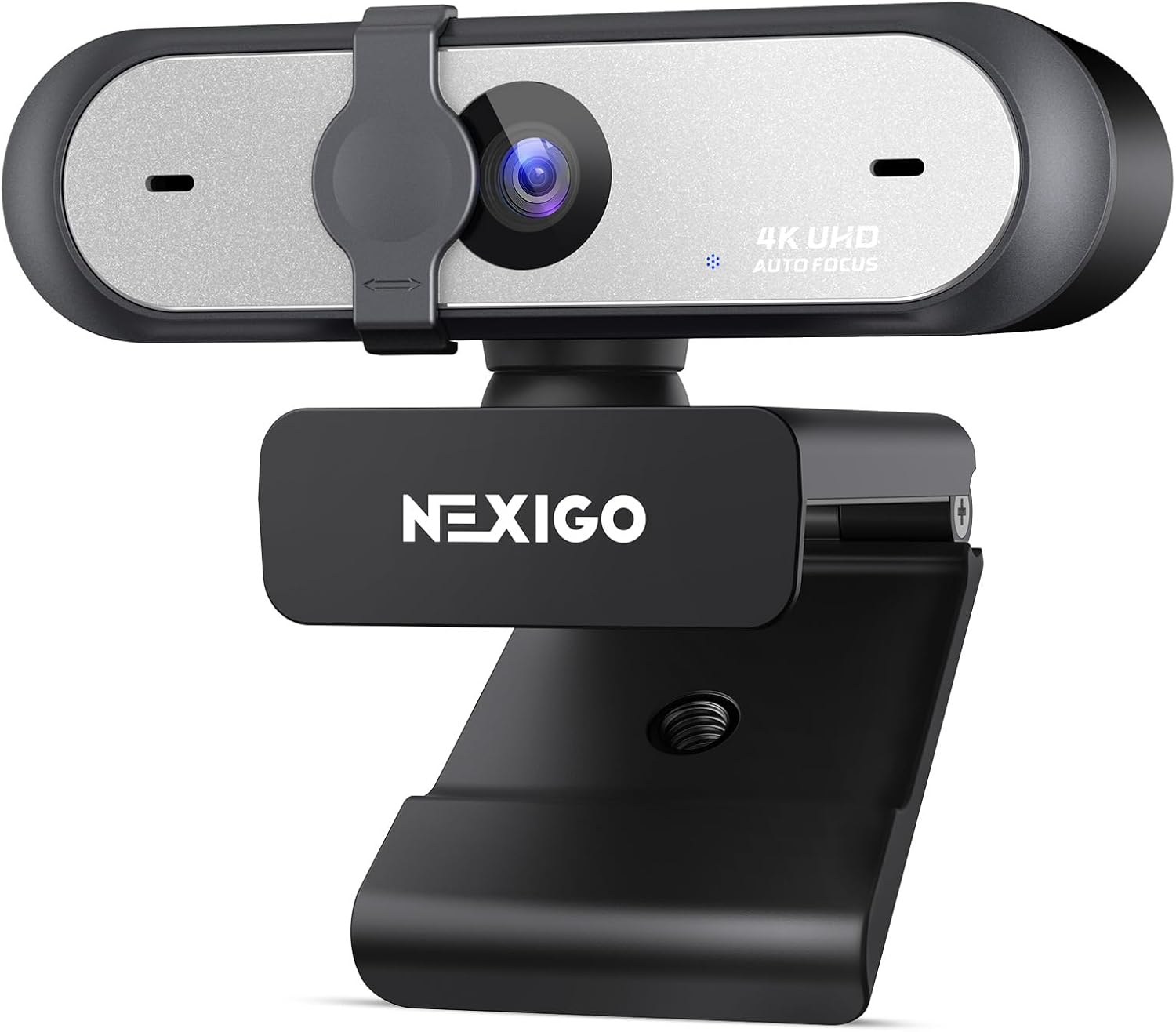
NexiGo N660P Pro 4K Webcam with Distortion-Free Lens, 1080p 60 fps Autofocus USB Streaming Camera, 3DNR, Noise-Canceling Mics & Privacy Cover, Web Cam for Gaming/Live Streaming/PC/Mac/Switch 2, Black
$50-$99This is a 4K 30fps or 1080p 60fps webcam with autofocus, dual noise-canceling mics, and a privacy cover, designed for streaming and video calls on various platforms.

NexiGo N660P Pro 4K Webcam with Distortion-Free Lens, 1080p 60 fps Autofocus USB Streaming Camera, 3DNR, Noise-Canceling Mics & Privacy Cover, Web Cam for Gaming/Live Streaming/PC/Mac/Switch 2, White
$50-$99This 4K webcam with 1080p 60 fps streaming, autofocus, and dual noise-canceling mics is for users needing high resolution and smooth video without external software.

4K Webcam with Autofocus & Tripod, Camera for PC Laptop with Dual Microphone, USB Computer Camera with Low Light Correction, Auto White Balance, Video Camera for Streaming, Meetings, Office, Zoom
$0-$49A 4K webcam with a CMOS sensor and f/2.8 aperture, designed for basic video calls and streaming on a budget.