
Canon RF100-400mm F5.6-8 is USM, Telephoto
Want the best price and purchase timing?
Our AI advisor analyzes real-time pricing across all channels to find you the best deal.
AI Verdict
This 1.8-pound 100-400mm telephoto lens with 5.5-stop IS is for Canon R-series shooters needing reach without a heavy setup.
This 1.8-pound telephoto lens with a 100-400mm range and 5.5-stop IS is a strong fit for photographers who prioritize portability and reach for outdoor, well-lit scenarios. Its Nano USM autofocus is quick enough for moving subjects, making it a solid choice for casual wildlife or sports.
If you need better low-light performance or weather sealing, look for lenses with a wider constant aperture (e.g., f/4 or f/2.8) and L-series construction.
Regret Score™
Low RiskLower is better — measures purchase-regret risk from real buyer complaints, review credibility, and product maturity
Issues discovered after purchase
Critically weak dimension
Amazon rating vs actual quality
Chance this product isn't for you
Pros
- The 1.8-pound weight makes it easy to carry for extended periods, unlike heavier telephoto options.
- Autofocus is fast and quiet thanks to the Nano USM motor, tracking subjects like birds in flight effectively.
- The Optical Image Stabilizer provides up to 5.5 stops of shake correction, extending to 6 stops with EOS R cameras featuring IBIS.
- It offers a 0.41x maximum magnification at 400mm with a 2.89 feet minimum focusing distance at 200mm, allowing for close-up shots.
- Image quality is sharp across much of the zoom range, with users reporting clarity even at 400mm when stopped down to f/10.
- The customizable control ring allows adjustment of aperture, ISO, or exposure compensation directly on the lens.
Cons
- The f/5.6-8 maximum aperture is narrow, limiting its use in low-light conditions like night photography or dimly lit indoor sports.
- It lacks weather sealing, which is a drawback for outdoor photography in unpredictable conditions.
- The lens does not include a lens hood, requiring a separate purchase.
- Sharpness at 400mm wide open at f/8 is not as high as at shorter focal lengths or when stopped down.
- The bokeh can appear somewhat harsh with 'bubble-like' highlights due to pronounced outlining.
Dimension Scores
It delivers sharp images across much of the zoom range, with central resolution hitting 4,600 lines at 100mm f/8 and maintaining good results at 400mm when stopped down to f/10.
The Nano USM motor provides fast, smooth, and quiet autofocus, capable of tracking subjects like birds in flight effectively.
The Nano USM motor offers smooth and near-silent focusing, which is beneficial for video applications, and the image stabilization helps with handheld footage.
Weighing 1.8 pounds, it is considered very light and compact for a 100-400mm telephoto lens, making it easy to carry for extended periods.
Best For
- Outdoor wildlife photography in daylight.
- Sports photography during well-lit events.
- Travel photography where minimizing gear weight is crucial.
- Landscape photography for compressing distant scenes.
Not Recommended For
- Night photography or astrophotography due to the narrow aperture.
- Professional-level photography requiring weather-sealed L-series build quality.
- Shooting in consistently dim indoor environments without additional lighting.
Watch Out For
- You'll need to buy a lens hood separately, as it's not included in the box.
- Expect to stop down to f/10 at 400mm to achieve sharper results, as f/8 can be softer.
- The lack of weather sealing means you'll need to be careful using it in rain or dusty environments.
- Image quality at the outer edges of the frame can be less sharp at the long end of the zoom range.
- Lateral chromatic aberration is present in uncorrected RAW images, though less noticeable in JPGs.
Full Specifications
| ASIN | B09FFV6WF5 |
| Brand | Canon |
| Batteries | 1 Nonstandard Battery batteries required. |
| Lens Type | Telephoto |
| Item Weight | 1.8 pounds |
| Manufacturer | Canon USA |
| Item model number | 5050C002 |
| Product Dimensions | 3.13 x 3.13 x 6.48 inches |
| Compatible Mountings | Canon RF |
| Focal Length Description | Telephoto 100-400 Lens |
What Buyers Say
What really stands out is how many people are genuinely surprised by the image quality for a lens this light and affordable. Users consistently mention its portability and how easy it is to carry around all day, making it a go-to for travel and outdoor adventures. The autofocus gets a lot of praise for being quick and quiet, even for moving subjects. However, the narrow f/5.6-8 aperture is a recurring point of concern, especially when the light starts to drop.
“Dude, this lens is so light, I actually take it everywhere now. Yeah, it's a bit dark when the sun goes down, but for daylight bird shots, it's a total game changer for my R50.”
Common Praise
- The 1.8-pound weight makes it comfortable for handheld shooting and carrying on hikes.
- Autofocus is fast and quiet, tracking subjects like birds in flight without issue.
- Image stabilization provides up to 5.5 stops of shake correction, making handheld shots easier.
- Sharpness is reported as very good, especially when stopping down slightly at longer focal lengths.
- The 100-400mm focal range offers plenty of reach for distant subjects.
Common Complaints
- The f/5.6-8 aperture is too slow for shooting in low light, requiring high ISOs.
- It doesn't have weather sealing, which is a concern for outdoor use.
- A lens hood is not included, which feels like an oversight.
- Image quality at 400mm wide open at f/8 can be softer than at other focal lengths or apertures.
- The bokeh can be a bit busy or 'bubble-like' in some situations.
Ownership Tips
- You'll quickly notice how much easier it is to carry compared to heavier telephoto lenses, encouraging more frequent use.
- Learning to stop down to f/10 at 400mm for maximum sharpness becomes a habit.
- The lack of a lens hood is annoying; you'll probably end up buying a third-party one.
- You'll find yourself pushing your camera's ISO higher than usual in anything but bright daylight.
- The customizable control ring is surprisingly useful once you assign a function to it.
Frequently Asked Questions
Is this lens suitable for bird photography?
Yes, many users find the 100-400mm focal range and fast Nano USM autofocus suitable for birding, especially in good light.
Does this lens come with a lens hood?
No, a lens hood is not included with the Canon RF100-400mm F5.6-8 IS USM and must be purchased separately.
How does it perform in low light?
Its f/5.6-8 maximum aperture is relatively narrow, making it challenging to use in low-light conditions without significantly increasing ISO or using slower shutter speeds.
Is this lens weather-sealed?
No, the Canon RF100-400mm F5.6-8 IS USM does not feature weather sealing.
Can I use teleconverters with this lens?
Yes, it is technically compatible with Canon RF 1.4x and 2x extenders, though image quality may degrade, and the maximum aperture will become even narrower.
Is it sharp at 400mm?
Users report that it can be sharp at 400mm, particularly when stopped down to f/10, though wide open at f/8 it might be softer.
Buying Guide
When you're looking at telephoto lenses, you're balancing reach, aperture, and weight. Longer focal lengths bring distant subjects closer, but often mean heavier, more expensive lenses with narrower apertures. A wider aperture (like f/2.8 or f/4) lets in more light, which is crucial for low-light shooting and creating blurry backgrounds, but adds significant bulk and cost. Image stabilization helps you handhold the lens at slower shutter speeds without blur. Autofocus speed matters for moving subjects. You need to decide what's most important for your shooting style.
Focal Length (100-400mm)
This range dictates how much you can 'zoom in.' 100mm is a moderate telephoto, good for portraits or distant landscapes, while 400mm pulls far-off subjects like wildlife or athletes right into your frame. Think of it like binoculars; a higher number means more magnification.
Maximum Aperture (f/5.6-8)
This number tells you how much light the lens can gather. A smaller number (like f/2.8) means a wider opening, letting in more light for dim conditions and creating a shallower depth of field (blurry backgrounds). An f/5.6-8 aperture is 'slow,' meaning it needs more light and will produce less background blur than a faster lens.
Optical Image Stabilizer (5.5 stops)
This feature helps counteract camera shake, letting you use slower shutter speeds handheld without your photos looking blurry. 5.5 stops means you can theoretically shoot at shutter speeds 5.5 times slower than you normally could, which is a big deal for sharp images with a long lens.
Weight (1.8 pounds)
For a telephoto lens, weight directly impacts how long you can comfortably carry and handhold it. A 1.8-pound lens is considered light for its reach, making it much more portable for hikes or travel than a 4-pound alternative.
Alternatives
If this lens doesn't fit, look for telephoto zooms with a wider, constant maximum aperture for better low-light performance, or L-series construction for weather sealing and more robust build quality.
You Might Also Like

NexiGo N660P Pro 4K Webcam with Distortion-Free Lens, 1080p 60 fps Autofocus USB Streaming Camera, 3DNR, Noise-Canceling Mics & Privacy Cover, Web Cam for Gaming/Live Streaming/PC/Mac/Switch 2, Pink
$50-$99This is a 4K CMOS webcam with 3DNR and dual noise-canceling mics, designed for plug-and-play use across multiple platforms.
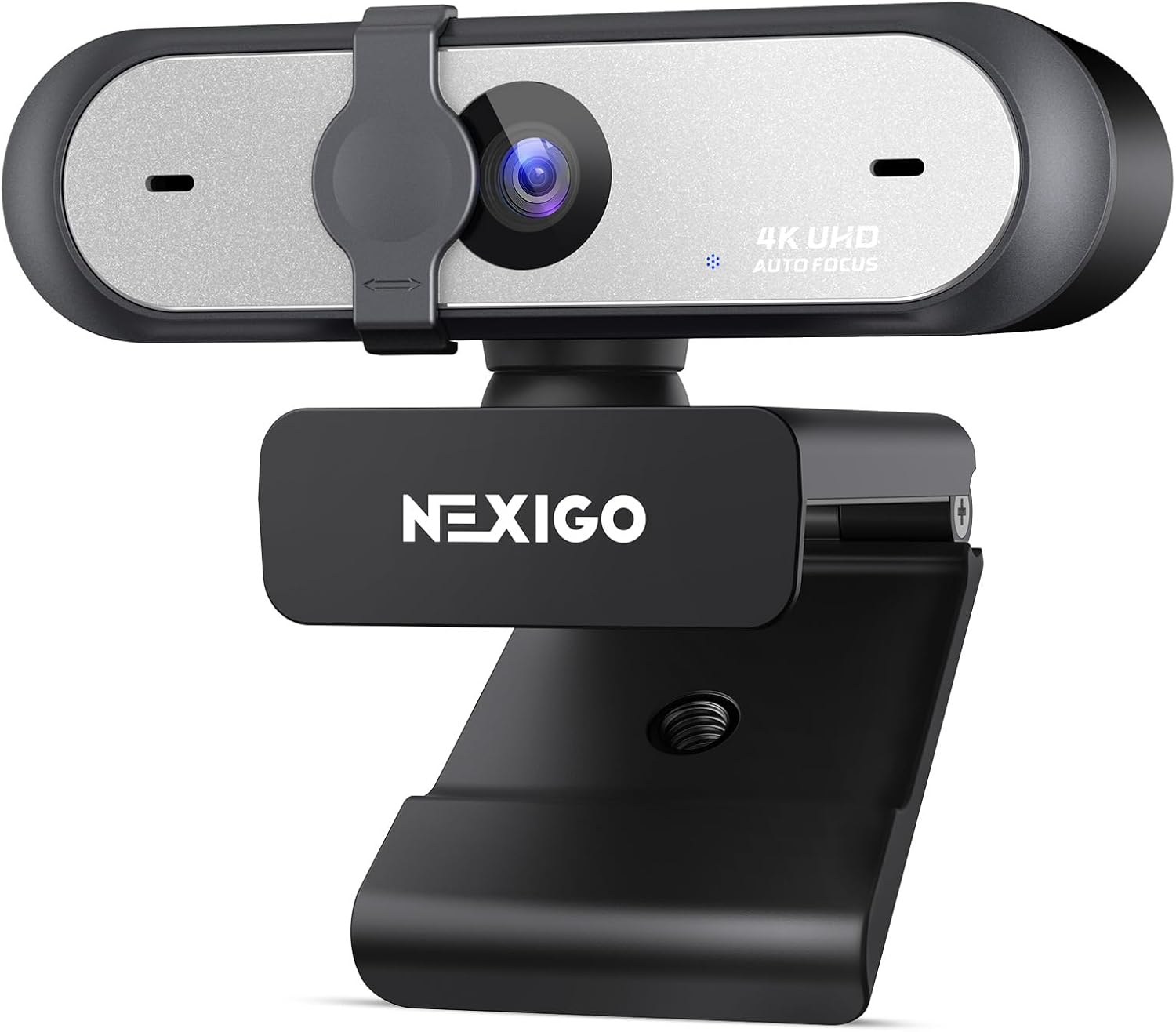
NexiGo N660P Pro 4K Webcam with Distortion-Free Lens, 1080p 60 fps Autofocus USB Streaming Camera, 3DNR, Noise-Canceling Mics & Privacy Cover, Web Cam for Gaming/Live Streaming/PC/Mac/Switch 2, Black
$50-$99This is a 4K 30fps or 1080p 60fps webcam with autofocus, dual noise-canceling mics, and a privacy cover, designed for streaming and video calls on various platforms.

NexiGo N660P Pro 4K Webcam with Distortion-Free Lens, 1080p 60 fps Autofocus USB Streaming Camera, 3DNR, Noise-Canceling Mics & Privacy Cover, Web Cam for Gaming/Live Streaming/PC/Mac/Switch 2, White
$50-$99This 4K webcam with 1080p 60 fps streaming, autofocus, and dual noise-canceling mics is for users needing high resolution and smooth video without external software.

4K Webcam with Autofocus & Tripod, Camera for PC Laptop with Dual Microphone, USB Computer Camera with Low Light Correction, Auto White Balance, Video Camera for Streaming, Meetings, Office, Zoom
$0-$49A 4K webcam with a CMOS sensor and f/2.8 aperture, designed for basic video calls and streaming on a budget.