
Canon RF100mm F2.8 L Macro is USM Lens, Medium Telephoto Lens, Macro Lens, Compatible with EOS R Series Mirrorless Cameras, Black
Want the best price and purchase timing?
Our AI advisor analyzes real-time pricing across all channels to find you the best deal.
AI Verdict
This 1.61-pound 100mm f/2.8 macro lens with 1.4x magnification is for Canon R series shooters needing extreme close-ups and artistic bokeh control.
This lens is a strong fit for Canon R series photographers prioritizing macro capabilities, offering 1.4x magnification and a unique SA control ring for creative bokeh. Its f/2.8 aperture and effective image stabilization also make it a capable portrait and detail video lens.
If 1.4x magnification isn't enough, look for specialized manual focus macro lenses that offer 2:1 or 5:1 magnification.
Regret Score™
Low RiskLower is better — measures purchase-regret risk from real buyer complaints, review credibility, and product maturity
Issues discovered after purchase
Critically weak dimension
Amazon rating vs actual quality
Chance this product isn't for you
Pros
- Achieves 1.4x maximum magnification, which is the highest of any autofocusing lens for the Canon RF platform.
- Features a bright, fixed f/2.8 aperture for blurred backgrounds and low-light shooting.
- Includes Optical Image Stabilization with up to 5 stops of shake correction, extending to 8 stops with in-body image stabilization (IBIS).
- The Spherical Aberration (SA) Control Ring allows adjustments to foreground/background bokeh character, from soft and dreamy to harder.
- Delivers exceptional sharpness, detail, and color reproduction, even at wide apertures.
- Autofocus is fast and accurate, even at macro distances, which is uncommon for macro lenses.
Cons
- Weighs 1.61 pounds, which some users find heavy for extended handheld use.
- Exhibits a slight focus shift at f/5.6 and narrower apertures, particularly noticeable in macro shots.
- The Nano USM motors can produce more noise than usual at macro distances, potentially disturbing subjects like hummingbirds.
- The f/2.8 maximum aperture might be a limiting factor for some portrait photographers who prefer brighter apertures like f/1.4 or f/1.2.
- Requires the SA ring to be locked when not in use to prevent accidental changes to bokeh characteristics.
Dimension Scores
The lens is consistently praised for its exceptional sharpness, detail rendition, and color reproduction across various apertures and magnifications.
Equipped with Nano USM motors, the autofocus is fast and accurate, even at close macro distances, which is a standout feature for a macro lens.
The lens performs well for video, especially for B-roll and detail shots, benefiting from its image stabilization and quiet autofocus, though some motor noise can occur at macro distances.
Weighing 1.61 pounds, it's not the lightest lens, but its build quality and image stabilization make it manageable for handheld use, though extended sessions might feel heavy.
Best For
- Extreme close-up photography of insects, jewelry, and flowers due to 1.4x magnification.
- Portrait photography where a medium telephoto focal length and adjustable bokeh are desired.
- Detailed B-roll and product videography, leveraging its sharpness and image stabilization.
- Handheld macro shooting, benefiting from the Hybrid IS system.
Not Recommended For
- As a primary walkaround lens if a wider field of view is frequently needed.
- Users who require an aperture brighter than f/2.8 for extremely shallow depth of field in portraits.
Watch Out For
- A slight focus shift can occur at f/5.6 and narrower, which can be noticeable in macro photography and may require shooting wide or focus stacking.
- The lens's motors can make more noise than usual at macro distances, potentially startling sensitive subjects like birds.
- The Spherical Aberration control ring needs to be locked if you don't intend to use its effect, as accidental bumps can change bokeh characteristics.
- The 1.61-pound weight can become noticeable during prolonged handheld shooting sessions.
Full Specifications
| ASIN | B08M91FQW6 |
| Brand | Canon |
| Lens Type | Macro |
| Item Weight | 1.61 pounds |
| Manufacturer | Canon USA |
| Item model number | 4514C002 |
| Product Dimensions | 3.21 x 3.21 x 5.83 inches |
| Compatible Mountings | Canon RF |
| Focal Length Description | 100mm fixed |
What Buyers Say
What really stands out is how sharp this lens is, with many users calling it one of Canon's sharpest lenses, even surpassing older EF versions. The 1.4x magnification is a game-changer for getting incredibly close, and the SA control ring offers a unique way to tweak your bokeh for artistic shots. However, some users noted a slight focus shift at narrower apertures, which is something to watch out for in macro work. Also, the autofocus motors can get a bit noisy when you're really close to your subject, which might be an issue for skittish wildlife.
“Dude, this 100mm macro is unreal for bugs and flowers, the detail is insane and that SA ring is actually kinda fun for weird bokeh, but yeah, it's a bit heavy and sometimes the focus shifts a tiny bit when I stop it down, annoying but not a dealbreaker.”
Common Praise
- Produces incredibly sharp images with excellent detail and micro-contrast.
- The 1.4x magnification allows for closer and more detailed shots than many other macro lenses.
- The SA Control Ring provides creative control over bokeh, allowing for soft or harder background blur.
- Autofocus is fast and precise, even at macro distances, which is a significant improvement over some older macro lenses.
- Effective image stabilization helps achieve sharp images, especially when shooting handheld.
- Renders beautiful background blur, making it suitable for portraits as well as macro.
Common Complaints
- Experiences a slight focus shift when stopped down to f/5.6 and narrower, impacting sharpness in some macro shots.
- The autofocus motors can be audible at very close focusing distances, potentially disturbing subjects.
- The 1.61-pound weight can feel heavy during prolonged handheld shooting sessions.
- The f/2.8 maximum aperture is not as bright as some dedicated portrait lenses, which might be a drawback for certain shooting styles.
- The SA control ring needs to be manually locked to prevent accidental adjustments.
Ownership Tips
- You'll quickly learn to lock the SA control ring unless you're actively using it, otherwise, you might accidentally change your bokeh.
- At extreme macro distances, the autofocus motor noise is noticeable, so be mindful if you're trying to photograph skittish subjects.
- The weight of 1.61 pounds becomes apparent after an hour or two of handheld macro shooting, so consider a monopod or tripod for longer sessions.
- The focus shift at narrower apertures is subtle but can be frustrating for critical macro work; shooting wide open or focus stacking helps.
- This lens doubles as a fantastic portrait lens, offering a pleasing focal length and beautiful background separation.
Frequently Asked Questions
Is the Canon RF 100mm F2.8 L Macro IS USM sharp?
Yes, users consistently report this lens is exceptionally sharp, delivering high resolution and fine detail, making it suitable for both macro and portrait work.
Can this lens be used for portraits?
Absolutely. Its 100mm focal length and f/2.8 aperture provide pleasing background blur, and the SA control ring allows for artistic adjustments to bokeh, making it a capable portrait lens.
What does the SA Control Ring do?
The Spherical Aberration (SA) Control Ring lets you adjust the character of the foreground and background bokeh. Turning it to the negative side creates a soft, dreamy look, while the positive side adds hardness to the bokeh.
How effective is the image stabilization?
The optical image stabilizer provides up to 5 stops of shake correction, which can increase to 8 stops when combined with a camera body featuring in-body image stabilization (IBIS). This is particularly helpful for handheld macro shooting.
Is the autofocus fast for macro photography?
Yes, the Nano USM motor provides fast and accurate autofocus, which is a significant advantage for a macro lens, as many macro lenses tend to hunt for focus.
Buying Guide
When you're looking at a macro lens like this, you're really thinking about how close you can get and how much detail you can capture. The 'macro' part means it can focus super close, letting you fill the frame with tiny things. The 'L' in Canon's naming means it's one of their professional-grade lenses, built tough with high-quality glass. The 'IS' means it has image stabilization, which is a big deal for keeping your shots steady, especially when you're zoomed in close or shooting handheld.
Maximum Magnification (1.4x)
This tells you how large a tiny subject will appear on your camera's sensor compared to its real size. A 1.4x magnification means a subject will be recorded 1.4 times larger than life-size, letting you see incredible detail that's invisible to the naked eye.
Fixed f/2.8 Aperture
The f/2.8 refers to how wide the lens can open. A wider aperture (smaller f-number) lets in more light, which is useful in dim conditions, and creates a shallower depth of field, blurring the background nicely to make your subject pop, like a spotlight on a stage.
Optical Image Stabilizer (5 stops)
This feature helps counteract camera shake, allowing you to use slower shutter speeds without blurring your photos. Think of it like having really steady hands, letting you capture sharp images even when you're not using a tripod, which is super important for macro where every tiny movement is magnified.
Spherical Aberration (SA) Control Ring
This is a unique control that lets you subtly change how the out-of-focus areas (bokeh) look. You can make the background blur softer and dreamier or slightly harsher, giving you artistic control over the 'feel' of your images, almost like adjusting the softness of a watercolor painting.
Alternatives
If this lens doesn't fit, look for macro lenses with higher magnification ratios like 2:1 or 5:1 if you need to capture even smaller details, or consider a faster aperture prime lens (e.g., f/1.2 or f/1.4) if your priority is extremely shallow depth of field for portraits.
You Might Also Like

NexiGo N660P Pro 4K Webcam with Distortion-Free Lens, 1080p 60 fps Autofocus USB Streaming Camera, 3DNR, Noise-Canceling Mics & Privacy Cover, Web Cam for Gaming/Live Streaming/PC/Mac/Switch 2, Pink
$50-$99This is a 4K CMOS webcam with 3DNR and dual noise-canceling mics, designed for plug-and-play use across multiple platforms.
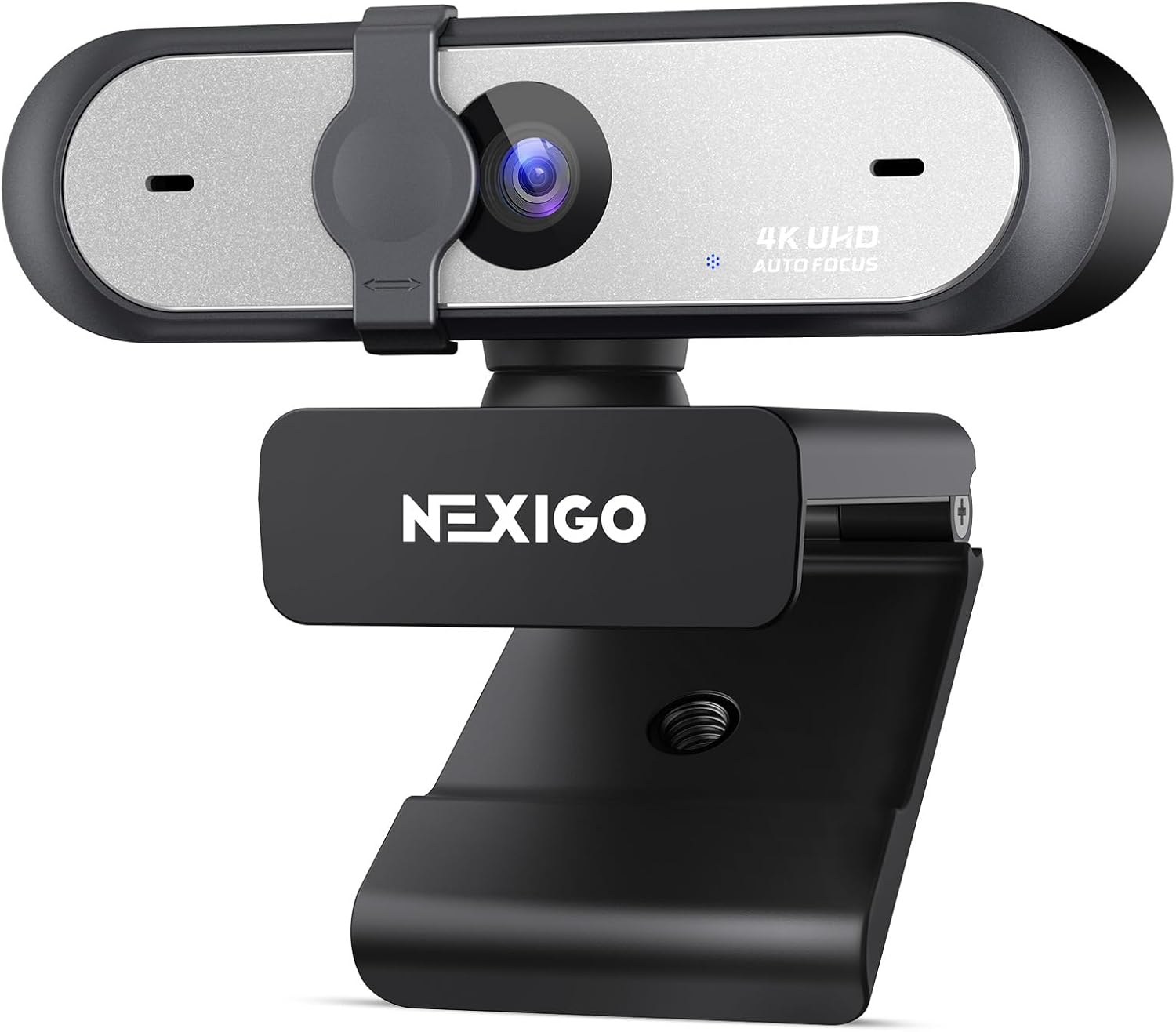
NexiGo N660P Pro 4K Webcam with Distortion-Free Lens, 1080p 60 fps Autofocus USB Streaming Camera, 3DNR, Noise-Canceling Mics & Privacy Cover, Web Cam for Gaming/Live Streaming/PC/Mac/Switch 2, Black
$50-$99This is a 4K 30fps or 1080p 60fps webcam with autofocus, dual noise-canceling mics, and a privacy cover, designed for streaming and video calls on various platforms.

NexiGo N660P Pro 4K Webcam with Distortion-Free Lens, 1080p 60 fps Autofocus USB Streaming Camera, 3DNR, Noise-Canceling Mics & Privacy Cover, Web Cam for Gaming/Live Streaming/PC/Mac/Switch 2, White
$50-$99This 4K webcam with 1080p 60 fps streaming, autofocus, and dual noise-canceling mics is for users needing high resolution and smooth video without external software.

4K Webcam with Autofocus & Tripod, Camera for PC Laptop with Dual Microphone, USB Computer Camera with Low Light Correction, Auto White Balance, Video Camera for Streaming, Meetings, Office, Zoom
$0-$49A 4K webcam with a CMOS sensor and f/2.8 aperture, designed for basic video calls and streaming on a budget.