
JINTU 420-800mm f/ 8.3 Manual Telephoto Zoom Lens + T-Mount for Canon EOS Rebel SL2 SL1 T3 T3i T4i T5 T5i T6 T6i T6s T7 T7i 4000D 6D 7D 60D 70D 77D 80D 5D II/III/IV 550D 650D SLR Camera Lenses
Want the best price and purchase timing?
Our AI advisor analyzes real-time pricing across all channels to find you the best deal.
AI Verdict
This 420-800mm f/8.3 manual telephoto lens with a 1.76-pound metal body is for budget photographers wanting extreme reach for static, distant subjects.
This lens is a situational fit because its 420-800mm focal range and low price are unique, but the fixed f/8.3 aperture, manual focus, and image quality limitations restrict its use to specific scenarios like well-lit, static, distant subjects. It requires significant user effort to get usable results.
If you need better image quality, autofocus, or low-light performance, look for lenses with a wider maximum aperture (e.g., f/4 or f/5.6) and built-in image stabilization.
Regret Score™
Very High RiskLower is better — measures purchase-regret risk from real buyer complaints, review credibility, and product maturity
Issues discovered after purchase
Critically weak dimension
Amazon rating vs actual quality
Chance this product isn't for you
Pros
- Achieves 420-800mm focal lengths, which is difficult to find at this price point.
- Features a full metal body construction, contributing to its durability.
- Weighs 1.76 pounds (700g), making it relatively light for its focal range.
- Includes a T-mount adapter for Canon EOS Rebel and other compatible Canon DSLR cameras.
- Multi-coated low-dispersion glass is used in its optical design.
Cons
- Requires entirely manual focus, which can be challenging to achieve sharp images.
- Fixed f/8.3 aperture limits low-light performance and depth of field control.
- Image quality is soft, particularly at longer focal lengths and towards the edges of the frame.
- Lacks image stabilization, necessitating a sturdy tripod for most uses.
- Users report chromatic aberration and bland color reproduction.
Dimension Scores
Images are reported as soft, particularly at 800mm, with noticeable chromatic aberration and bland color reproduction.
This lens is entirely manual focus and does not have any autofocus capabilities.
Manual focus and the fixed f/8.3 aperture make it challenging to achieve consistent and sharp video, especially with moving subjects.
Weighing 1.76 pounds and measuring 10.6 x 3.5 x 3.5 inches, it's relatively light and manageable for a telephoto lens of this focal range.
Best For
- Capturing distant, static subjects like the moon or wildlife that is not moving.
- Experimenting with extreme telephoto photography on a limited budget.
- Photography in bright, outdoor lighting conditions.
Not Recommended For
- Fast-moving subjects, due to the lack of autofocus and image stabilization.
- Low-light photography, because of the fixed f/8.3 aperture.
- Professional-grade image quality or critical sharpness.
Watch Out For
- The camera will display 'lens not attach' because it's a manual lens with no electronic contacts.
- Achieving precise focus is difficult and time-consuming, especially without camera features like focus peaking.
- The zoom mechanism can feel 'janky' and may allow dust or hairs inside the lens barrel.
- The focus ring can stiffen in colder temperatures, and the lens might unscrew at the T2 mount or zoom engagement point.
- Image sharpness degrades significantly at 800mm, with corners of the frame potentially blocked by the lens barrel beyond 640mm.
Full Specifications
| ASIN | B07MW118KD |
| Brand | JINTU |
| Lens Type | Telephoto |
| Item Weight | 1.76 pounds |
| Manufacturer | JINTU |
| Item model number | 420-800mm super telephoto lens |
| Product Dimensions | 11.4 x 2.6 x 2.6 inches |
| Compatible Mountings | Canon EF, Canon EF-S |
| Camera Lens Description | 800 month |
| Focal Length Description | telephoto lens camera lens |
| Is Discontinued By Manufacturer | No |
What Buyers Say
Many users find this lens to be a fun, inexpensive way to experiment with extreme telephoto photography, but it comes with a steep learning curve. The biggest hurdle is the entirely manual focus, which demands patience and often a sturdy tripod to get anything remotely sharp. While the metal construction feels durable for the price, the optical performance is a different story, with softness and color issues being common complaints. It's a lens for specific, well-lit situations, not for everyday use or critical work.
“Man, this thing is a pain to focus, but when I finally got that shot of the moon, it was kinda worth the struggle for what I paid. Just don't expect miracles, and bring a tripod!”
Common Praise
- The 420-800mm focal length provides extreme reach for a low cost.
- The full metal body construction feels sturdy for its price point.
- It's relatively lightweight at 1.76 pounds, making it portable for a telephoto.
- It's a viable option for capturing subjects like the moon or distant, stationary wildlife.
Common Complaints
- Achieving sharp focus manually is very difficult and time-consuming.
- Image quality is soft, especially at the 800mm end of the zoom range.
- Chromatic aberration and color fringing are frequently observed in images.
- The fixed f/8.3 aperture requires abundant light, limiting its use in dimmer conditions.
- The zoom mechanism can be loose or 'janky,' sometimes allowing internal dust.
- Lack of image stabilization means a tripod is almost always necessary.
Ownership Tips
- You'll quickly learn the importance of a very sturdy tripod; handheld shots are nearly impossible to keep steady and sharp.
- Finding focus without focus peaking on your camera is a constant battle, often resulting in blurry images.
- The lens performs best at its wider end (around 420mm); pushing it to 800mm significantly degrades image quality.
- You'll need to shoot in bright daylight to compensate for the fixed f/8.3 aperture and keep ISO low.
- The physical zoom mechanism can be stiff or loose, and some users report internal dust or hairs appearing over time.
Frequently Asked Questions
Does this lens have autofocus?
No, this is a fully manual focus lens. You will need to adjust focus yourself.
Why does my camera say 'lens not attached'?
This is normal for a manual lens without electronic contacts. You need to switch your camera to M (Manual) mode and sometimes enable 'Release W/O Lens' in your camera settings.
Is this lens compatible with my Canon DSLR?
Yes, it comes with a T-mount adapter compatible with a wide range of Canon EOS Rebel, Digital Rebel, and EOS DSLR cameras.
Can I use this lens for sports photography?
It's not ideal for fast-moving sports due to the manual focus and lack of image stabilization, which makes tracking difficult.
What kind of image quality can I expect?
Expect images to be soft, especially at longer focal lengths, and potentially exhibit chromatic aberration. It's not designed for professional-level sharpness.
Buying Guide
When looking at a telephoto lens like this, you need to understand that 'reach' (the long focal length) often comes with trade-offs, especially at this price. You're getting a huge zoom range, but you're giving up convenience features like autofocus and image stabilization, and you're sacrificing image sharpness. This lens forces you to slow down and really learn manual photography.
420-800mm Focal Length
This number tells you how 'zoomed in' the lens can get. 420mm is already quite magnified, and 800mm brings distant objects incredibly close, like looking through a powerful telescope. It's how far away you can be from your subject and still fill the frame.
f/8.3 Maximum Aperture
The aperture (f-number) controls how much light enters the lens and how much of your image is in focus. An f/8.3 aperture is 'slow,' meaning it lets in less light than, say, an f/2.8 lens. This means you'll need bright conditions or higher ISO settings, and you'll have a larger depth of field (more of the scene will be in focus, which can be good or bad depending on your subject).
Manual Focus
Unlike lenses that automatically find focus, you have to turn a ring on this lens to get your subject sharp. This is much harder and slower, especially with distant or moving subjects, and requires a steady hand or a tripod to avoid blurry photos.
Alternatives
If this lens doesn't fit, look for telephoto lenses with a wider maximum aperture (e.g., f/5.6 or lower), built-in image stabilization, and autofocus capabilities for easier use and better low-light performance.
You Might Also Like

NexiGo N660P Pro 4K Webcam with Distortion-Free Lens, 1080p 60 fps Autofocus USB Streaming Camera, 3DNR, Noise-Canceling Mics & Privacy Cover, Web Cam for Gaming/Live Streaming/PC/Mac/Switch 2, Pink
$50-$99This is a 4K CMOS webcam with 3DNR and dual noise-canceling mics, designed for plug-and-play use across multiple platforms.
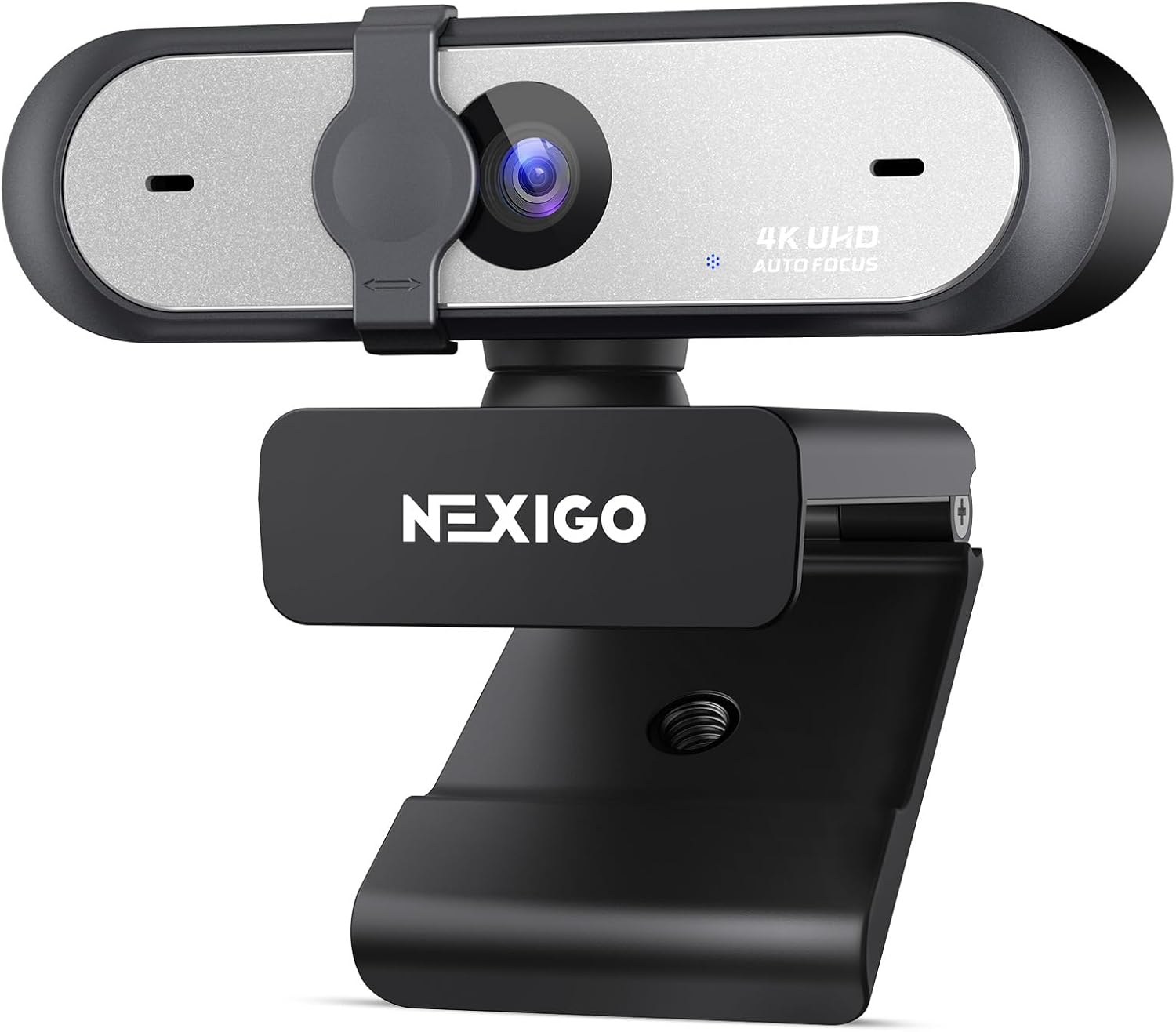
NexiGo N660P Pro 4K Webcam with Distortion-Free Lens, 1080p 60 fps Autofocus USB Streaming Camera, 3DNR, Noise-Canceling Mics & Privacy Cover, Web Cam for Gaming/Live Streaming/PC/Mac/Switch 2, Black
$50-$99This is a 4K 30fps or 1080p 60fps webcam with autofocus, dual noise-canceling mics, and a privacy cover, designed for streaming and video calls on various platforms.

NexiGo N660P Pro 4K Webcam with Distortion-Free Lens, 1080p 60 fps Autofocus USB Streaming Camera, 3DNR, Noise-Canceling Mics & Privacy Cover, Web Cam for Gaming/Live Streaming/PC/Mac/Switch 2, White
$50-$99This 4K webcam with 1080p 60 fps streaming, autofocus, and dual noise-canceling mics is for users needing high resolution and smooth video without external software.

4K Webcam with Autofocus & Tripod, Camera for PC Laptop with Dual Microphone, USB Computer Camera with Low Light Correction, Auto White Balance, Video Camera for Streaming, Meetings, Office, Zoom
$0-$49A 4K webcam with a CMOS sensor and f/2.8 aperture, designed for basic video calls and streaming on a budget.