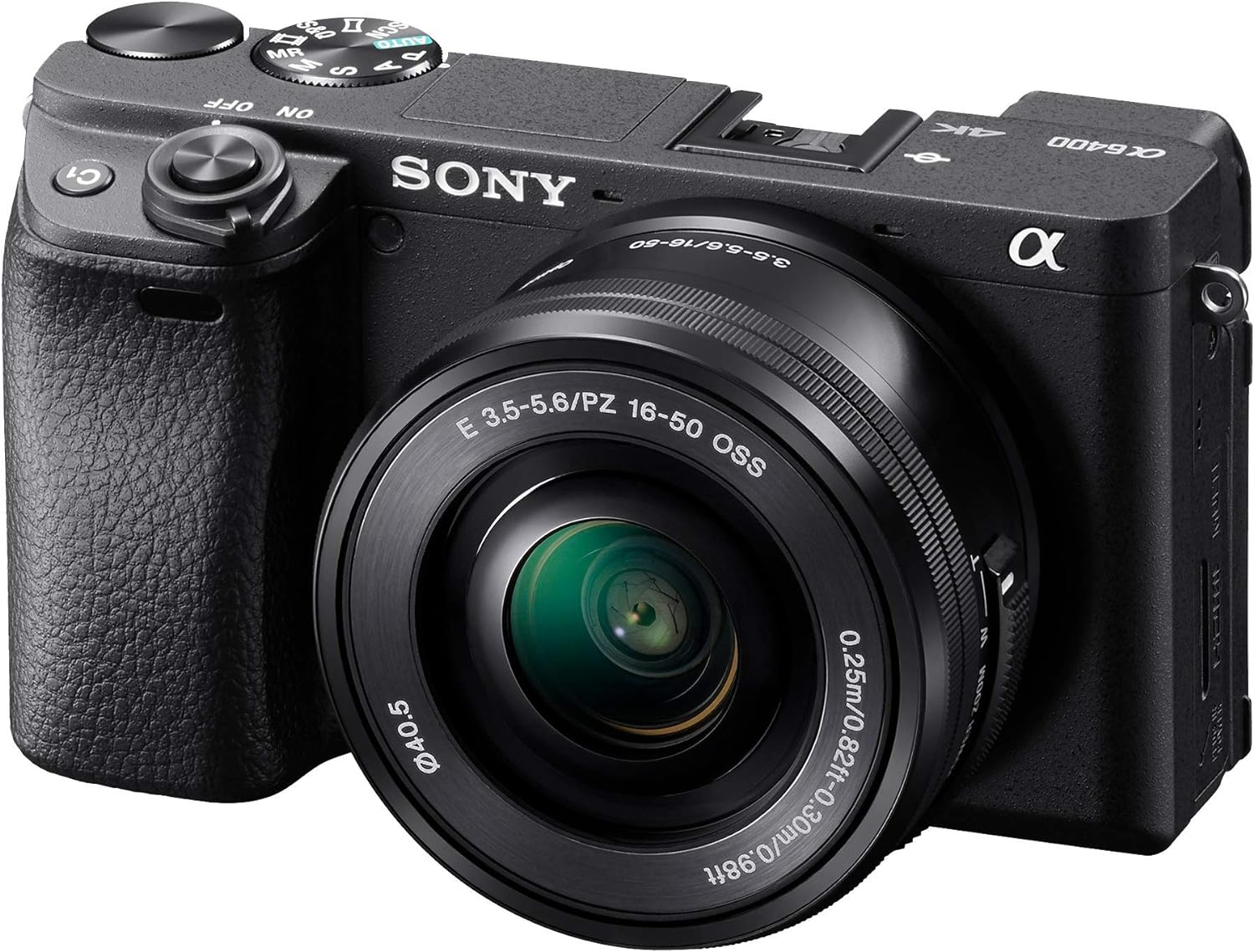
Sony Alpha a6400 Mirrorless Camera: Compact APS-C Interchangeable Lens Digital Camera with Real-Time Eye Auto Focus, 4K Video, Flip Screen & 16-50mm Lens - E Mount Compatible - ILCE-6400L/B, Black
Want the best price and purchase timing?
Our AI advisor analyzes real-time pricing across all channels to find you the best deal.
AI Verdict
A 24.2MP APS-C camera with 4K video and Real-time Eye AF, designed for photographers and casual videographers who prioritize a 403g compact body.
This camera is a strong fit for photographers and casual videographers who value a compact, 403g body with a 24.2MP APS-C sensor and industry-leading autofocus. Its 4K video capabilities without overheating and a flip screen cater well to content creators, despite the 8-bit color limitation. The advanced autofocus system, with 425 detection points, makes it highly capable for capturing moving subjects.
If professional video work is your primary goal, look for cameras offering 10-bit video recording and in-body image stabilization (IBIS) for more robust post-production and smoother handheld footage.
Regret Score™
Low RiskLower is better — measures purchase-regret risk from real buyer complaints, review credibility, and product maturity
Issues discovered after purchase
Critically weak dimension
Amazon rating vs actual quality
Chance this product isn't for you
Pros
- Its 425 phase/contrast detection points cover 84% of the sensor, delivering highly effective autofocus performance.
- Captures 4K video at 30fps with no reported overheating issues.
- Achieves up to 11fps continuous shooting at 24.2MP raw.
- The 403g body is compact and lightweight, making it an easy everyday carry.
- Features a tiltable LCD screen, useful for vlogging and low-angle shots.
- Includes a microphone jack for external audio recording.
Cons
- Lacks in-body image stabilization, requiring optically stabilized lenses for smoother footage or slower shutter speeds.
- Battery life is a frequent complaint, with users needing to charge the NP-FW50 battery often.
- The menu system is extensive and can be tricky to navigate for some users.
- Offers limited touchscreen functionality, which some find unintuitive.
- Video color is limited to 8-bit, which restricts advanced color grading options.
Dimension Scores
The 24.2MP APS-C sensor produces crisp, natural colors and offers scope for cropping.
Its 425 phase/contrast detection points and Real-time Eye AF deliver lightning-fast and reliable subject tracking.
It records 4K at 30fps with no overheating and 1080p at 120fps, but is limited by 8-bit color depth and lack of IBIS.
Weighing 403g, its compact and lightweight magnesium alloy body makes it easy to carry daily.
Best For
- Vlogging and content creation with its flip screen and mic input.
- Street photography due to its compact 403g form factor.
- Travel photography, being lightweight and easy to transport.
- Beginner photographers seeking advanced autofocus and image quality.
Not Recommended For
- Professional videographers who require 10-bit color depth or in-body stabilization.
- Users who rely heavily on intuitive touchscreen controls for camera operation.
- Those unwilling to invest in additional NP-FW50 batteries for extended shooting sessions.
Watch Out For
- You'll need to carry extra NP-FW50 batteries because the battery life is a significant issue for many users.
- The rear LCD's 921K dot display can make photos look 'naff' and colors 'off' for review, prompting users to prefer the EVF or computer for critical assessment.
- Some users with myopia report the 2.3 million dot viewfinder appears blurry.
- The 16-50mm kit lens, while adequate for beginners, often leads users to desire an upgrade for better optical performance.
- The absence of in-body image stabilization means you'll need to seek out lenses with optical stabilization (OSS, VC, OS) to mitigate camera shake.
Full Specifications
| ASIN | B07MV3P7M8 |
| Batteries | 1 Lithium Ion batteries required. (included) |
| Department | All Ages |
| Item Weight | 10.3 ounces |
| Aspect Ratio | 16:9 |
| Manufacturer | Sony |
| Optical Zoom | 1.07 x |
| Maximum Aperture | 3.5 f |
| Item model number | ILCE6400L/B |
| Product Dimensions | 6.2 x 9.2 x 4.55 inches |
| Image Stabilization | Optical |
| Compatible Mountings | Sony E (NEX), Sony Mirrorless |
| Expanded ISO Minimum | 100 |
| Maximum Focal Length | 50 Millimeters |
| Metering Description | Average, Center-Weighted Average, Highlight Weighted, Multi-Zone, Spot |
| Supported File Format | JPEG, Raw |
| Photo Sensor Technology | CMOS |
What Buyers Say
Users are consistently blown away by the autofocus performance, calling it 'sticky' and 'reliable' for both photos and 4K video. The camera's compact 403g size is a huge plus for everyday carry and travel. However, the battery life is a common pain point, with many needing to carry multiple NP-FW50 spares. The rear LCD's quality for reviewing images is often criticized, leading users to rely on the EVF instead.
“Man, the autofocus on this thing is insane, it just locks on! But seriously, I'm always scrambling for a charger, this battery dies way too fast.”
Common Praise
- Autofocus performance is 'blown away' by its speed and reliability, especially with Real-time Eye AF.
- The camera's compact and lightweight 403g design makes it highly portable.
- It shoots 4K video at 30fps without overheating, a significant advantage for its class.
- Image quality, even with SOOC JPEGs, is described as 'super crispy' with 'fantastic' colors.
- The tiltable screen is highly appreciated for vlogging and shooting from low angles.
- Customizable buttons are very handy for quick access to frequently used settings.
Common Complaints
- Battery life is a 'big issue,' requiring frequent charging of the NP-FW50 battery.
- The touchscreen functionality is limited and could be more intuitive.
- The menu system is extensive and can be tricky to navigate.
- There is no in-body image stabilization, which affects handheld video and low-light photography without stabilized lenses.
- The rear LCD display's 921K dots can make image review appear blurry or with inaccurate colors.
- Some users with myopia find the viewfinder blurry.
Ownership Tips
- You'll definitely want to buy at least one, probably two, extra NP-FW50 batteries and a dual charger for all-day shooting.
- Spend time customizing the buttons and 'My Menu' to streamline your workflow, as the default menu can be a maze.
- Don't rely solely on the rear LCD for critical image review; use the EVF or transfer to a computer for accurate assessment.
- If you're serious about video or low-light photography, plan to invest in lenses with optical stabilization since the body lacks IBIS.
- The 16-50mm kit lens is a decent start, but you'll likely outgrow it quickly and want to explore prime or faster zoom lenses.
Frequently Asked Questions
Does the Sony a6400 have in-body image stabilization (IBIS)?
No, the Sony a6400 does not feature in-body image stabilization. You will need to use lenses with optical stabilization (like Sony's OSS lenses) to help reduce camera shake.
Is the a6400 suitable for vlogging?
Yes, it is suitable for vlogging due to its tiltable LCD screen that flips up for self-monitoring and a microphone jack for improved audio quality.
What is the battery life like on the a6400?
Many users report that the NP-FW50 battery has limited life, often requiring frequent charging or carrying multiple spare batteries for extended use.
Can the a6400 shoot 4K video without overheating?
Yes, the a6400 is capable of shooting 4K video at 30fps without reported overheating issues, which was a significant advantage at its release.
How good is the autofocus system?
The autofocus system is highly praised, featuring 425 phase/contrast detection points covering 84% of the sensor, Real-time Eye AF, and animal eye detect (with firmware update), making it very fast and reliable for both stills and video.
Is the kit lens (16-50mm) sufficient?
The 16-50mm kit lens is generally considered adequate for beginners, but many users eventually seek to upgrade for better image quality or specific focal lengths.
Buying Guide
When looking at cameras like this, you need to think about what you'll actually shoot. A bigger sensor, like this 24.2MP APS-C one, means better image quality, especially in lower light, and more control over background blur. The autofocus system is crucial; a fast one means you won't miss shots of moving subjects. Also, consider if you need 4K video and how important a flip screen is for things like vlogging.
Megapixels (24.2MP)
This number tells you how much detail the camera can capture. More megapixels mean you can crop into your photos more aggressively without them looking pixelated, similar to zooming in on a map without losing clarity.
APS-C Sensor
This refers to the physical size of the sensor. An APS-C sensor is larger than those in smartphones or smaller compact cameras, allowing it to gather more light for better low-light performance and create a shallower depth of field, giving you that blurry background effect in portraits.
Autofocus Points (425 phase/contrast detection)
These are the areas the camera uses to detect and lock onto your subject. More points spread across the sensor, like the 425 points covering 84% here, mean the camera can track moving subjects more accurately and quickly, keeping them in sharp focus even if they move across the frame.
Alternatives
If this camera doesn't quite fit, look for models with in-body image stabilization (IBIS) for smoother handheld video and better low-light performance with any lens, or cameras that offer 10-bit video recording for more flexibility in color grading.
You Might Also Like

NexiGo N660P Pro 4K Webcam with Distortion-Free Lens, 1080p 60 fps Autofocus USB Streaming Camera, 3DNR, Noise-Canceling Mics & Privacy Cover, Web Cam for Gaming/Live Streaming/PC/Mac/Switch 2, Pink
$50-$99This is a 4K CMOS webcam with 3DNR and dual noise-canceling mics, designed for plug-and-play use across multiple platforms.
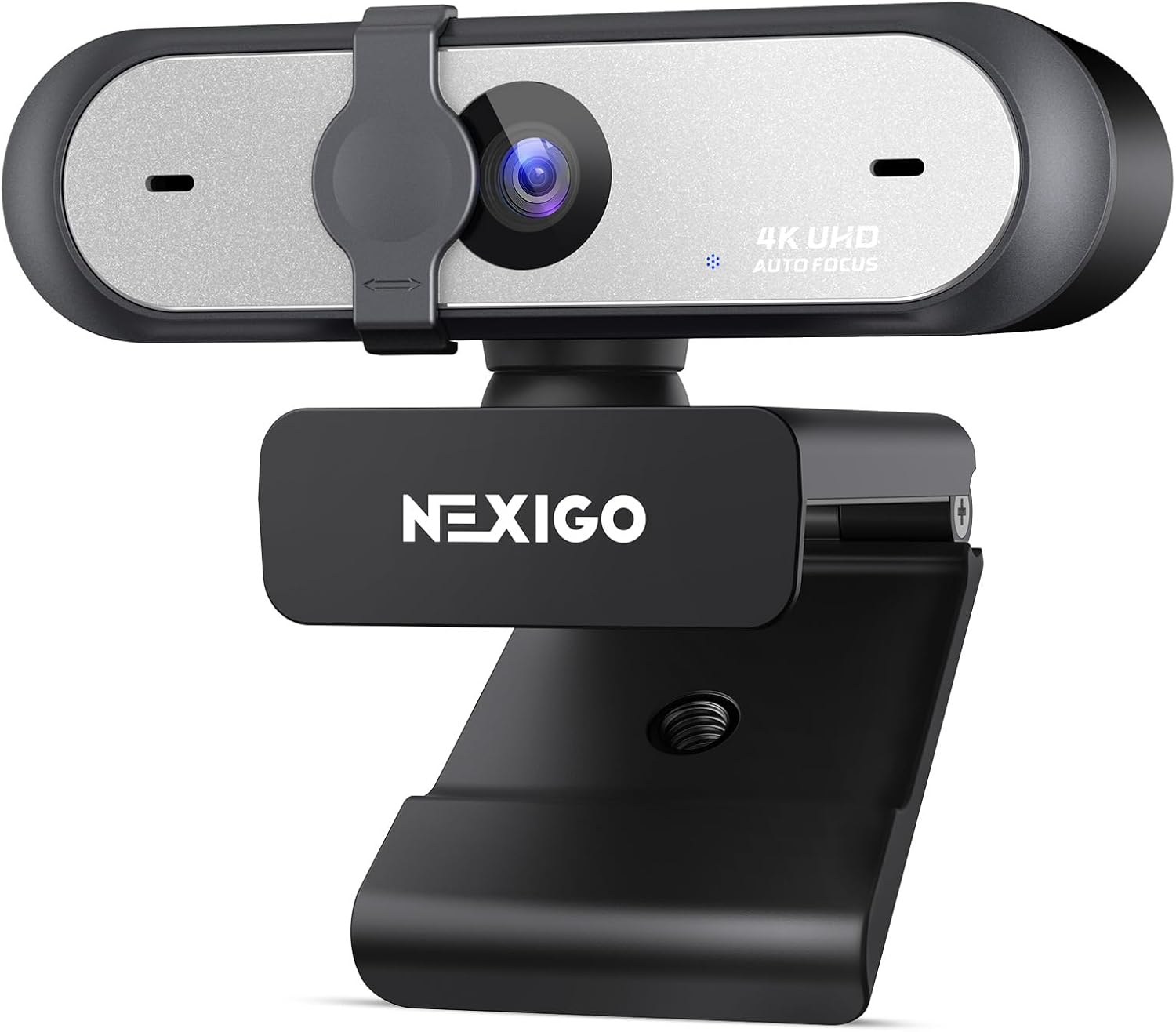
NexiGo N660P Pro 4K Webcam with Distortion-Free Lens, 1080p 60 fps Autofocus USB Streaming Camera, 3DNR, Noise-Canceling Mics & Privacy Cover, Web Cam for Gaming/Live Streaming/PC/Mac/Switch 2, Black
$50-$99This is a 4K 30fps or 1080p 60fps webcam with autofocus, dual noise-canceling mics, and a privacy cover, designed for streaming and video calls on various platforms.

NexiGo N660P Pro 4K Webcam with Distortion-Free Lens, 1080p 60 fps Autofocus USB Streaming Camera, 3DNR, Noise-Canceling Mics & Privacy Cover, Web Cam for Gaming/Live Streaming/PC/Mac/Switch 2, White
$50-$99This 4K webcam with 1080p 60 fps streaming, autofocus, and dual noise-canceling mics is for users needing high resolution and smooth video without external software.

4K Webcam with Autofocus & Tripod, Camera for PC Laptop with Dual Microphone, USB Computer Camera with Low Light Correction, Auto White Balance, Video Camera for Streaming, Meetings, Office, Zoom
$0-$49A 4K webcam with a CMOS sensor and f/2.8 aperture, designed for basic video calls and streaming on a budget.