
Nikon NIKKOR Z 50mm f/1.8 S | Premium large aperture 50mm prime lens (nifty fifty) for Z series mirrorless cameras | Nikon USA Model
Want the best price and purchase timing?
Our AI advisor analyzes real-time pricing across all channels to find you the best deal.
AI Verdict
A 50mm f/1.8 prime lens for Nikon Z cameras, delivering extreme sharpness and minimal distortion.
This 50mm f/1.8 lens is a strong fit for Nikon Z camera owners who prioritize optical performance, delivering extreme sharpness and minimal distortion across the frame. Its f/1.8 aperture and quiet stepping motor make it suitable for various lighting conditions and video work.
If you need closer focusing capabilities, look for a lens with a higher maximum reproduction ratio, like 1:2 or 1:1, for true macro photography.
Regret Score™
Low RiskLower is better — measures purchase-regret risk from real buyer complaints, review credibility, and product maturity
Issues discovered after purchase
Critically weak dimension
Amazon rating vs actual quality
Chance this product isn't for you
Pros
- Delivers extreme sharpness across the frame, even at f/1.8.
- Produces pleasing bokeh with a smooth transition from in-focus to out-of-focus areas.
- Features an ultra-quiet stepping motor for silent autofocus operation.
- Controls optical defects like chromatic aberration very well.
- Designed with weather sealing to protect against dust and moisture.
- Utilizes Nano coating to minimize internal reflections and flare.
Cons
- Weighs 14.6 ounces, making it larger than many older 50mm f/1.8 lenses.
- Autofocus performance can be inconsistent in some shooting situations.
- Exhibits some "onion ring" bokeh and elliptical distortion in highlights at the corners.
- Minimum focus distance of 16 inches (0.4m) results in a 0.15x reproduction ratio, limiting close-up capabilities.
- Can show some flashing or multi-colored element reflections when a light source is just outside the frame.
Dimension Scores
Delivers extreme sharpness corner-to-corner at f/1.8 with minimal distortion and well-controlled aberrations.
Features an ultra-quiet stepping motor, but some users report inconsistent performance in certain situations.
The ultra-quiet stepping motor enables silent focusing, which is beneficial for video recording.
Weighs 14.6 ounces, which is not the lightest for an f/1.8 prime, but still manageable for daily use.
Best For
- Portrait photography requiring sharp subjects and blurred backgrounds.
- Low-light photography where a wide f/1.8 aperture is beneficial.
- Street photography needing a standard focal length with high image clarity.
- General photography for Z-series users prioritizing optical quality.
Not Recommended For
- Macro photography due to its 0.15x maximum reproduction ratio.
- Users prioritizing the smallest and lightest 50mm prime lens available.
- Videographers needing perfectly consistent autofocus for critical moving subjects.
Watch Out For
- The 14.6-ounce weight is heavier than expected for an f/1.8 prime, making it feel less "compact" than some users anticipate.
- Autofocus can be inconsistent, leading to missed shots in fast-paced or challenging lighting conditions.
- Close-up performance is limited by a 16-inch (0.4m) minimum focus distance and a 0.15x reproduction ratio.
- Bokeh can show "onion ring" patterns and elliptical shapes in highlights, which some photographers might find distracting.
Full Specifications
| ASIN | B07GQ6FR5F |
| Brand | Nikon |
| Lens Type | Standard |
| Item Weight | 14.6 ounces |
| Manufacturer | Nikon |
| Item model number | 20083 |
| Product Dimensions | 3.4 x 3 x 3 inches |
| Compatible Mountings | Nikon Z |
| Focal Length Description | Standard/Normal Prime Lens |
| Is Discontinued By Manufacturer | No |
What Buyers Say
Users frequently highlight the lens's exceptional sharpness, often describing it as "crazy sharp" even wide open at f/1.8, with many comparing its optical performance to much more expensive glass. The micro contrast and rendering are also consistently praised for creating images with depth, avoiding a flat appearance. However, some photographers note that the 14.6-ounce weight makes it feel less compact than older f/1.8 50mm lenses, and there are occasional mentions of inconsistent autofocus performance. The bokeh is generally well-received, though a few users observe "onion ring" patterns in specular highlights.
“Dude, this 50mm is legit, like, the sharpness is insane, but man, it's kinda chunky for an f/1.8 and sometimes the AF just hunts for a second.”
Common Praise
- Images are extremely sharp from edge to edge, even at f/1.8.
- Micro contrast and detail rendering create images with depth.
- Bokeh is pleasing with a smooth transition to out-of-focus areas.
- Chromatic aberrations and distortion are very well controlled.
- The stepping motor provides quiet autofocus operation.
- Weather sealing provides confidence for shooting in varied conditions.
Common Complaints
- The 14.6-ounce weight is heavier than expected for an f/1.8 prime.
- Autofocus can be inconsistent, especially in challenging light or with moving subjects.
- Bokeh can exhibit "onion ring" patterns and elliptical shapes in highlights.
- Minimum focus distance of 16 inches (0.4m) limits close-up photography.
- Some flare or reflections can appear when a bright light source is near the edge of the frame.
Ownership Tips
- The lens balances well on Z-series bodies despite its 14.6-ounce weight, not feeling front-heavy.
- The control ring is customizable and has a smooth, damped feel, making manual adjustments precise.
- The weather sealing holds up in light rain and dusty environments without issues.
- The lens hood is effective at reducing flare, but some internal reflections can still occur without it.
- The f/1.8 aperture allows for shooting in surprisingly dim conditions without pushing ISO too high.
Frequently Asked Questions
Does this lens have image stabilization?
No, the lens itself does not have optical image stabilization. It relies on the 5-axis in-body image stabilization (IBIS) present in many Nikon Z mirrorless cameras.
Is this lens weather-sealed?
Yes, the lens is extensively sealed against dust and moisture, particularly around all moving parts of the barrel.
How does the autofocus perform in low light?
The lens features a quiet stepping motor and a wide f/1.8 aperture, which contributes to its superior low-light performance, though some users report occasional inconsistencies.
Can I use this lens for close-up or macro photography?
While it can focus down to 16 inches (0.4m), its maximum reproduction ratio is 0.15x, which is not sufficient for dedicated macro photography.
Is this lens too large for a 'nifty fifty'?
At 14.6 ounces and 3 inches in diameter by 3.4 inches in length, some users find it larger than traditional f/1.8 50mm lenses, though its optical performance often justifies the size.
Buying Guide
When buying a prime lens like this 50mm f/1.8, you're investing in optical quality and a specific focal length, not zoom flexibility. You need to understand that a 50mm lens on a full-frame Z camera provides a "normal" perspective, similar to human vision, making it a versatile choice for many subjects. Its wide f/1.8 aperture is crucial for creating blurred backgrounds and shooting in low light, but it also means you'll be moving your feet to frame your shots.
f/1.8 maximum aperture
This number tells you how much light the lens can gather and how shallow your depth of field can be. A lower number like f/1.8 means you can shoot in darker places without cranking up your camera's ISO, and you can get those creamy, blurred backgrounds that make your subject pop.
14.6 ounces (415g) weight
This is how much the lens weighs. For a prime lens, 14.6 ounces is on the heavier side compared to some older 50mm f/1.8 lenses, so it will add noticeable weight to your camera setup, impacting how long you can comfortably handhold it.
Stepping Motor (STM)
This refers to the type of motor inside the lens that moves the focusing elements. An STM is known for being quiet and smooth, which is especially important for shooting video where motor noise can be picked up by your microphone.
0.15x maximum reproduction ratio
This spec indicates how "close" the lens can focus and how large a small object will appear on your camera's sensor. A 0.15x ratio means a subject will appear 15% of its actual size on the sensor, which is not ideal for extreme close-ups of small details like insects or tiny flowers.
Alternatives
If this lens doesn't fit, consider a 50mm lens with a wider maximum aperture like f/1.4 or f/1.2 for even more background blur and low-light capability, or a dedicated macro lens with a 1:1 reproduction ratio for extreme close-up photography. If weight is a primary concern, look for lighter 50mm prime lenses, though they might compromise on optical performance.
You Might Also Like

NexiGo N660P Pro 4K Webcam with Distortion-Free Lens, 1080p 60 fps Autofocus USB Streaming Camera, 3DNR, Noise-Canceling Mics & Privacy Cover, Web Cam for Gaming/Live Streaming/PC/Mac/Switch 2, Pink
$50-$99This is a 4K CMOS webcam with 3DNR and dual noise-canceling mics, designed for plug-and-play use across multiple platforms.
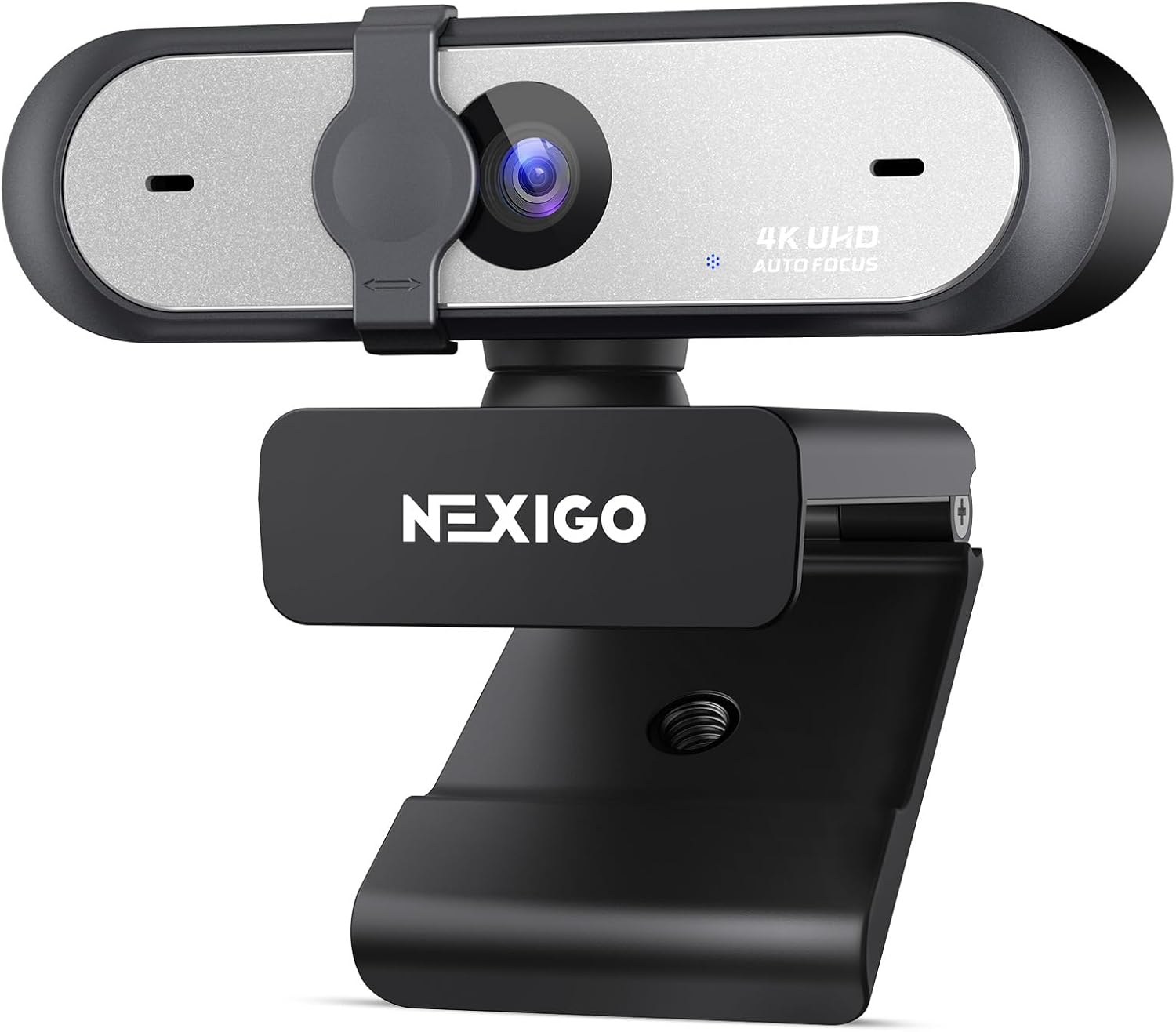
NexiGo N660P Pro 4K Webcam with Distortion-Free Lens, 1080p 60 fps Autofocus USB Streaming Camera, 3DNR, Noise-Canceling Mics & Privacy Cover, Web Cam for Gaming/Live Streaming/PC/Mac/Switch 2, Black
$50-$99This is a 4K 30fps or 1080p 60fps webcam with autofocus, dual noise-canceling mics, and a privacy cover, designed for streaming and video calls on various platforms.

NexiGo N660P Pro 4K Webcam with Distortion-Free Lens, 1080p 60 fps Autofocus USB Streaming Camera, 3DNR, Noise-Canceling Mics & Privacy Cover, Web Cam for Gaming/Live Streaming/PC/Mac/Switch 2, White
$50-$99This 4K webcam with 1080p 60 fps streaming, autofocus, and dual noise-canceling mics is for users needing high resolution and smooth video without external software.

4K Webcam with Autofocus & Tripod, Camera for PC Laptop with Dual Microphone, USB Computer Camera with Low Light Correction, Auto White Balance, Video Camera for Streaming, Meetings, Office, Zoom
$0-$49A 4K webcam with a CMOS sensor and f/2.8 aperture, designed for basic video calls and streaming on a budget.