
Canon EF 75-300mm f/4-5.6 III Telephoto Zoom Lens for Canon SLR Cameras, 6473A003 (Renewed)
Want the best price and purchase timing?
Our AI advisor analyzes real-time pricing across all channels to find you the best deal.
AI Verdict
This 1.44-pound 75-300mm f/4-5.6 telephoto zoom lens is for Canon SLR users needing extended reach on a tight budget, accepting compromises in image stability and low-light performance.
This lens is a situational fit for photographers who specifically need a 75-300mm telephoto range and are working within a strict budget. Its 1.44-pound weight and 4.8-inch length make it portable, but the lack of image stabilization and a wide aperture means it's best suited for well-lit, static, or tripod-supported scenarios.
If you need better low-light performance or sharper handheld shots, look for a telephoto lens with a wider constant aperture (e.g., f/2.8) or built-in optical image stabilization.
Regret Score™
High RiskLower is better — measures purchase-regret risk from real buyer complaints, review credibility, and product maturity
Issues discovered after purchase
Critically weak dimension
Amazon rating vs actual quality
Chance this product isn't for you
Pros
- Offers a 75-300mm focal range, extending reach for distant subjects.
- Weighs 1.44 pounds, making it lighter than many telephoto options.
- Features a 4.9-foot minimum focus distance for closer shots within its range.
- Uses an EF mount, compatible with a wide range of Canon SLR cameras.
- Measures 2.8 inches in diameter and 4.8 inches long, making it relatively compact for its zoom range.
Cons
- Lacks optical image stabilization, requiring faster shutter speeds or a tripod for sharp images.
- Maximum aperture of f/4-5.6 is not wide, limiting low-light performance and bokeh.
- Autofocus motor is a DC type, which can be slower and louder than USM motors.
- Considered by some users to be a lower-performing lens in Canon's lineup.
Dimension Scores
User feedback indicates it's an 'okay starter lens' but not one to 'expect worlds from,' suggesting below-average optical performance compared to other telephoto lenses.
The DC Autofocus Motor is generally slower and less precise than USM motors found in higher-end Canon lenses, making it less suitable for quick action.
The lack of image stabilization and potentially noisy DC autofocus motor make it a poor choice for smooth, stable video recording, especially handheld.
Weighing 1.44 pounds and measuring 4.8 inches long, it's one of the smallest and lightest telephoto zoom lenses in its class, making it easy to carry.
Best For
- Daytime outdoor photography of distant subjects like wildlife or sports.
- Beginner photographers exploring telephoto photography without a large investment.
- Users with a steady hand or who primarily shoot with a tripod.
- Shooting in bright, well-lit conditions.
Not Recommended For
- Low-light photography or indoor sports events.
- Professional use where critical sharpness and fast autofocus are paramount.
- Users who require built-in image stabilization for handheld shooting.
- Anyone expecting premium optical quality or advanced features.
Watch Out For
- No optical image stabilizer means you'll need to keep your shutter speed high or brace yourself to avoid blurry shots, especially at 300mm.
- The f/4-5.6 aperture means you'll be bumping up your ISO or slowing your shutter speed in anything but bright daylight, leading to noisier images.
- On crop-sensor cameras, the 75-300mm focal length acts like a 120-480mm lens, which can be too much zoom for some situations and make handheld shooting even harder.
- The DC autofocus motor isn't the fastest or quietest, so don't expect to track fast-moving subjects with pinpoint accuracy.
Full Specifications
| ASIN | B06XP4Z2M7 |
| Brand | Canon |
| Batteries | 1 Lithium Ion batteries required. |
| Lens Type | Telephoto |
| Item Weight | 1.44 pounds |
| Manufacturer | Canon |
| Item model number | 6473A003AA |
| Product Dimensions | 8.9 x 5.35 x 5.4 inches |
| Compatible Mountings | Canon EF |
| Camera Lens Description | Canon EF 75-300mm f/4-5.6 III Telephoto Zoom Lens for Canon SLR Cameras, 6473A003 (Renewed) |
| Focal Length Description | 75-300 |
| Is Discontinued By Manufacturer | No |
What Buyers Say
The most common feedback is that this lens is a bare-bones telephoto option, often recommended as a starter lens but with significant limitations. Many users point out the critical absence of image stabilization, which makes getting sharp shots at longer focal lengths difficult without a tripod or very fast shutter speeds. The variable f/4-5.6 aperture is also a recurring point, meaning it struggles in anything but bright daylight. While it works on crop sensor cameras, the effective focal length can be unwieldy for some.
“Honestly, I bought this renewed lens because it was cheap and I needed something to get closer shots. It works, but man, you gotta have a rock-steady hand or crank up the ISO, especially when it's not super sunny. Don't expect miracles, but it gets the job done for the price.”
Common Praise
- Provides significant zoom reach up to 300mm for distant subjects.
- Lightweight at 1.44 pounds, making it easy to carry for extended periods.
- Compatible with a wide range of Canon EF-mount SLR cameras.
- Offers a relatively close 4.9-foot minimum focus distance.
Common Complaints
- No optical image stabilization, leading to blurry photos if not held perfectly steady.
- Narrow f/4-5.6 aperture struggles in low-light conditions, requiring high ISO.
- Autofocus can be slow and noisy, not ideal for moving subjects.
- Image quality at the 300mm end is often reported as soft.
- Some users consider it optically inferior to other Canon telephoto options.
Ownership Tips
- You'll quickly learn the importance of shutter speed and bracing techniques due to the lack of image stabilization.
- Finding the sweet spot for sharpness often means stopping down the aperture a bit, especially at the telephoto end.
- The autofocus motor noise can be noticeable, especially in quiet environments or during video recording.
- You might find yourself avoiding the 300mm end unless lighting is perfect and your subject is stationary, due to softness and camera shake.
Frequently Asked Questions
Does this lens have image stabilization?
No, this Canon EF 75-300mm f/4-5.6 III lens does not have optical image stabilization. You'll need to use faster shutter speeds or a tripod to prevent blur, especially at longer focal lengths.
Will this lens work on my Canon Rebel camera?
Yes, this EF mount lens is compatible with Canon Rebel series cameras. However, on crop-sensor Rebels, the focal length will be effectively multiplied by 1.6x, making it feel more like a 120-480mm lens.
Is this lens good for shooting sports or fast-moving subjects?
The DC autofocus motor in this lens is not known for its speed or precision, which can make tracking fast-moving subjects like in sports challenging. The f/4-5.6 aperture also limits its use in dimmer conditions often found in sports venues.
What kind of filter thread does this lens use?
This lens has a 58mm filter thread diameter, so you'll need 58mm filters for it.
Is this a renewed product, and what does that mean?
Yes, this is an Amazon Renewed product. This means it has been inspected and tested to work and look like new by an Amazon qualified supplier, though it may come in a generic box.
Buying Guide
When looking at telephoto lenses like this, you need to understand that a longer focal length lets you get closer to distant subjects, but it also magnifies camera shake. This lens, without image stabilization, means you're fighting that shake with every shot. The aperture range (f/4-5.6) tells you how much light the lens can gather; a higher number means less light, forcing your camera to compensate with higher ISO or slower shutter speeds, which can introduce noise or blur. Think about when and where you'll use it most.
75-300mm focal length
This range dictates how 'zoomed in' you can get. 75mm is a moderate telephoto, good for portraits or tighter compositions, while 300mm brings distant subjects much closer, like a bird far away or a player on a sports field.
f/4-5.6 aperture range
This number tells you how 'bright' the lens is. f/4 is the widest at 75mm, and it narrows to f/5.6 at 300mm. A wider aperture (smaller f-number) lets in more light, which is crucial for low-light shooting and creating that blurry background effect (bokeh). This lens's aperture is relatively narrow, so expect to need plenty of light.
DC Autofocus Motor
This is the mechanism that focuses your lens. DC motors are typically older and less sophisticated than USM (Ultrasonic Motor) types. They can be slower, louder, and less smooth, which might mean you miss focus on fast-moving subjects or hear the lens focusing during video.
Alternatives
If this lens doesn't quite cut it, look for telephoto lenses with 'IS' in their name for image stabilization, or a wider, constant maximum aperture (like f/2.8 or f/4) for better low-light performance and subject isolation.
You Might Also Like

NexiGo N660P Pro 4K Webcam with Distortion-Free Lens, 1080p 60 fps Autofocus USB Streaming Camera, 3DNR, Noise-Canceling Mics & Privacy Cover, Web Cam for Gaming/Live Streaming/PC/Mac/Switch 2, Pink
$50-$99This is a 4K CMOS webcam with 3DNR and dual noise-canceling mics, designed for plug-and-play use across multiple platforms.
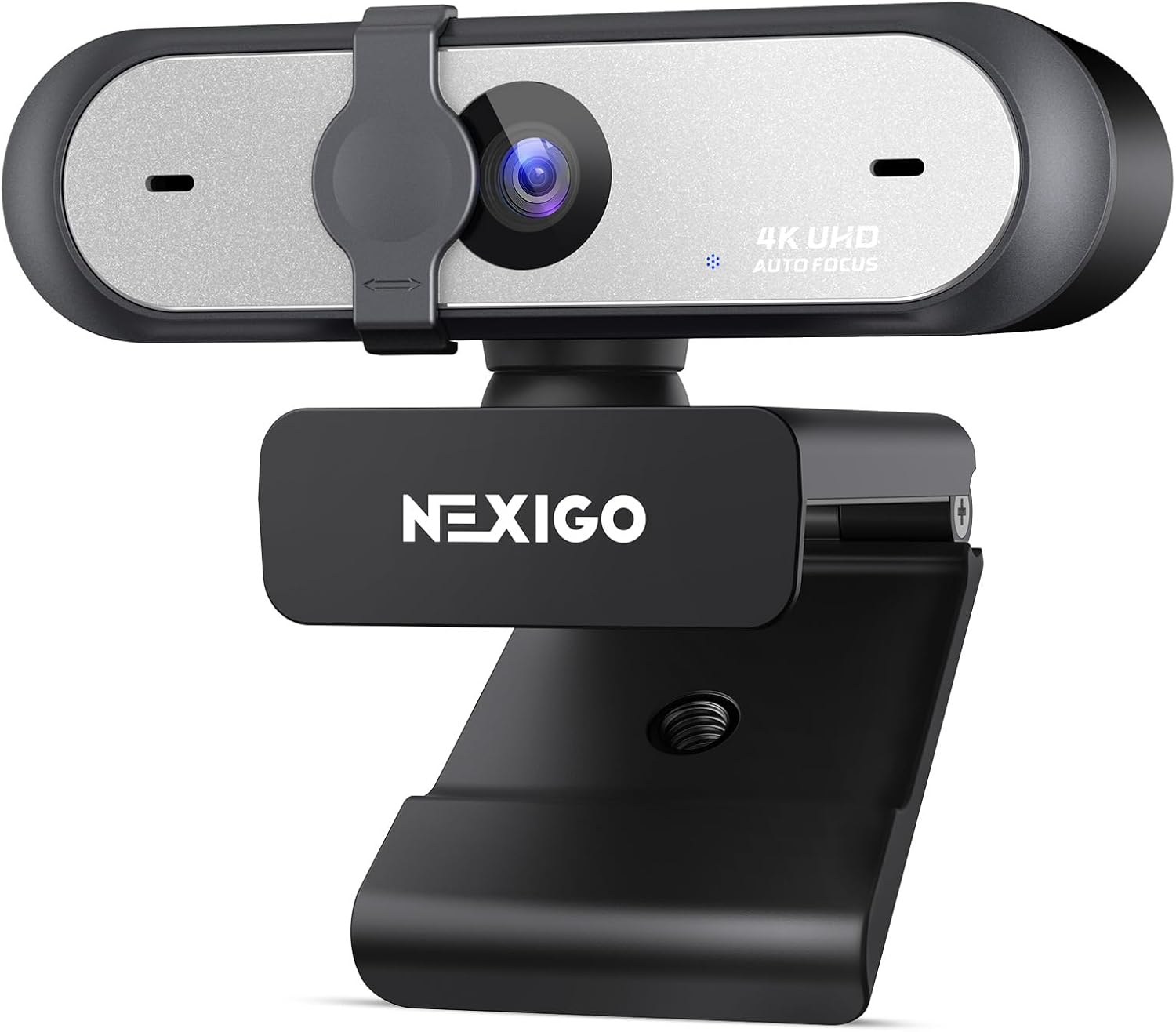
NexiGo N660P Pro 4K Webcam with Distortion-Free Lens, 1080p 60 fps Autofocus USB Streaming Camera, 3DNR, Noise-Canceling Mics & Privacy Cover, Web Cam for Gaming/Live Streaming/PC/Mac/Switch 2, Black
$50-$99This is a 4K 30fps or 1080p 60fps webcam with autofocus, dual noise-canceling mics, and a privacy cover, designed for streaming and video calls on various platforms.

NexiGo N660P Pro 4K Webcam with Distortion-Free Lens, 1080p 60 fps Autofocus USB Streaming Camera, 3DNR, Noise-Canceling Mics & Privacy Cover, Web Cam for Gaming/Live Streaming/PC/Mac/Switch 2, White
$50-$99This 4K webcam with 1080p 60 fps streaming, autofocus, and dual noise-canceling mics is for users needing high resolution and smooth video without external software.

4K Webcam with Autofocus & Tripod, Camera for PC Laptop with Dual Microphone, USB Computer Camera with Low Light Correction, Auto White Balance, Video Camera for Streaming, Meetings, Office, Zoom
$0-$49A 4K webcam with a CMOS sensor and f/2.8 aperture, designed for basic video calls and streaming on a budget.