
High-Power 420-1600mm f/8.3 HD Manual Telephoto Zoom Lens for Canon EOS 70D, 80D, 90D, Rebel T3, T3i, T5, T5i, T6i, T6s, T7, T7I, T8I, SL3, EOS 5D, EOS5D IV, 6D II, 7D II SLR Cameras
Want the best price and purchase timing?
Our AI advisor analyzes real-time pricing across all channels to find you the best deal.
AI Verdict
A 1.7-pound, 420-1600mm f/8.3 manual telephoto zoom lens for Canon EF-mount DSLRs, designed for photographers prioritizing extreme reach over autofocus or low-light performance.
This lens offers an unparalleled 420-1600mm focal length for its price, making it a situational fit for users who specifically need extreme reach and are willing to master manual focus. Its fixed f/8.3 aperture and lack of stabilization mean it's best suited for bright conditions and tripod-mounted use. It won't work as an everyday lens due to these limitations.
If you need faster focusing, better low-light performance, or optical image stabilization, look for lenses with wider maximum apertures (e.g., f/4-f/5.6), built-in image stabilization, and autofocus capabilities.
Regret Score™
Very High RiskLower is better — measures purchase-regret risk from real buyer complaints, review credibility, and product maturity
Issues discovered after purchase
Critically weak dimension
Amazon rating vs actual quality
Chance this product isn't for you
Pros
- Achieves extreme telephoto reach from 420mm up to 1600mm with the included 2X teleconverter.
- Features a robust metal construction for durability and stability.
- Includes a built-in tripod collar, essential for supporting its 1.7-pound weight and maintaining stability at long focal lengths.
- Utilizes high index, low-dispersion multi-coated optical glass to reduce flare.
- Compatible with a wide range of Canon EOS DSLR cameras, including Rebel, 70D, 80D, 90D, 5D, 6D, and 7D series.
Cons
- Requires manual focus, demanding practice and patience for sharp results, especially at longer focal lengths.
- Has a fixed f/8.3 aperture across its zoom range, limiting its performance in low-light conditions.
- Its 1.7-pound weight and approximately 17-inch length make it bulky and challenging for handheld use.
- Lacks optical image stabilization, which is a significant drawback for a lens with such extreme focal lengths.
Dimension Scores
Delivers 'decent image quality' and 'details can be sharp' only 'when properly focused and stopped down' with 'careful manual adjustment'.
This lens is entirely manual focus, meaning it has no autofocus capability whatsoever.
Manual focus and the lack of image stabilization make it extremely difficult to achieve smooth, stable, and in-focus video, especially at long focal lengths.
Weighing 1.7 pounds and measuring approximately 17 inches in length, it is described as 'heavy and bulky,' making it challenging for easy transport or handheld use.
Best For
- Capturing distant wildlife in well-lit environments.
- Astrophotography, focusing on celestial bodies with a stable tripod.
- Budget-conscious photographers exploring extreme telephoto photography without breaking the bank.
- Stationary sports photography where subjects are predictable and lighting is ample.
Not Recommended For
- Fast-paced action photography requiring quick autofocus.
- Handheld shooting due to its weight and lack of image stabilization.
- Low-light photography or indoor events without external lighting.
Watch Out For
- Achieving sharp focus is difficult and requires considerable practice due to the manual focus system, especially at 1600mm.
- The fixed f/8.3 aperture means you'll need bright conditions or high ISO settings, which can introduce noise.
- The lens's 1.7-pound weight and substantial length make it cumbersome and impractical for extended handheld shooting.
- Without optical image stabilization, any camera shake is magnified at extreme focal lengths, necessitating a sturdy tripod for usable images.
Full Specifications
| ASIN | B017JF8MIU |
| Brand | Big Mike's |
| Lens Type | Telephoto |
| Item Weight | 1.7 pounds |
| Manufacturer | Big Mike's |
| Item model number | 4332060496 |
| Product Dimensions | 2.44 x 2.44 x 2.44 inches |
| Compatible Mountings | Canon EF |
| Camera Lens Description | 800 month |
| Focal Length Description | 420-1600 millimeters |
| Is Discontinued By Manufacturer | No |
What Buyers Say
Many users are drawn to this lens for its extreme 420-1600mm reach at a low price point, often for wildlife or astrophotography. However, the manual focus system is a recurring challenge, with many reporting difficulty achieving sharp images without significant practice and a sturdy tripod. The fixed f/8.3 aperture also frequently limits its use to bright, sunny conditions, as low-light performance is severely hampered. The sheer size and weight of the lens mean it's not a casual carry-around option, and the absence of optical image stabilization is a constant point of concern for stability.
“Look, I got this for the reach, right? 1600mm! But man, trying to focus on a bird that's actually moving? Forget about it. And if it's not sunny, my pictures look like they were taken with a potato. You NEED a tripod, a really good one, and a lot of patience.”
Common Praise
- The lens offers an incredible telephoto reach from 420mm to 1600mm, allowing capture of very distant subjects.
- Its metal construction feels robust and durable, providing a sense of stability.
- The inclusion of a built-in tripod mount collar is appreciated for balancing the lens and reducing strain on the camera body.
- The price point is surprisingly affordable compared to other super telephoto lenses, making extreme telephoto accessible.
Common Complaints
- Manual focusing is extremely difficult and requires considerable skill and patience to get sharp shots, especially at longer focal lengths.
- The fixed f/8.3 aperture severely limits shooting to well-lit conditions, making it unsuitable for low-light or indoor use.
- The lens is heavy and bulky, making handheld shooting impractical and requiring a tripod for stability.
- Image quality can be soft or blurry if not perfectly focused and stabilized, leading to frustration for some users.
Ownership Tips
- You'll spend a lot of time on a tripod, even in bright daylight, to get anything remotely sharp at the longer end.
- Learning to manually focus accurately, especially on moving subjects, is a steep learning curve and takes consistent practice.
- The lens feels front-heavy on most DSLR bodies, making the tripod collar absolutely essential for balance.
- Dust can be an issue with zoom lenses, and the manual nature means more handling, so keep it clean.
- The included teleconverter adds significant bulk and further reduces light, making it even harder to focus and get bright images.
Frequently Asked Questions
Does this lens have autofocus?
No, this is a manual focus lens. You will need to adjust the focus ring yourself to achieve sharpness.
Can I use this lens without a tripod?
While technically possible, its 1.7-pound weight and extreme focal lengths make handheld shooting very challenging. A sturdy tripod is highly recommended for stable and sharp images.
What kind of images can I expect in low light?
With a fixed f/8.3 aperture, this lens struggles in low-light conditions. You'll likely need to use very high ISO settings, which can result in noisy images, or shoot only in bright daylight.
Is this lens compatible with my mirrorless Canon camera?
This lens is designed for Canon EF-mount DSLR cameras. While it might work with an EF-to-RF adapter on mirrorless bodies, full functionality and performance are not guaranteed, and it will still be manual focus.
Does it come with the 2X teleconverter?
Yes, the product description and user reviews confirm that a 2X teleconverter is included, extending the focal length to 1600mm.
Buying Guide
When looking at a telephoto zoom lens like this, you need to understand that 'zoom' doesn't always mean 'easy.' This lens gives you immense reach, letting you see things far away, but it demands a lot from you. You'll be doing all the focusing yourself, and it needs a lot of light to work well. Think of it as a specialized tool for specific, often static, long-distance shots, not a general-purpose lens you can just point and shoot.
Focal Length (420-1600mm)
This number tells you how 'zoomed in' you can get. 420mm is already quite close, but 1600mm is extreme, like looking through a powerful telescope. It lets you capture subjects that are very far away, but also magnifies any camera shake.
Aperture (f/8.3)
This number indicates how much light the lens lets in. f/8.3 is a relatively 'small' opening, meaning it needs a lot of ambient light to expose your photos properly. In dimmer conditions, your camera will have to work harder (higher ISO), which can make your photos grainy.
Manual Focus
Unlike lenses that automatically focus, you have to turn a ring on this lens to get your subject sharp. This gives you precise control but requires practice, especially with moving subjects or at very long focal lengths where even tiny adjustments make a big difference.
Alternatives
If this lens doesn't fit, consider lenses with a wider maximum aperture (e.g., f/4 or f/5.6) for better low-light performance, or lenses with built-in optical image stabilization for sharper handheld shots. For faster action, look for lenses that include autofocus.
You Might Also Like

NexiGo N660P Pro 4K Webcam with Distortion-Free Lens, 1080p 60 fps Autofocus USB Streaming Camera, 3DNR, Noise-Canceling Mics & Privacy Cover, Web Cam for Gaming/Live Streaming/PC/Mac/Switch 2, Pink
$50-$99This is a 4K CMOS webcam with 3DNR and dual noise-canceling mics, designed for plug-and-play use across multiple platforms.
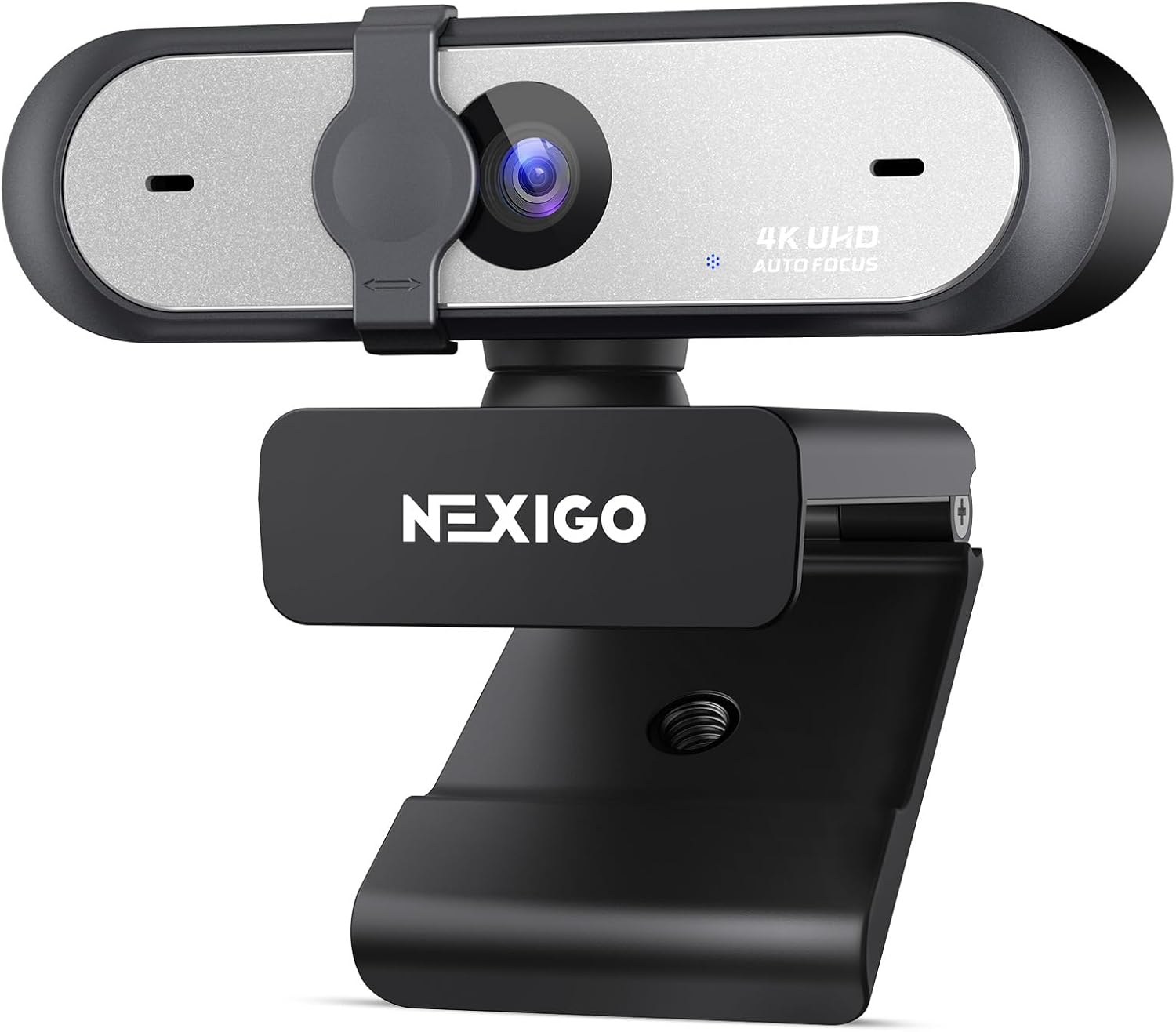
NexiGo N660P Pro 4K Webcam with Distortion-Free Lens, 1080p 60 fps Autofocus USB Streaming Camera, 3DNR, Noise-Canceling Mics & Privacy Cover, Web Cam for Gaming/Live Streaming/PC/Mac/Switch 2, Black
$50-$99This is a 4K 30fps or 1080p 60fps webcam with autofocus, dual noise-canceling mics, and a privacy cover, designed for streaming and video calls on various platforms.

NexiGo N660P Pro 4K Webcam with Distortion-Free Lens, 1080p 60 fps Autofocus USB Streaming Camera, 3DNR, Noise-Canceling Mics & Privacy Cover, Web Cam for Gaming/Live Streaming/PC/Mac/Switch 2, White
$50-$99This 4K webcam with 1080p 60 fps streaming, autofocus, and dual noise-canceling mics is for users needing high resolution and smooth video without external software.

4K Webcam with Autofocus & Tripod, Camera for PC Laptop with Dual Microphone, USB Computer Camera with Low Light Correction, Auto White Balance, Video Camera for Streaming, Meetings, Office, Zoom
$0-$49A 4K webcam with a CMOS sensor and f/2.8 aperture, designed for basic video calls and streaming on a budget.