
Canon EF 50mm f/1.8 STM Lens, Black
Want the best price and purchase timing?
Our AI advisor analyzes real-time pricing across all channels to find you the best deal.
AI Verdict
This 5.6-ounce 50mm f/1.8 lens is for Canon EF mount users wanting shallow depth of field and low-light capability without spending much.
This lens is a situational fit because its f/1.8 aperture and 50mm focal length are excellent for specific uses like portraits and low-light, but its softness at f/1.8 and lack of image stabilization limit its utility for demanding video or wide-open landscape shots. It offers significant value for its price point, making it a strong entry-level prime.
If you need consistently sharper images at f/1.8 or built-in image stabilization, look for lenses with a wider maximum aperture (like f/1.4) or those explicitly stating IS in their features.
Regret Score™
Medium RiskLower is better — measures purchase-regret risk from real buyer complaints, review credibility, and product maturity
Issues discovered after purchase
Critically weak dimension
Amazon rating vs actual quality
Chance this product isn't for you
Pros
- f/1.8 maximum aperture allows significant light intake for low-light conditions.
- Stepping motor (STM) provides near-silent autofocus for stills and smooth AF for movies.
- Weighs 5.6 ounces, making it lightweight for carrying.
- Features a metal lens mount, an upgrade from the plastic mount of its predecessor.
- Achieves very sharp images when stopped down to f/5.6.
- Minimum focusing distance of 1.15 feet (0.35 meter) allows for closer subject framing.
Cons
- Images can appear soft, especially at f/1.8, particularly towards the edges of the frame.
- Chromatic aberration is present in high-contrast areas when shooting wide open.
- STM motor can be noisy during video recording, requiring external audio solutions.
- Lacks image stabilization, which is a drawback for video work and handheld low-light photography.
- Bokeh quality, while improved with 7 rounded blades, can still appear busy or heptagonal compared to more expensive lenses.
Dimension Scores
Sharpness is good when stopped down to f/2.8-f/5.6, but softness at f/1.8 and chromatic aberration at wide apertures prevent a higher score.
The STM motor provides smooth and near-silent AF for stills, but some users report it's not the fastest, and it can be noisy for video.
The STM offers smooth continuous AF for movies, but the audible motor noise and complete lack of image stabilization are significant drawbacks for serious video work.
At 5.6 ounces, it is exceptionally lightweight and compact, making it easy to carry for extended periods.
Best For
- Creating portraits with blurred backgrounds due to the f/1.8 aperture.
- Photography in dimly lit environments without flash.
- Beginners looking to experiment with prime lenses and shallow depth of field.
- APS-C camera users seeking a tighter, flattering perspective for portraits (80mm effective focal length).
Not Recommended For
- Professional video production where on-camera audio is critical due to STM motor noise.
- Situations requiring consistently razor-sharp images at f/1.8 across the entire frame.
- Users needing image stabilization for handheld video or very slow shutter speeds.
Watch Out For
- Images shot at f/1.8 often show noticeable softness, especially outside the center, requiring stopping down to f/2.8 or f/5.6 for optimal sharpness.
- The STM motor, while smooth, can produce audible noise during video recording, making on-camera audio unusable for some users.
- Chromatic aberration, appearing as color fringing, is visible in high-contrast scenes when the lens is used at its widest aperture.
- Manual focus is 'focus-by-wire,' meaning the camera must be powered on for the focus ring to function, which can be inconvenient.
Full Specifications
| ASIN | B00X8MRBCW |
| Brand | Canon |
| Language | English, English, English, English, English |
| Batteries | 1 Lithium Ion batteries required. |
| Lens Type | Standard |
| Item Weight | 5.6 ounces |
| Manufacturer | Canon Cameras US |
| Item model number | 0570C005AA |
| Product Dimensions | 4.38 x 4.38 x 4.3 inches |
| Compatible Mountings | Canon EF |
| Camera Lens Description | Canon EF 50mm f/1.8 STM Lens |
| Focal Length Description | 50 mm fixed lens |
| Is Discontinued By Manufacturer | No |
What Buyers Say
Many users report that while this lens is often touted for its f/1.8 aperture, its true optical performance, particularly sharpness, significantly improves when stopped down to f/2.8 or even f/5.6. The STM autofocus is generally appreciated for its smoothness in stills, but its audible operation during video recording is a consistent point of contention. The upgrade to a metal mount from its predecessor is a welcome change, contributing to a more robust feel despite the plastic barrel.
“I bought this for portraits and yeah, at f/1.8 it's a little soft, but stop it down to f/2.8 and it's a whole different lens, totally worth the money for that background blur, even if the video autofocus sounds like a tiny robot buzzing.”
Common Praise
- Sharpness is very good at f/5.6, almost razor sharp from corner to corner.
- The metal mount feels much more durable than the plastic mount on the old version.
- STM autofocus is smooth and quiet enough for still photography.
- The f/1.8 aperture lets in a lot of light, making low-light shooting possible without flash.
- Creates a pleasing background blur that makes subjects stand out.
Common Complaints
- Images are noticeably soft at f/1.8, especially in the corners.
- The STM motor makes an audible noise during video, which gets picked up by the camera's microphone.
- Chromatic aberration is visible in high-contrast areas when shooting wide open.
- Bokeh can be a bit busy or heptagonal, not as creamy as more expensive lenses.
- Lack of image stabilization makes handheld video and low-light stills challenging.
Ownership Tips
- You'll find yourself shooting at f/2.8 or f/4 more often than f/1.8 to get consistently sharp results.
- If you plan on shooting video, invest in an external microphone to avoid picking up the STM motor noise.
- The lightweight plastic barrel holds up better than expected, especially with the metal mount.
- The 50mm focal length on an APS-C body feels quite zoomed in, making it less ideal for general walk-around photography.
- Learning to work around the lack of image stabilization by using faster shutter speeds or bracing yourself becomes second nature.
Frequently Asked Questions
Is this lens sharp at f/1.8?
No, images can appear soft at f/1.8, especially towards the edges. For better sharpness, you'll need to stop down to f/2.8 or f/5.6.
Can I use this lens for video?
Yes, the STM motor provides smooth autofocus for video. However, the motor can be noisy, so external audio recording is recommended if on-camera sound is important.
Does this lens have image stabilization?
No, this lens does not include image stabilization. This means you'll need faster shutter speeds or a tripod to avoid blur in low-light or video situations.
What is the build quality like?
It features a metal lens mount, which is an upgrade from previous versions, but the barrel is still plastic. Users generally find it to be a more durable feel than its predecessor.
Is this lens good for APS-C cameras?
On an APS-C camera, the 50mm focal length acts like an 80mm lens on full-frame, making it suitable for tighter portraits. It's less ideal for general-purpose wide shots on APS-C.
Buying Guide
When looking at lenses like this, you need to understand that the 'f/1.8' number, called aperture, dictates how much light the lens lets in and how much background blur you can get. A smaller number means more light and more blur. The '50mm' is the focal length; it tells you how 'zoomed in' the lens is. On a full-frame camera, 50mm is close to what your eye sees, but on a crop-sensor camera, it'll feel more like an 80mm lens, which is tighter.
Focal Length (50mm)
This is how 'zoomed in' your photos will be. On a full-frame camera, 50mm gives a natural perspective, similar to human vision, making it suitable for portraits where you want to fill the frame from a comfortable distance. On an APS-C camera, it acts like an 80mm lens, which is tighter and great for headshots but less for wide scenes.
Maximum Aperture (f/1.8)
This number controls how much light the lens can gather and how much of your background can be blurred. A low f-number like f/1.8 means it lets in a lot of light, so you can shoot in darker places without flash, and it creates that creamy, out-of-focus background effect that makes your subject pop.
Stepping Motor (STM)
This refers to the type of motor inside the lens that handles autofocus. STM motors are designed to be smooth and quiet, especially during video recording, to avoid jerky focus transitions and minimize motor noise in your footage. However, some users report it can still be audible.
Alternatives
If you need sharper images at the widest aperture, look for lenses with a larger maximum aperture (e.g., f/1.4) or those known for their optical performance wide open. For video, consider lenses with built-in image stabilization or quieter autofocus motors.
You Might Also Like

NexiGo N660P Pro 4K Webcam with Distortion-Free Lens, 1080p 60 fps Autofocus USB Streaming Camera, 3DNR, Noise-Canceling Mics & Privacy Cover, Web Cam for Gaming/Live Streaming/PC/Mac/Switch 2, Pink
$50-$99This is a 4K CMOS webcam with 3DNR and dual noise-canceling mics, designed for plug-and-play use across multiple platforms.
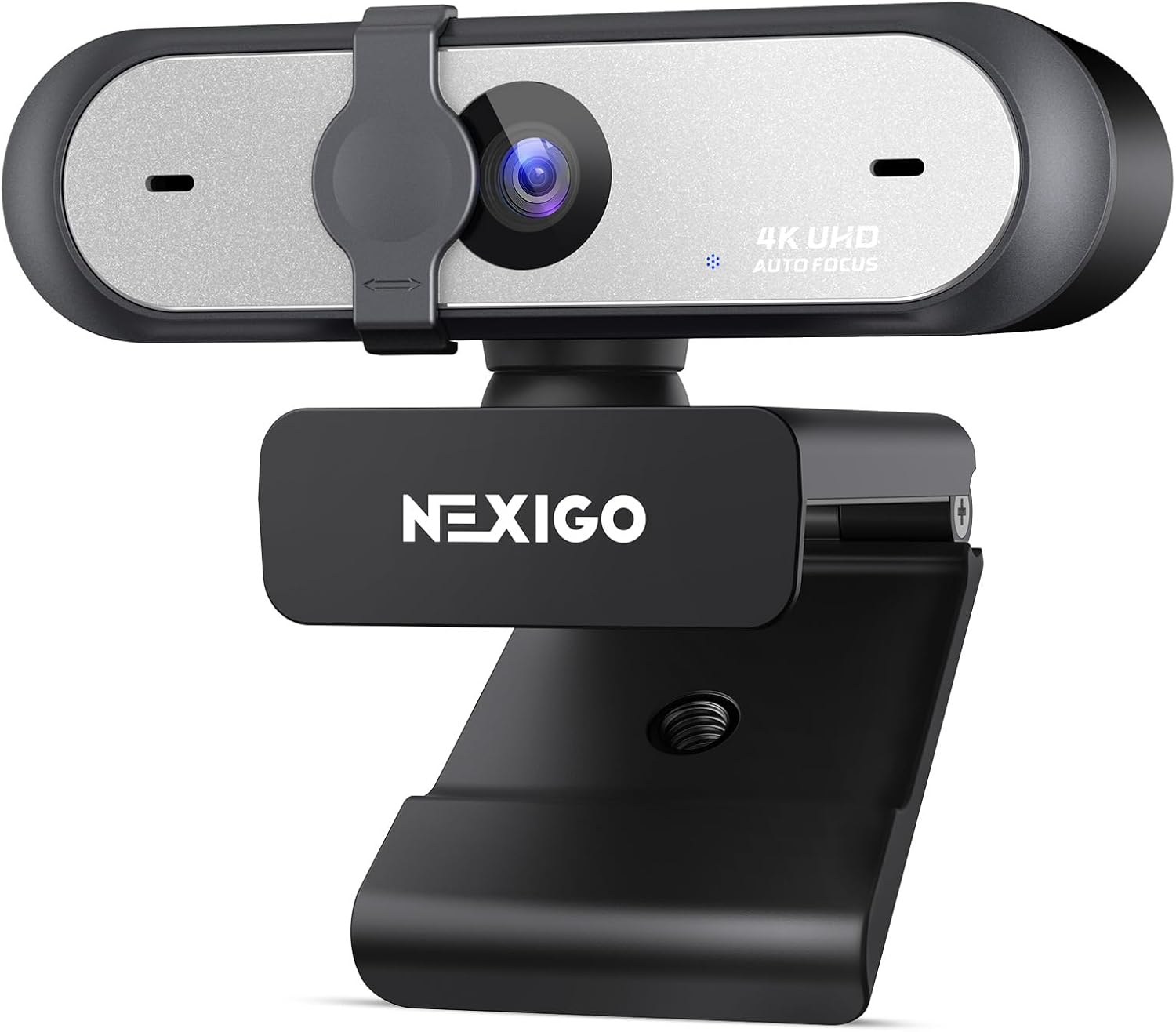
NexiGo N660P Pro 4K Webcam with Distortion-Free Lens, 1080p 60 fps Autofocus USB Streaming Camera, 3DNR, Noise-Canceling Mics & Privacy Cover, Web Cam for Gaming/Live Streaming/PC/Mac/Switch 2, Black
$50-$99This is a 4K 30fps or 1080p 60fps webcam with autofocus, dual noise-canceling mics, and a privacy cover, designed for streaming and video calls on various platforms.

NexiGo N660P Pro 4K Webcam with Distortion-Free Lens, 1080p 60 fps Autofocus USB Streaming Camera, 3DNR, Noise-Canceling Mics & Privacy Cover, Web Cam for Gaming/Live Streaming/PC/Mac/Switch 2, White
$50-$99This 4K webcam with 1080p 60 fps streaming, autofocus, and dual noise-canceling mics is for users needing high resolution and smooth video without external software.

4K Webcam with Autofocus & Tripod, Camera for PC Laptop with Dual Microphone, USB Computer Camera with Low Light Correction, Auto White Balance, Video Camera for Streaming, Meetings, Office, Zoom
$0-$49A 4K webcam with a CMOS sensor and f/2.8 aperture, designed for basic video calls and streaming on a budget.