
Raynox DCR-250 Super Macro Snap-On Lens
Want the best price and purchase timing?
Our AI advisor analyzes real-time pricing across all channels to find you the best deal.
AI Verdict
This 2.1-ounce 8-diopter macro snap-on lens is for photographers wanting extreme close-ups on 52mm-67mm filter threads without a dedicated macro lens.
This lens is a situational fit because it provides high magnification for a low cost, making it accessible for macro exploration. However, its short working distance and shallow depth of field mean it demands specific shooting conditions and user patience. It's a tool for specific macro needs, not a general-purpose solution.
If you need more working distance and better optical consistency, look for a dedicated macro lens with a longer focal length and 1:1 magnification.
Regret Score™
High RiskLower is better — measures purchase-regret risk from real buyer complaints, review credibility, and product maturity
Issues discovered after purchase
Critically weak dimension
Amazon rating vs actual quality
Chance this product isn't for you
Pros
- Provides significant magnification, rated at 8-diopter or 2.5x, for extreme close-up photography.
- Features a snap-on universal mount, allowing quick attachment and detachment to lenses with 52mm to 67mm filter sizes.
- Weighs only 2.1 ounces, adding minimal bulk to your camera setup.
- Can be paired with existing macro lenses to achieve even higher magnification levels.
- Achieves its maximum macro magnification when the host zoom lens is set to its most telephoto position.
Cons
- The working distance becomes extremely short, making lighting and subject positioning challenging.
- Produces a significantly shallow depth of field, making precise focus difficult, especially when shooting handheld.
- Can introduce softness or degrade image quality, particularly at the edges of the frame or in specific lighting conditions.
- Vignetting can occur, especially when used with wider lenses or at shorter focal lengths.
- The included lens caps are often described as flimsy and difficult to remove.
Dimension Scores
The lens produces generally good images for its price, but users report potential softness at edges and some degradation compared to dedicated macro lenses.
Autofocus becomes largely impractical due to the extremely shallow depth of field and short working distance inherent in high-magnification macro photography.
While usable for video, the very shallow depth of field and short working distance make stable and in-focus macro video challenging without specialized equipment and techniques.
Weighing only 2.1 ounces and featuring a compact design, it's highly portable and easy to carry in a camera bag.
Best For
- Budget-conscious photographers looking to explore macro photography without investing in a dedicated macro lens.
- Photographers who own lenses with 52mm to 67mm filter threads and want to add macro capability.
- Capturing extreme close-ups of small, stationary subjects like flowers or insects that allow for a very short working distance.
- Users who already have a macro lens and want to push magnification even further for tiny details.
Not Recommended For
- Professional macro photographers requiring critical edge-to-edge sharpness and consistent image quality across all setups.
- Users needing a comfortable working distance for skittish subjects or complex lighting setups.
- Anyone expecting effortless autofocus or a wide depth of field in macro shots.
Watch Out For
- The working distance can be reduced to just a few millimeters, making it hard to illuminate subjects effectively without casting shadows.
- Users report the snap-on adapter can be difficult to center correctly on the lens, and in some cases, may accidentally pop off.
- Image quality can be compromised, with some users experiencing softness, particularly when not used with optimal host lenses or at maximum magnification.
- The extremely shallow depth of field makes achieving sharp focus challenging, often requiring focus stacking or significant practice.
- Vignetting is a common issue, especially when used with host lenses below 75mm (35mm equivalent) or at wider focal lengths.
Full Specifications
| ASIN | B000A1SZ2Y |
| Brand | Raynox |
| Lens Type | Macro |
| Item Weight | 2.1 ounces |
| Manufacturer | Raynox |
| Item model number | DCR-250 |
| Product Dimensions | 4 x 2.7 x 1.1 inches |
| Compatible Mountings | Canon EF, Canon EF,Nikon F(DX),Sony Alpha |
| Focal Length Description | 250 millimeters |
| Is Discontinued By Manufacturer | No |
What Buyers Say
What really stands out is how many users consider this an 'addictive' tool for getting incredibly close to subjects, even if they already own dedicated macro lenses. Many photographers use it as a gateway into macro photography because of its low cost, but it's also frequently used by experienced macro shooters to push magnification beyond what their primary macro lenses offer. The biggest hurdle is definitely the super short working distance, which means you're practically touching your subject, and that makes lighting a real puzzle. You'll spend a lot of time trying to get enough light in there without blocking it yourself.
“Dude, this thing is wild. I can get so close to tiny bugs, it's almost unreal for what it costs. Yeah, focusing is a pain and you're practically on top of whatever you're shooting, but the detail you get is just insane.”
Common Praise
- Provides surprisingly high magnification for its price point, often exceeding 1:1 ratios.
- The snap-on mechanism is genuinely convenient for quick attachment and removal from various lenses.
- Produces sharp results, especially when paired with a quality host lens and proper technique.
- Allows photographers to explore extreme macro without the significant investment of a dedicated macro lens.
- Lightweight and compact, making it easy to carry and use in the field.
Common Complaints
- The working distance is extremely short, often just a few millimeters, which complicates lighting and subject interaction.
- Achieving sharp focus is difficult due to the incredibly shallow depth of field, requiring patience and often manual focus.
- Some users report softness or a noticeable drop in image quality, particularly at the edges of the frame.
- Vignetting can be an issue, especially with wider lenses or at certain focal lengths.
- The included lens caps are often described as cheap and frustratingly hard to remove.
Ownership Tips
- You'll quickly learn that a ring flash or other diffused lighting is almost mandatory to get good results due to the extremely short working distance.
- It takes a lot of practice to get consistently sharp shots, especially handheld, because the depth of field is so razor-thin.
- The magnification power isn't a fixed number; it really depends on the focal length of the lens you attach it to, working best with longer telephoto settings.
- You might find yourself buying a better set of lens caps because the ones included are genuinely annoying to deal with.
- It's surprisingly durable for its price, with some users reporting it holding up well even after accidental drops.
Frequently Asked Questions
What lens filter sizes does the Raynox DCR-250 fit?
The Raynox DCR-250 includes a snap-on universal mount that fits lenses with filter threads ranging from 52mm to 67mm.
Can I use the Raynox DCR-250 with a mirrorless camera?
Yes, the Raynox DCR-250 can be used with mirrorless cameras as long as the lens you attach it to has a filter thread size between 52mm and 67mm.
Does the Raynox DCR-250 affect autofocus?
While it doesn't disable autofocus, the extremely shallow depth of field and short working distance in macro photography often make manual focusing more practical and precise.
Do I need special lighting when using this lens?
Due to the very short working distance and the light loss associated with high magnification, additional lighting like a ring flash or diffused light source is often necessary to properly illuminate subjects.
Will this lens work with my kit lens?
Yes, if your kit lens has a filter thread between 52mm and 67mm, the DCR-250 can attach to it, significantly increasing its magnification capabilities.
Buying Guide
When you're looking at macro add-on lenses like this, you need to understand that you're trading convenience and cost for some optical compromises. This isn't a standalone lens; it clips onto your existing camera lens. The big deal here is magnification, but that comes with a super short working distance and a paper-thin depth of field, making focusing a real challenge. You'll be getting incredibly close to your subjects, so think about how you'll light them.
Lens Type: Macro
This means it's designed for extreme close-up photography, allowing you to capture tiny details that are invisible to the naked eye. It's like having a magnifying glass for your camera.
Snap-on Universal Mount (52mm to 67mm filter size)
This tells you it's not a screw-on filter. The snap-on mechanism makes it quick to attach and remove from lenses within that specific filter thread range, offering flexibility if you have multiple compatible lenses.
Maximum Macro Magnification at Telephoto Position
This means you'll get the most 'zoom' on tiny objects when you use it with a zoom lens set to its longest focal length. Think of it like using the telephoto end of your lens to get even closer to something small.
Weight: 2.1 ounces
This is incredibly light, so it won't add noticeable weight to your camera setup. It's easy to carry around and won't throw off the balance of your camera much.
Alternatives
If this doesn't fit your needs, consider searching for dedicated macro lenses for better optical performance and longer working distances, or extension tubes for a more flexible, but often manual, magnification solution.
You Might Also Like

NexiGo N660P Pro 4K Webcam with Distortion-Free Lens, 1080p 60 fps Autofocus USB Streaming Camera, 3DNR, Noise-Canceling Mics & Privacy Cover, Web Cam for Gaming/Live Streaming/PC/Mac/Switch 2, Pink
$50-$99This is a 4K CMOS webcam with 3DNR and dual noise-canceling mics, designed for plug-and-play use across multiple platforms.
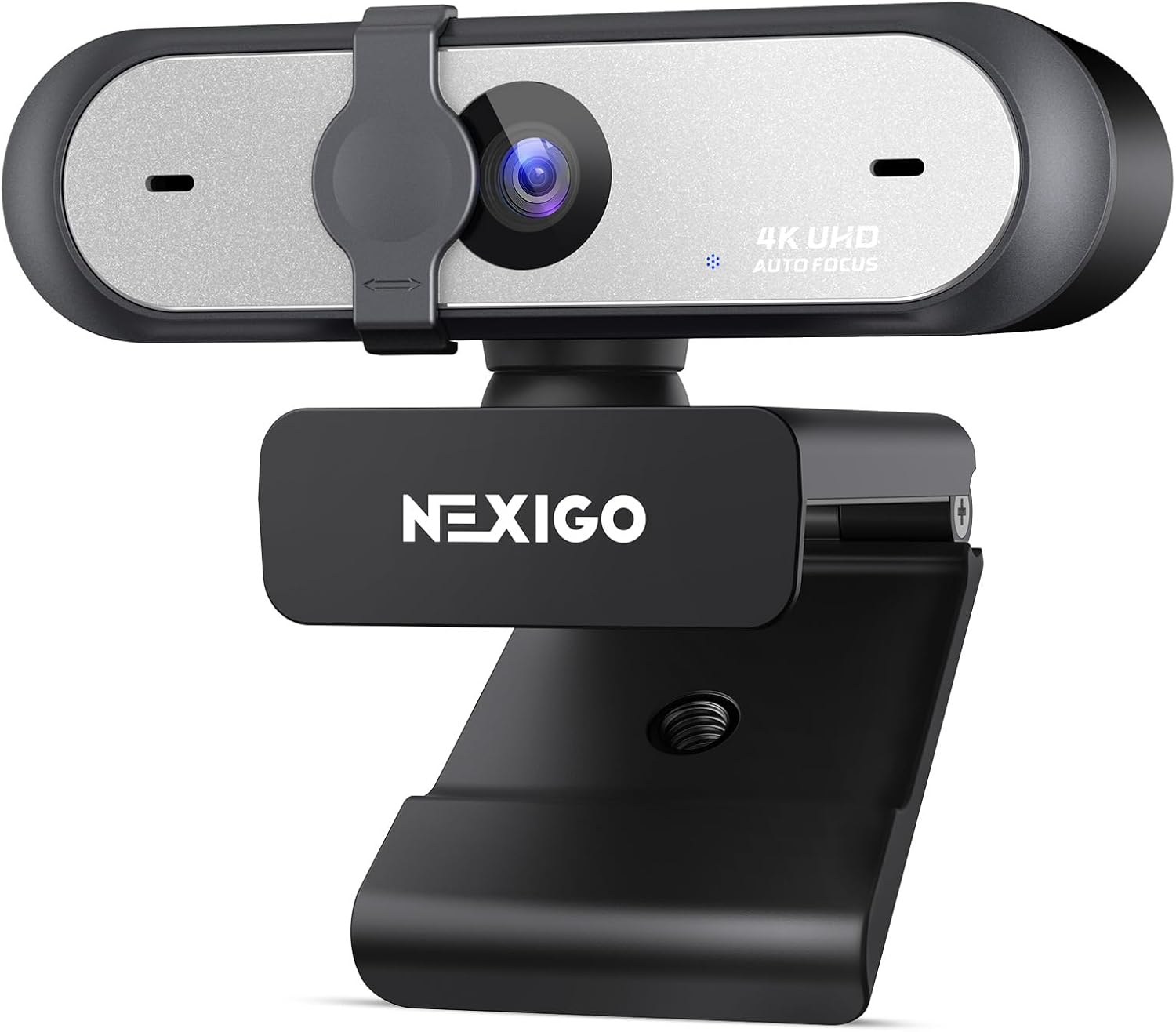
NexiGo N660P Pro 4K Webcam with Distortion-Free Lens, 1080p 60 fps Autofocus USB Streaming Camera, 3DNR, Noise-Canceling Mics & Privacy Cover, Web Cam for Gaming/Live Streaming/PC/Mac/Switch 2, Black
$50-$99This is a 4K 30fps or 1080p 60fps webcam with autofocus, dual noise-canceling mics, and a privacy cover, designed for streaming and video calls on various platforms.

NexiGo N660P Pro 4K Webcam with Distortion-Free Lens, 1080p 60 fps Autofocus USB Streaming Camera, 3DNR, Noise-Canceling Mics & Privacy Cover, Web Cam for Gaming/Live Streaming/PC/Mac/Switch 2, White
$50-$99This 4K webcam with 1080p 60 fps streaming, autofocus, and dual noise-canceling mics is for users needing high resolution and smooth video without external software.

4K Webcam with Autofocus & Tripod, Camera for PC Laptop with Dual Microphone, USB Computer Camera with Low Light Correction, Auto White Balance, Video Camera for Streaming, Meetings, Office, Zoom
$0-$49A 4K webcam with a CMOS sensor and f/2.8 aperture, designed for basic video calls and streaming on a budget.